Why B2B Publishers Can Be Effective Content Marketing Partners

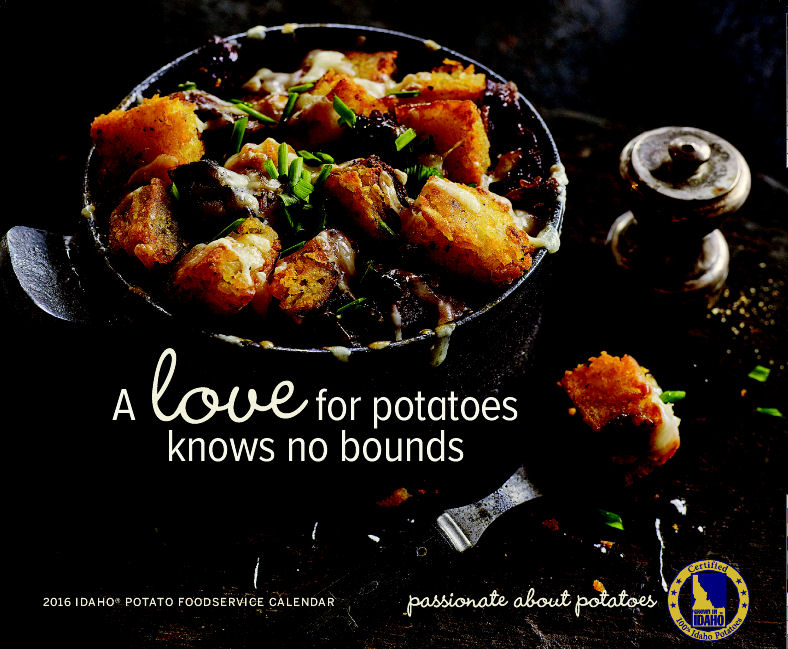
2016 Idaho Potato Chefs Calendar
Annual Idaho Potato Chef’s Calendar distributed through Plate magazine

Before going on your own to develop and distribute custom content you may want to explore a partnership with industry publishers. B2B publishers are in a unique position of knowing the audience you want to reach. They know what interests them, what their concerns are, and how to engage them.

Current topics, issues and trends are something publishers cover every day. You can use their arsenal of talented writers, designers and project managers to take your content to the next level. Get access to the markets you want to reach. Enhance your position in business-to-business markets and distribute your content efficiently.

Custom content can take many forms including branded or unbranded articles that are identified as advertorials, calendars, or supplements to name a few. A publisher who knows your audience and business objectives can offer insight on the type of content that will best engage readers.

Understand the publisher’s brand and mission

Custom content that appears in an industry website or publication places your business within a context of trust and knowledge. But first, you need to understand the publisher’s brand and its mission. It’s likely you are already familiar with publications serving your industry, but if you are new to the market, you can search online, or via SRDS to learn more.

Review the publisher’s magazine, website, and blogs. Read a few feature articles and look at the various sections. Online you can learn a lot about their mission by reading the About page. Contact the publisher and ask for a media kit to learn about their audience and reach. Review the editorial calendar to find topics they will be covering and when.

Identify your objectives for the custom content

Know what you want your content to do and how it will serve the intended audience. Here are several common objectives for custom content projects.

Position your product as on trend

Sunkist ran a series of advertorial articles in Plate magazine highlighting lemon-inspired desserts and cocktails. The articles ran opposite their advertisement. It provided additional editorial coverage for the Sunkist brand while describing creative uses of their product for Plate’s audience, professional chefs.

Position your company as a leader in the industry

To be viable, a sponsored article that addresses a new trend should include research data and quotes from respected industry leaders. In the food service industry clean label is something operators are just beginning to be impacted by. We recently gathered data, interviewed sources and wrote an article for a food service client on this topic to be published in an industry magazine.

Demonstrate product versatility

How are your customers using your product? Share their stories to show its versatility. That’s what the Idaho® Potato Commission does with its annual Foodservice Chef’s calendar. Each month highlights a chef’ along with their potato dish and recipe as well as industry events. It is distributed with the Nov/Dec issue of Plate magazine.

Affirm subject expertise

Share deep knowledge on a topic with custom supplements or whitepapers. These long-form content projects may be inserted and mailed with the B2B publisher magazine or featured online. As a pullout section in a print magazine, they provide readers with a unique reference and in-depth coverage of a topic.

Drive traffic to your website

B2B publishers may offer distribution of a custom e-newsletter directed toward your target audience. The same compelling content you find in print can be adapted for a custom e-newsletter, offering additional opportunities to measure results with special offers, downloads and increased web traffic.

Custom Content Continues to Work Long after the Published Date

Custom content has the advantage of being owned by you. This means you can share your custom publishing content with customers and prospects online and off. Its impact can go well beyond what appears in the publication. Use it in an eblast, for social media and as a blog topic. Extend its reach by distributing print content at trade shows and meetings or send a special mailing to your best customers.

Content for Biz is pleased to have media partners in the food service and construction industries who rely on us to develop custom content. We encourage you to take advantage of the unique role industry publishers have with their audience to make the most of your custom content.

2012 Content Strategy Trends for B2B

Business StrategyB2B companies will continue to rely on quality content in varied forms to differentiate themselves and their products during 2012. The website is still home base for most companies, but social media and branded content are augmenting their online presence. Marketing budgets are increasing in these areas. Companies are looking for business professionals who can develop content using a strategy that makes sense for their business.

To build relationships online B2B companies are adapting.

Websites

On websites prospects are looking for your location, contact information, what you do, a clear message, and easy interaction (click to chat?). Those not familiar with the company head for the About Us page first after reviewing the Home page. They also want to know who your customers are.

For 2012 you may want to consider using a lighter tone in your content to engage prospects. Be genuine and use simple language. Keep evolving with the design of your site to see what works best as your offers or strategies change.  Ways to add interest might include a blog, twitter feed, customer reviews/ratings or videos featuring your customers.

Social Media

For some B2B companies, social media is becoming a customer service outlet. It is on the social channels that they receive feedback and respond to customer inquiries and comments. Using social media this way can strengthen SEO ranking.

According to a recent survey of B2B marketers conducted by the Content Marketing Institute Twitter outdoes all other channels for content distribution with 74% of B2B content marketers using Twitter followed by LinkedIn (71%), Facebook (70%) and YouTube (56%).

Other content statistics from the survey show the following increases in usage:

  • Blogs: 45% increase
  • Case studies: 32% increase
  • Videos: 36% increase
  • Webinars/webcasts: 25% increase

Branded Content

A study conducted in 2011 by the Custom Content Council and  ContentWise shows that branded content (content produced by a brand that is driven by narrative, not commerce) represents more than 50% percent of the total marketing budget. Why use branded content? The most often cited reason was to educate customers. Branded content has lots of forms including guides with exclusive tips, books, videos, newsletters and blogs that address a particular topic of interest to an audience.

For 2012, more branded content will be used by marketers of all sizes. Nearly three quarters of respondents to the survey believe it is more effective than magazine advertising. Sixty-nine percent think it tops direct mail and public relations.

Content Strategy

Content strategists help companies create and position their content. Strategist Ahava Leibtag predicted that in 2012 more companies will rely on content curation (the vetting of information for customers), delivering and displaying content (think mobile devices) and integrating marketing and communications (social media people trained in customer service).

What becomes apparent is that in 2012 investing in quality content delivered by professional content providers is a good business strategy.

How to Create (not copy) Quality Content

Here’s a simple question: Why is it so hard to create quality content?

Crowd with signs

Often, little attention is paid to what is being published. We see the same thing over and over again. Anyone can copy. If you want to generate better online leads and engagement, create custom content that expands upon your experience with the customers you serve. Harness what professional writers and researchers know about quality content. Then reach for new heights of creative achievement that differentiate you in a crowded market place.

Content isn’t just for websites. It is a part of your brand. It should offer a pragmatic promise not pie in the sky. Content moves across all your communications channels, including blogs and social media. Suppliers, manufacturers, distributors and buyers may depend on it. Use your existing body of knowledge to find creative solutions. Replace caution with curiosity. Listen to learn. Unleash your story telling ability.

Creativity includes process and technical ability. Below are some recent posts from Content For Biz that explore the process on how to create (not copy) quality content.

How to Convert Customer Knowledge into Content

How to Find Credible Sources for Articles, Blog Posts and Whitepapers

Writers Need Answers Before Content Creation Begins

Tell an Authentic Story

Worst Sentences Fixed

Why Tone & Mood Matter in Custom Content

Q&A Becomes a Custom Content Star for Mack Trucks

Not everyone is creative.  It is estimated that only 30% of the population falls into this category. In his book, A Whole New Mind, subtitled: Why Right-Brainers Will Rule the Future, author Dan Pink suggests that ingenuity and creativity will be more valued in the future because these traits cannot be computerized, outsourced or easily reproduced at a lower price.

Your content kettle should be stirred regularly. Add some spice. Where do you look for creative inspiration?

Q&A Becomes a Custom Content Star for Mack Trucks

BulldogWhat questions do potential customers have about your B2B brand? Mack Trucks got it right when they added a section to their website called “Talking SCR.”  SCR (Selective Catalytic Reduction) is a new technology that Mack employed to meet stricter emissions regulations. The change had truck owners worried about how SCR technology would affect fuel economy, costs and maintenance.

The SCR Talks section allows website visitors to submit questions via email to Dave McKenna, director of Powertrain sales and marketing. Questions and answers are then posted on www.macktruck.com. The appeal of the section is in the authenticity of both the truckers and McKenna.

While McKenna is straightforward in presenting the facts, his passion and enthusiasm for Mack shines through, especially when he shares the news of a sale.  He deals with competitive questions head on. Customers show genuine appreciation for the information. Says one customer, “Thanks for all the great information and for taking your time to answer our questions – it’s invaluable in understanding the real world applicability of these technologies.”

Information that your audience finds invaluable is powerful. The opportunity to ask a question and get a personal response is simple, yet effective in building brand loyalty. Shared on the Internet, the information becomes a benefit to the entire Mack Truck community and a positive force for the brand.

In an interview with B2B for its “10 Great Websites” feature article, Sharon Shuman, director of e-business for Mack Trucks, called SCR Talks one of the most popular areas of the website.

What questions are your customers asking? Who can best answer them? Mack Trucks offers proof that Q&A can become quality custom content–useful information  that can drive traffic and build loyalty among your audience.

Why Tone & Mood Matter in Custom Content

Most B2B websites exist to build relationships and brand awareness, not direct sales (except e-commerce sites). Getting the tone and mood of your site right allows the viewer to pass through the first gate to engagement. People use visual design as an initial filter. “Do I like how this site looks?” You have more control over this than you may think.

Studies show that opinions about what a website should look like are influenced by what industry it is found in. In my work as a content writer, I see this influence from within an industry as well. Let’s look at the automobile industry and the differences between an auto body shop, luxury car manufacturer, and auto parts manufacturer.

How can tone influence the mood of the viewer (who already has preconceived notions)? It is up to the content planner and writer to understand audience expectations and set the tone that creates the mood for building good interaction with a brand or business.

Tone Creates Mood

Tone is a feeling or atmosphere created by content writers using text, visuals and sometimes sounds. The choice of words, images and graphic details reflect tone. Tone is set with intent by the content writer to be serious, professional or
light hearted, etc.

Mood is what the audience perceives or feels while viewing the content.

An auto body shop or “collision repair” (new term being used) often caters to vehicle owners in distress. This audience may not be interested in reading tons of text or viewing pretty pictures. They want a cost estimate. Help with an insurance claim. Something that indicates the shop fixes their type of car.

The tone can be created using before and after photos to show the car owners there is hope for returning the vehicle to its original condition. The text may emphasize real-time response (readiness), customer convenience (caring), competence (quality) and satisfaction. The mood might be that of a prize fighter reclaiming his title or a sense of renewal.

On the other hand, an audience for luxury cars is looking for distinction. There is time to read some of the detail on performance, accessories and style. How is each described? The text is concise instilling a sense of scarcity, desire and pride. The photos on these sites change before our eyes, showing action. As a result the mood created may be racy or progressive. Lexus uses the phrases “Brace Yourself” and “Embrace cutting edge over convention” on their site.

E-Commerce Sites Create Tone and Mood Too

A manufacturer of auto parts may set up an e-commerce site that lists all parts by vehicle type. The tone (efficiency) is created through easy-to-use navigation devices such as search boxes, as well as accurate descriptions and photos of the part. When the phrase “Get the Perfect Fit” is placed above search boxes for make, model and year as JC Whitney does on their site, the buyer may feel more assured of their selection. The mood assurance is skillfully intended by the content writer.

Stay steps ahead of the competition by using tone and mood to distinguish your brand or business. Look at some of your favorite websites and see if the mood makes you want to do business with them.