Q&A Becomes a Custom Content Star for Mack Trucks

BulldogWhat questions do potential customers have about your B2B brand? Mack Trucks got it right when they added a section to their website called “Talking SCR.”  SCR (Selective Catalytic Reduction) is a new technology that Mack employed to meet stricter emissions regulations. The change had truck owners worried about how SCR technology would affect fuel economy, costs and maintenance.

The SCR Talks section allows website visitors to submit questions via email to Dave McKenna, director of Powertrain sales and marketing. Questions and answers are then posted on www.macktruck.com. The appeal of the section is in the authenticity of both the truckers and McKenna.

While McKenna is straightforward in presenting the facts, his passion and enthusiasm for Mack shines through, especially when he shares the news of a sale.  He deals with competitive questions head on. Customers show genuine appreciation for the information. Says one customer, “Thanks for all the great information and for taking your time to answer our questions – it’s invaluable in understanding the real world applicability of these technologies.”

Information that your audience finds invaluable is powerful. The opportunity to ask a question and get a personal response is simple, yet effective in building brand loyalty. Shared on the Internet, the information becomes a benefit to the entire Mack Truck community and a positive force for the brand.

In an interview with B2B for its “10 Great Websites” feature article, Sharon Shuman, director of e-business for Mack Trucks, called SCR Talks one of the most popular areas of the website.

What questions are your customers asking? Who can best answer them? Mack Trucks offers proof that Q&A can become quality custom content–useful information  that can drive traffic and build loyalty among your audience.

Tell an Authentic Story

Powhatan Cooking Demonstration at Jamestown Settlement

I spent some time in Williamsburg, Va., last week and we visited the nearby Jamestown settlement and Powhatan Indian village exhibit.  There was something about Caucasians playing the part of the Indians that left me thinking about authenticity, or the lack of it.

Case studies can provide compelling content, but authenticity is key.  Potential customers want to read real stories, and if your copy sounds like a sales pitch, they will quickly move on.

An authentic story begins with an interview that goes beyond the basics.  Here are some of the methods and questions I have found helpful in capturing an authentic and compelling story from a business owner, customer  or subject matter expert.

Before the Interview

Learn as much as you can about the business of the person you are interviewing.   Check their profile on Linked-In, view the company website, make a personal visit to their business if possible. By doing this you will avoid the obvious questions, become familiar with the industry-specific language, and identify topics for discussion.

Begin with some small talk and set a friendly tone. Let them know you will provide them with an opportunity to review their comments. This serves to relax the person being interviewed. If someone is rushed, offer to call back when they are not distracted by pressing business problems.

During the Interview

A vivid description of the customer and their problem will engage readers who will identify with the story.  Ask questions in a non-threatening way.  Don’t just run through a predetermined list of questions (although it’s a good idea to prepare questions in advance). Show genuine interest and ask follow up questions.  And if the person goes off on a tangent, be patient.

Ask about their responsibilities and their biggest work challenges. Ask how the product or service fits into the grand scheme of their job or product. Ask what life was like before they found a solution. If they are a business owner, ask how they got into the business.  Uncover what the true pain points were. Get all the details that will create an authentic story.

If you are a marketer, you must take off your marketing hat and think like a journalist, asking the who, what, when, where and why questions. Ask them to compare how they do things now, vs. how they did things before. Ask how they came to find out about the solution. Ask what they were apprehensive about in choosing a supplier and how they were able to alleviate these doubts. Ask about the other options they considered and why they didn’t choose them. Ask what they would do differently, if they had to do it over again. Avoid presenting a completely one-sided view.

Ask how the solution met or exceed their expectations. Focus on customer service issues as well as benefits of the product. Ask about any critical timing or delivery issues. Ask if there were any unexpected benefits or rewards. Ask if any problems came up and how they were resolved. Find out if there was positive feedback from customers, sales or the management. Are there any quantitative measures of success? If so, find out what those numbers really mean to the business.  Were they able to increase profits or reduce costs? Facts and figures are an essential component of a convincing case study.

After the Interview

When writing the case study, use quotes, facts and details gleaned from your interview to add authenticity and personality. Make your story  easy to read and skim online through with good use of subheads and call-out quotes.  Don’t forget to include your keywords and phrases.

I like like this case study from Trimble. The details and conversational language helps to make it both authentic and readable.

What are some other ways to add authenticity to your website content?

Create More Readable Copy through Testing

Computer Test for ReadabilityIs your compelling online content lost in long sentences and confusing text? One way to test the readability of content is to read it aloud. It’s easy to spot long, run-on sentences when you find yourself gasping for air. But that’s not all you can do.  Consider conducting a quantitative test of readability as a more definitive guide. I recently discovered a readability scoring system built right into Microsoft Word called the Flesh Read Ease Score.

Developed by author and writing consultant Rudolf Flesch (1911-1986), the score objectively calculates readability using a formula that takes into account the average number of words in a sentence and the number of syllables in the passage. Scores range from 0 to 100. You don’t need to know the formula, just how to interpret the scores. A score of zero would be most difficult and a score of 100 easiest. Scores in the 60 to 70 range are considered readable by the average reader.

To put the scores  into context, Readers Digest has a Flesch Reading score of 65, while the Harvard Business Review has a score in the low 30s.

Another measure called the Flesch-Kincaid formula, also available in Microsoft Word, translates the readability score to a grade level.  A score of 65 correlates with the 8th to 9th grade level and a score of 55 indicates a 10th to 12th grade level. Scores between 0 and 30 represent college graduate level readability.

Scores are obtained automatically when you run a Word document through a spelling and grammar check.  However, you have to adjust the readability options in Word to have the test results appear.

How to Set the Readability Options in Microsoft Office Word 2007

  1. Click the Microsoft Office Button , and then click Word Options.
  2. Click Proofing.
  3. Make sure Check grammar with spelling is selected.
  4. Under When correcting grammar in Word, select the Show readability statistics check box.

While your B2B audience may be highly educated, your website is probably not the place to impress them with five syllable words and long cumbersome sentences. If your score is coming up too high, break up longer sentences and replace words that may be causing confusion. Potential buyers want to find information fast, and you can help them with clear, concise and readable text.

How does your website content score on the Flesch Reading Ease Test?  Here’s how my text scored on this blog post.

Flesch Reading Ease                     56.8
Flesch-Kinkaid Grade Level          9.1

Why I Hate/Admire Nike

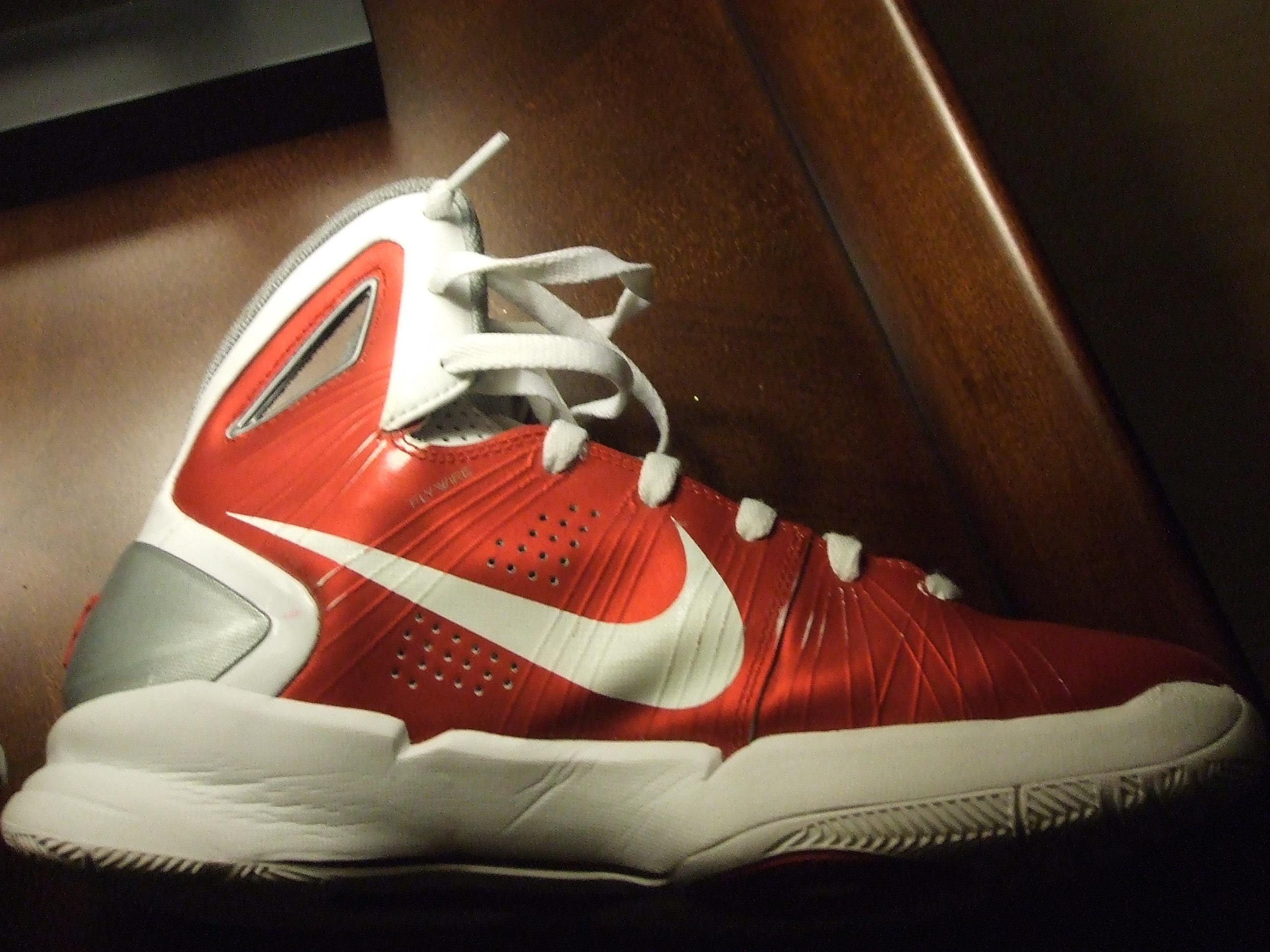
Will's Nike Shoe
Will's Basketball Shoe

As a parent, I hate Nike.

But as a marketer, they command my respect. Their brand is embedded in my 13-year-old son’s brain.  Their content engages him. He spends hours on their website dreaming about the athletic feats he will accomplish in their shoes. They even let him design his own shoes online.  Whoever doesn’t believe that advertising works doesn’t spend much time with 13-year-olds. His lives in a world where only the latest and greatest brands will do.

I have resigned myself to giving him a shoe allowance, and anything over and above this amount, he pays for out of his birthday or report card money. He will gladly shell out his hard earned cash for anything and everything with a swoosh on it.

In contrast, I buy my athletic shoes out of the clearance rack at a discount store. The name brand doesn’t mean that much to me in the case of athletic shoes.  But my son, he just doesn’t see it this way.

Clearly Nike is selling more than shoes. It provides a young man with confidence. My son wants to look cool to his friends, and with Nike, he’s pretty sure he will.  He wants to feel a certain way, and the shoes, that’s what does it for him.

Can B-to-B marketers learn a lesson from Nike?  I think so.  But to inspire that kind of brand loyalty requires thinking beyond the “product attributes.” What can you do to enhance the total experience; to engage the customer; to make them “feel” something about your brand?  Are you ready to let them design it and customize it right on your website? Do you know what their real motivations are? What b-to-b brands do you think have the same kind of loyalty as Nike?

I may not like what Nike has done to my son, but I can learn from it. And if I could request just one thing from Nike, it would be this. Maybe just once a year, could you do a little something for the Moms? You know a coupon would be really nice.

Why Less is More When Driving Reponse Online

One might think that the more items readers are able to “click on” in an email, the greater the response. However, that isn’t necessarily the case.  Your audience can be easily overwhelmed.  And sometimes fewer choices lead to greater response.

This was the case in an email newsletter I create for Clutter Coach Company, owned by certified professional organizer, Jane Carroo.  The company’s website (www.cluttercoach.com) is loaded with great content.  Subscribers to the Clutter Coach Company e-newsletter get special access to even more organizing content online. So the e-newsletter serves to drive traffic to the website and also keeps Clutter Coach Company top of mind among prospects and customers.

We decided to promote the online content in the e-newsletter by including a list of organizing articles. At first we provided a complete laundry list of nearly 30 articles in each e-newsletter.

However, taking a lesson from Jane, we decided to ”simplesize” the list, and instead offered six general categories of interest, which then led readers to a list of related articles in the category. The click-thru rate jumped 10 full percentage points with the first issue – from 24% to 34%.

B-2-B magazine editors have experienced the same phenomenon when it comes to new products issues. Reducing the number of products featured in an issue results in increased reader response.  A Top 100 Products list, for example, generated more response than a prior issue that included less information on several hundred products.  This list had value and represented only those products the editors and readers found worthy.

These experiences remind me that while it’s great to have a lot of content, it is equally important to organize it well.  Organization equals value to busy people. Just ask Jane.

Organize the structure of your site so that visitors don’t have to navigate through information that isn’t relevant to them. Guide them through the process. Weed through non-essential information so your site visitors won’t have to. Organize your content so as not to overwhelm.

Have you had similar results when you chose to pare down your choices? Share your thoughts here.