A Tale of Two Construction Websites Reveals the Importance of Content Discipline

Content for construction websitesThis is a tale of two construction company websites. Both had approved designs but were lacking content. One website was done in two weeks. The other lingers with an “Under construction” message for visitors to its site. Both websites were to be used as affirmation of the firm’s existence, services offered and approach to new projects. Because both companies relied on word of mouth and personal contact to gain clients, a call to action and heavy selling on the sites was not encouraged.

Experienced professionals with good reputations run both companies. They know a company website is necessary in today’s world. One realized that a website requires a disciplined approach to content development. The other was not as focused.

From the beginning there were differences. The “Done” website was being spearheaded by the firm’s owner who had a clear understanding of his market and clients. He also had a vision for what he wanted his website visitors to feel and think. “I don’t want to beg for business. The potential client should look at what we offer and say, ‘I want to work with them.”’ He wasn’t interested in getting a single project. He wanted to build on-going relationships with clients who had multiple projects in the works. His clients care about quality, safety, accurate estimates, and reliable schedules.

He brought a similar approach to his website project. While happy with the web developer’s design, the first writer he worked did not have a good understanding of the industry, and came up short. He searched for professional writers with knowledge of the construction industry and found Content For Biz. We developed a schedule for content creation that included reviews and approvals by him on set dates. He adhered to this schedule and provided what was needed along the way.

A marketing department subordinate who offered broad ideas and no deadline was directing the “Undone” site. Content For Biz developed a content creation schedule that included interviews with past clients to determine what problems they were facing and how their challenges were resolved by the firm. This approach was appreciated. But instead of moving forward with what they had, more names were added to the list of past customers to interview. This was not necessary and we told
them so.

The client with the “Undone” site did not adhere to the content schedule. Responses such as: “The owner is terribly busy and hasn’t had time to review the copy” or, “I know you requested that information but we can’t find it” were common.

Content writers are flexible and often offer a Plan B or C to help clients reach their goals. Content discipline, however, is necessary to get the job done. It means adding website content to the priority list, follow up, producing what is needed, as well as review and approval of the content in a
timely manner.

In the process of building a website, companies often find that they have some content areas that need improvement, but it’s important to keep moving forward. When applied, content discipline is what gets websites done on schedule. Companies and business owners reach their content goals. It’s a satisfying experience for them, the writers they work with, the web developers and the people who engage with the well-presented, informative and well-crafted content.

Best of all, content discipline makes it easy for visitors to think: “I want to work with them.”


ConExpo 2014 Shows Smart, Simple, Safe and Sustainable Machines

These “S” words were used over and over again at this year’s ConExpo/ConAgg trade show in Las Vegas. Heavy equipment suppliers proved their machines are engineered to meet the task of rebuilding America’s infrastructure, wooing contractors and enticing private enterprise. Many of the machines included smart technology making them more efficient, safer and simpler to operate.

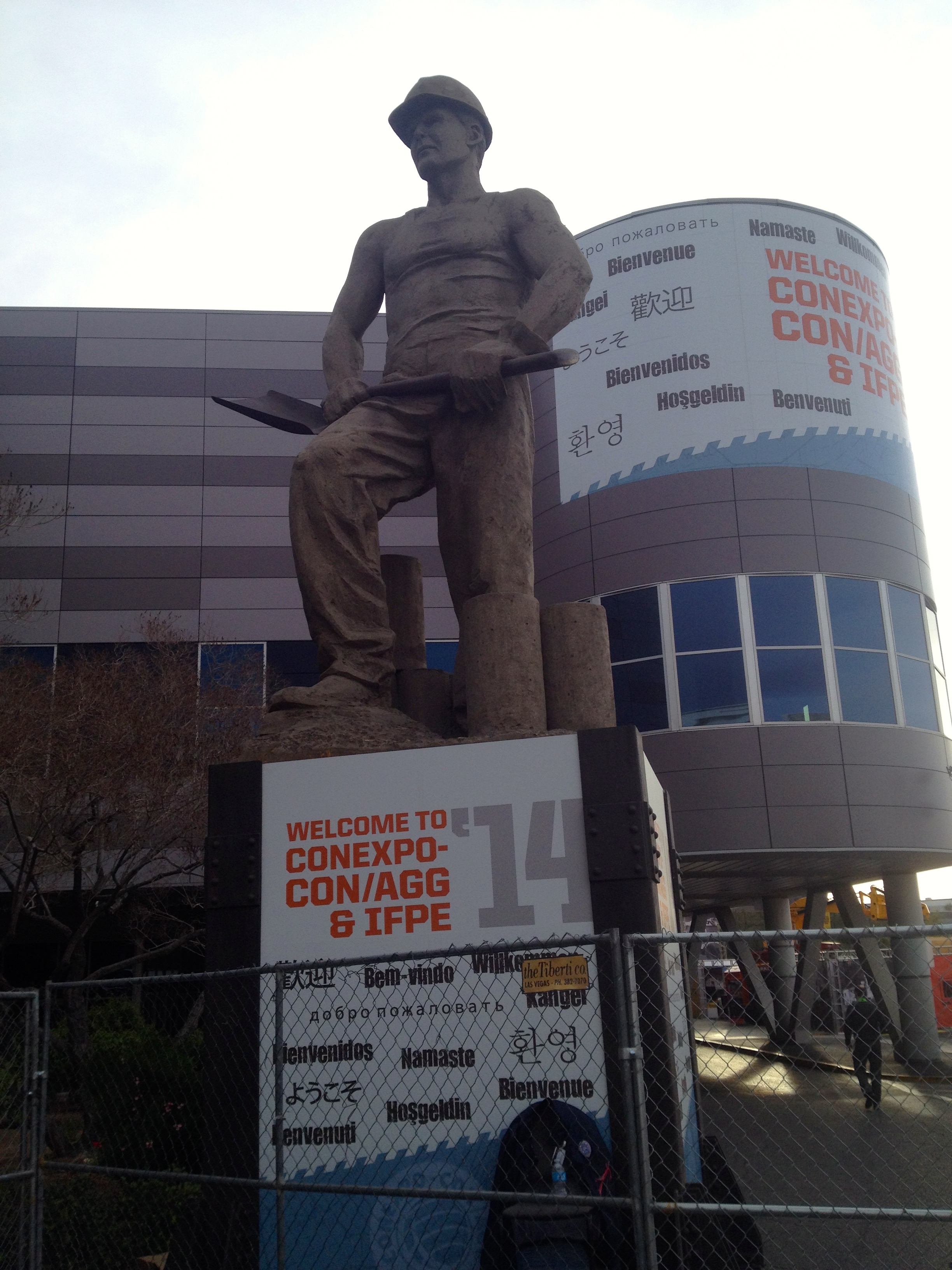
The bigger than life perspective to the show began at the entrance of the Las Vegas Convention Center with huge statues of construction workers standing guard and nearby cranes rising in salute to welcome visitors.

Cranes at ConExpo 2014

Statue at ConExpo 2014


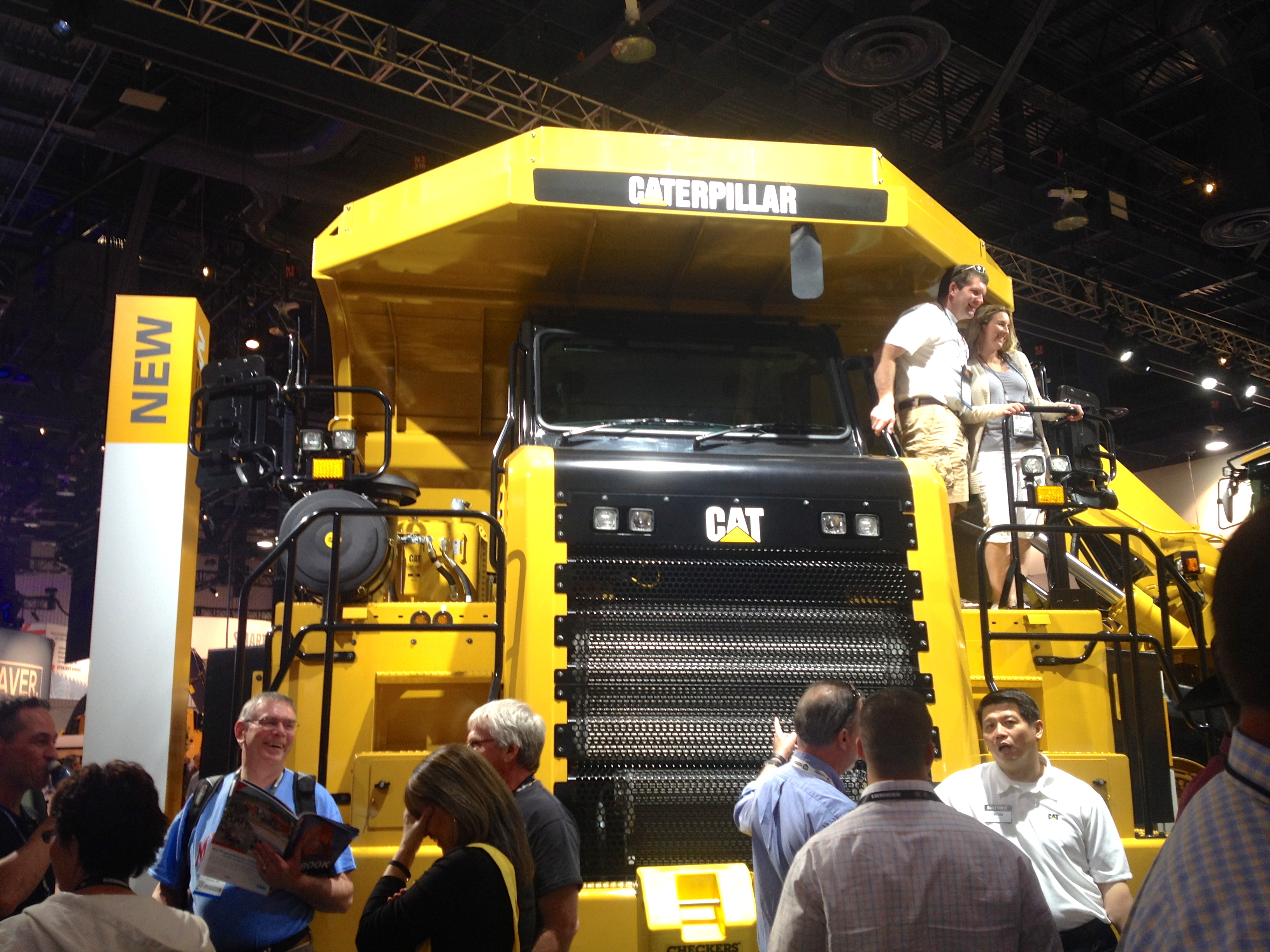
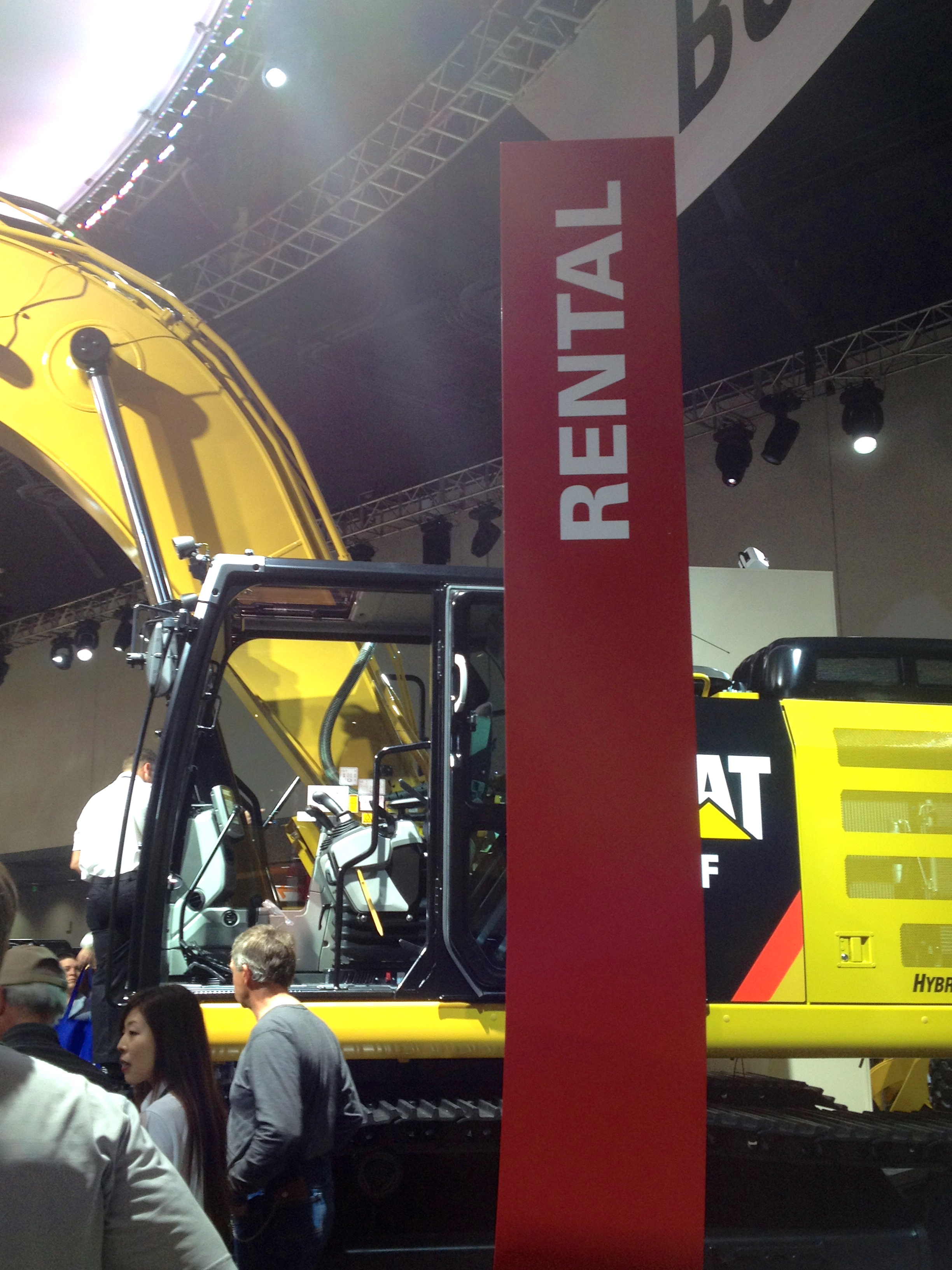
While walking the floor, I focused on the trade show content presented and exhibitors who offered their visitors some kind of hands-on experience. I appreciated the guide posts used by Caterpillar to identify rental and new machines.

New Caterpillar equipment

ConExpo 2014 Caterpillar

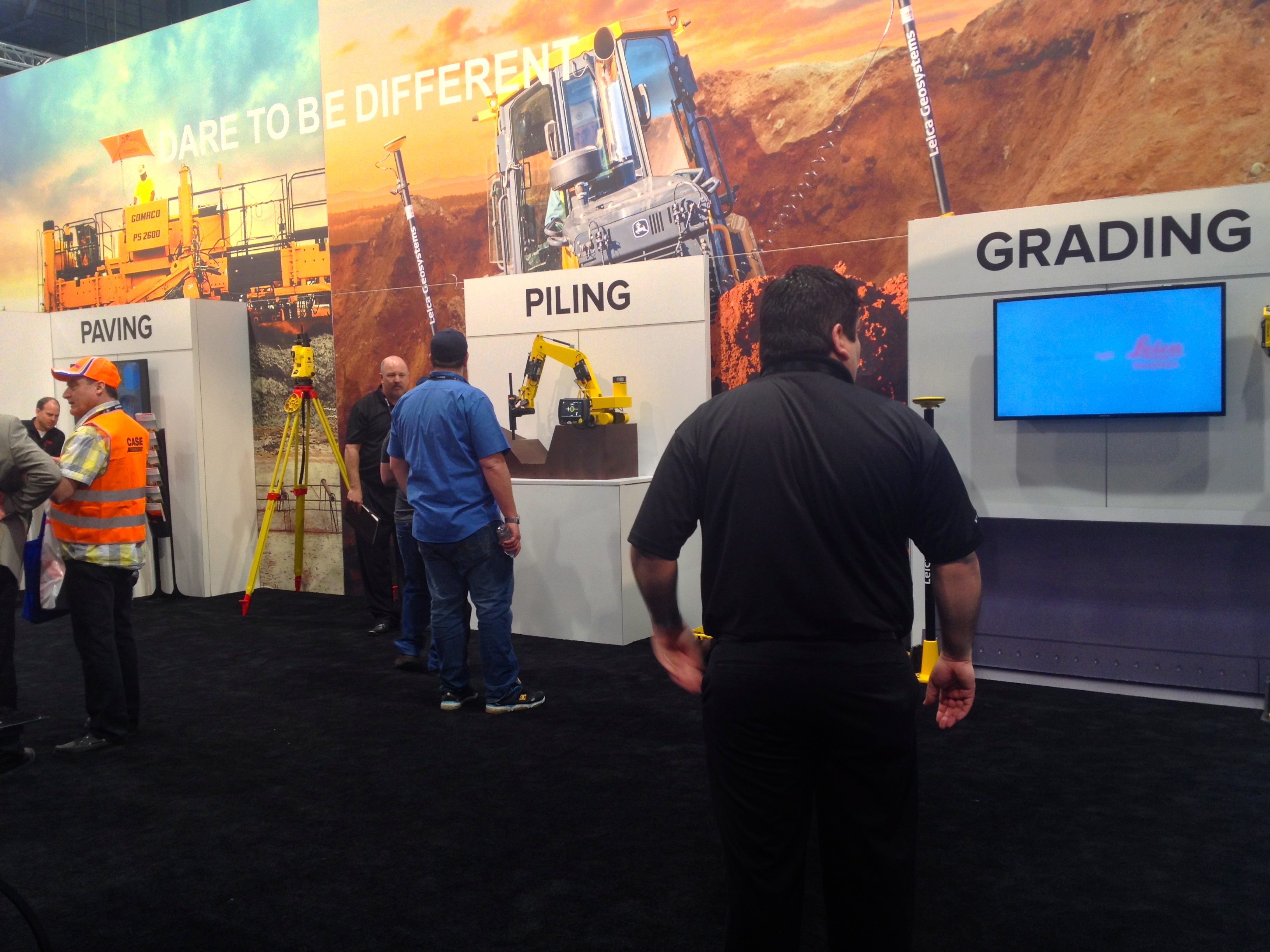
As well as the function segmentation used at some exhibitor booths.

ConExpo exhibitor


Case Construction presented a panel discussion including author and infrastructure expert Dan McNichol. He was the first to speak and began with a story, documented in his book Dire States. “I traveled 11,000 miles across America in a 1949 Hudson to bring awareness for our ailing infrastructure… During my travel I didn’t meet a single person who disputed that our infrastructure is falling apart.” His message, along with those from former U.S. Congressman Jim Oberstar, Janet Kavinoky, executive director at the U.S. Chamber of Commerce; and Jim Hasler, vice president of CASE Construction Equipment, have been heard before.

Surrounded by some of the most innovative, technologically advanced machinery in the world, the four speakers advocated for a long-term federal plan and state initiatives that would get these gleaming machines off the trade show floor and into the business of repairing dilapidated roadways, bridges, waterways, buildings, parks and schools.

However, the panel was preaching to the choir. With an estimated cost of $172 billion over the next nine years to improve the U.S. transportation infrastructure, the hurdles are high. They asked the choir to sing louder and get people outside the industry to sing along. Maybe, just maybe, priorities will change.

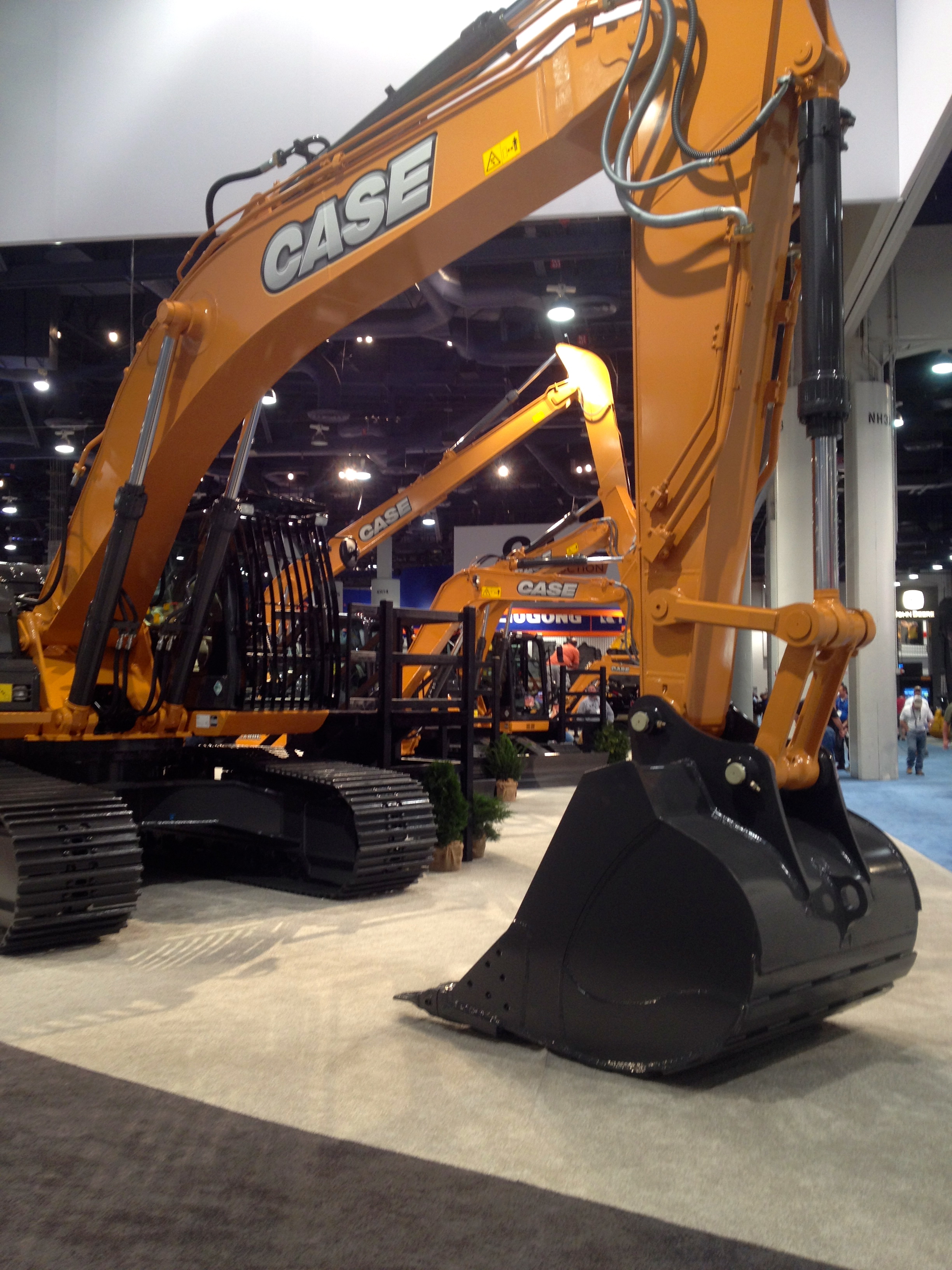
Case at ConExpo


At a joint news conference The Association of Equipment Manufacturers (AEM) and the Association of Equipment Management Professionals (AEMP) announced they are moving forward with developing a broader telematics data sharing standard that will better serve customers and protect the industry. Such a standard will improve data flexibility, governance, and processes. They are not waiting for academia or government but are relying on industry leaders such as Komatsu, Volvo and Caterpillar to assist with creating the standards and proposed certification process for OEM, end users and system management firms. It is believed that the right data feed can provide companies with the ROI needed to make investment decisions, manage fleets more efficiently and identify the importance of each machine.

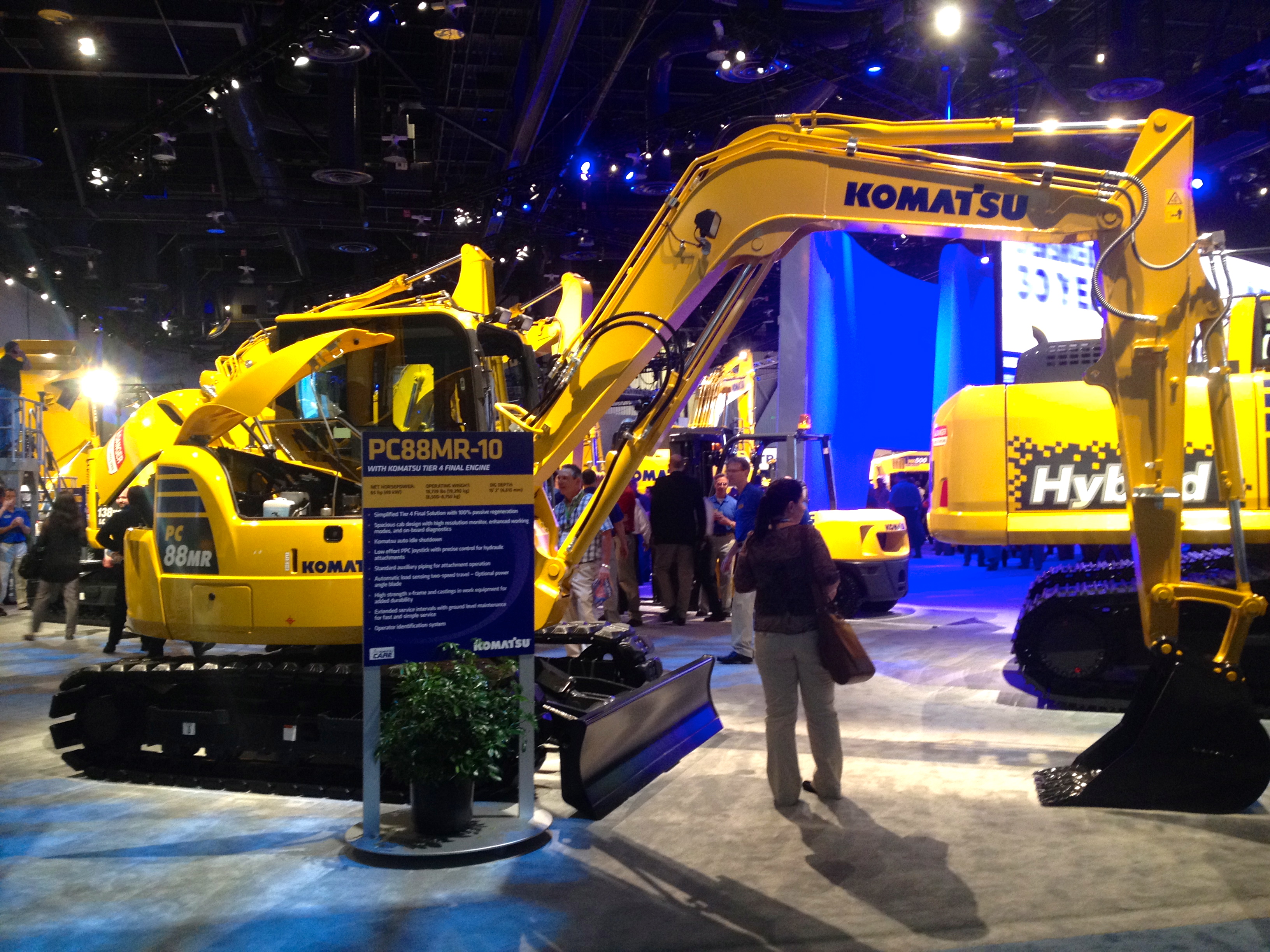
Komatsu exhibit at ConExpo


While there was no red carpet for many of the contractors attending the show, some of them did get recognized for the work they do and the way they do it. They received awards for improving the quality of life in their communities during a breakfast hosted by AEM. To read stories about their projects click on the Quality of Life link on the ConExpoConAgg.com website.

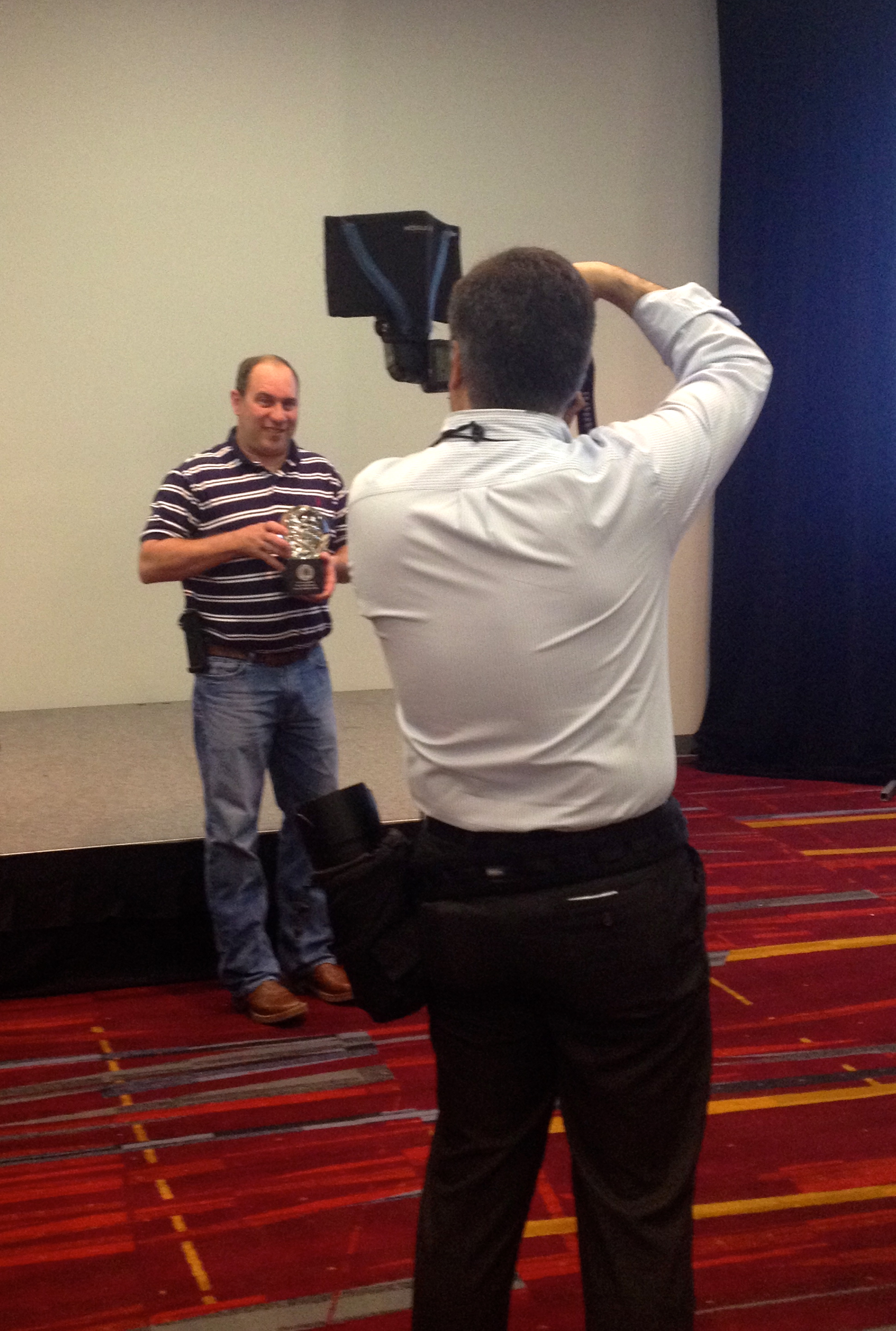
AEM contractor awards at ConExpo


Some exhibitors, including Leica, gave the reins to visitors and allowed them to get a feel for what’s new and available.

Leica exhibit at ConExpo


Others showed their strength in the grinding challenge.

In many ways that’s what the show was all about – what can be done as an industry to show our strength and willingness to make America better.


What Makes a Thought Leader?

Content of Thought LeadersIn any given market or on any specific topic there are persons or firms recognized as authorities. They are the thought leaders. With assistance from the Internet, thought leaders can easily share information and shape perceptions in a positive way. This is often done through blogs, whitepapers, research, video interviews, and public relations. For those companies who sell services and expertise, rather than products, thought leadership is especially powerful.

Many clients come to us asking for help in identifying subjects or ideas that will help position them as thought leaders.  For some firms thought leadership comes naturally. They are innovative, ahead of the pack.  As content writers, we respect forward thinking ideas and present them in a creative way. Other firms are more challenged. They haven’t been as innovative, and don’t really know what it takes to stand out.

Here’s some advice on how to be a thought leader.

Know your customer well, or be willing to find out.

Knowledge learned in the trenches is valuable, but it often stays in the trenches. As content writers, we like to interview those in the know – salespeople who work closely with customers every day. They hear the questions customers ask. If you don’t know your customer’s problems you need to be committed to finding out.  Use phone interviews, surveys, feedback forms or other types of research.  You cannot be a thought leader if you don’t know your customer’s pain points.

Be willing to educate.

You may know all there is to know about your subject, but if you can’t teach what you know to someone else, you won’t be a thought leader.  Some companies are afraid of giving away all their trade secrets and are not willing to share their knowledge. You have to believe that the knowledge you give away will be far less than what you receive in return.

I think many heavy equipment dealers fall into this category. They could provide a lot more information about fixing machines, but perhaps they are worried that people might stop going to them for service, and do the repairs themselves. That might be true  but I think this perspective is short sighted. Most dealers are only getting a fraction of the service business now. The same person you are helping has choices on where they want to buy parts and new machines. Why not endear them to you?

Keep an ear to the ground.

Technology can supplement the market intelligence you garner from conversations by capturing relevant comments posted on social media and news releases from across the web. Use Google alerts to get daily or weekly alerts based on your interests.  Use Google Trends to see if interest is growing in a particular topic. An equipment manufacturer or dealer could track searches for specific machine types to see what’s gaining interest. Look outside your industry for trends that may impact your business in the future. Use social media tools to listen in on relevant conversations. Join social media groups and take notice of what topics solicit comments and response.

Do it better than anyone else.

If you cover well worn topics, jumpstart new ideas and present them better than anyone ever has. Add graphics, organization or functionality to make the information more accessible and more useful. There is always a way to be different. Thought leaders are not satisfied with what they did in the past.

Have an opinion.

Passion ignites discussion. Are you willing to take a stand on social and political issuesthat are important to your business or your community? People want to know who they are doing business with. Share what you believe. A thought leader has strong values, is well respected in their field and is a person or entity that people admire. Are you supporting efforts to improve your industry? Tackling relevant issues? As Don Draper from the AMC television series Mad Men says, “If you don’t like what’s being said, change the conversation.”

Embrace change.

Markets are in constant flux, yesterday’s data and perceptions won’t due. Thought leaders embrace change in their markets and their products. They are always looking for what’s next. Research, both quantitative and qualitative is one way to stay on top of change.  Identifying trends and creating news helps establish authority.  Ask customers, suppliers and partners for input on threats and opportunities for your business.  A customer advisory board is a valuable tool among thought-leading organizations.

 Recognize that you don’t have all the answers.

You don’t need to know-it-all to be a thought leader. In fact, exposing your weaknesses or mistakes can make you more likeable. Noted leadership author John C. Maxwell once said, “A man must be big enough to admit his mistakes, smart enough to profit from them, and strong enough to correct them.” Companies are really no different.

Thought leadership is not part of every company’s DNA, but there is always room for better ideas and ways to present them. Get your message out to audiences on a regular basis. Become a thought leader.

Who is a thought leader in your industry and why?


Can Content Bring More Parts & Service Business?

In preparation for this week’s AEM Marketing Council Meeting focused on CONEXPO-CON/AGG,  I’ve spent a lot of time looking at the types of content equipment owners can access online.  Compared to other businesses, dealer and manufacturer websites are uninspiring.

Most websites offer  a wealth of product information, but comparatively little content on how to reduce equipment maintenance costs or repair machines.  Perhaps dealers don’t want to give away their secrets and manufacturers don’t want to admit their machines break. In either case, both manufacturers and dealers are missing an opportunity.  Maintenance content could be used to build relationships and loyalty so that when a machine needs parts or service there is only one OEM or dealer to do the job.

New research conducted by the CEB Marketing Leadership Council shows that buyers progress nearly 60 percent of the way through the buying process before they ever contact a salesperson. By the time that happens, you may be out of a deal. Content can play a key role in nurturing relationships over time.  Let your website be an extension of great customer service. Educate and train your customers on equipment maintenance and your brand stays top of mind.

Here’s a nice example of maintenance content from Caterpillar.

Are you ready to be a leader in content?


Should Co-op Advertising Promote Dealers Online?

co-op advertisingYou bet. Construction equipment manufacturers and dealers are sitting on a tremendous opportunity to boost sales with online advertising and email marketing. And the money to do it is sitting in un-used co-op advertising coffers.  Instead of embracing technology to find creative ways to promote manufacturers brands at the local level online, many manufacturers are dragging their heels when it comes to reimbursement for pay-per-click ads, banners or e-newsletters.

But the blame can’t be all on the manufacturers. Many dealers have been slow to move online as well. However, manufacturers would appear to be in a better position to leverage expertise across an entire dealer network.  Aggressive dealer marketers are currently bearing the full cost of online programs, because it works.

As you will discover from reading “Putting the Cooperation Back into Co-op Brand Marketing,”  there’s a lot that manufacturers and dealers could do to improve the results they get from their co-op advertising. They should start by expanding their programs to include online advertising.

Share your ideas and frustrations here. Let’s get a conversation started.