A Tale of Two Construction Websites Reveals the Importance of Content Discipline

Content for construction websitesThis is a tale of two construction company websites. Both had approved designs but were lacking content. One website was done in two weeks. The other lingers with an “Under construction” message for visitors to its site. Both websites were to be used as affirmation of the firm’s existence, services offered and approach to new projects. Because both companies relied on word of mouth and personal contact to gain clients, a call to action and heavy selling on the sites was not encouraged.

Experienced professionals with good reputations run both companies. They know a company website is necessary in today’s world. One realized that a website requires a disciplined approach to content development. The other was not as focused.

From the beginning there were differences. The “Done” website was being spearheaded by the firm’s owner who had a clear understanding of his market and clients. He also had a vision for what he wanted his website visitors to feel and think. “I don’t want to beg for business. The potential client should look at what we offer and say, ‘I want to work with them.”’ He wasn’t interested in getting a single project. He wanted to build on-going relationships with clients who had multiple projects in the works. His clients care about quality, safety, accurate estimates, and reliable schedules.

He brought a similar approach to his website project. While happy with the web developer’s design, the first writer he worked did not have a good understanding of the industry, and came up short. He searched for professional writers with knowledge of the construction industry and found Content For Biz. We developed a schedule for content creation that included reviews and approvals by him on set dates. He adhered to this schedule and provided what was needed along the way.

A marketing department subordinate who offered broad ideas and no deadline was directing the “Undone” site. Content For Biz developed a content creation schedule that included interviews with past clients to determine what problems they were facing and how their challenges were resolved by the firm. This approach was appreciated. But instead of moving forward with what they had, more names were added to the list of past customers to interview. This was not necessary and we told
them so.

The client with the “Undone” site did not adhere to the content schedule. Responses such as: “The owner is terribly busy and hasn’t had time to review the copy” or, “I know you requested that information but we can’t find it” were common.

Content writers are flexible and often offer a Plan B or C to help clients reach their goals. Content discipline, however, is necessary to get the job done. It means adding website content to the priority list, follow up, producing what is needed, as well as review and approval of the content in a
timely manner.

In the process of building a website, companies often find that they have some content areas that need improvement, but it’s important to keep moving forward. When applied, content discipline is what gets websites done on schedule. Companies and business owners reach their content goals. It’s a satisfying experience for them, the writers they work with, the web developers and the people who engage with the well-presented, informative and well-crafted content.

Best of all, content discipline makes it easy for visitors to think: “I want to work with them.”


Must-Have Content For Promoting Events and Conferences

Event organizers and marketing managers need to address a multitude of details to launch a successful live event. To lessen the load, here is a run down of must-have content when planning an event. Keep in mind that ability, budget and leadership all influence what content actually gets created.

Build excitement and awareness with content that explains what the event is, whom it’s for, and why it’s worth attending. If it’s an annual event, the content also needs to convey what’s different about this year. Website pages, postcards, ads, video and emails are some of the common formats for this initial content.

Establish a theme

What ties all the content together? A theme gives writers and speakers a focus for content creation. It keeps the overall event message front and center. Your theme also serves as a platform for the agenda. For example, the Society For Hospitality and Foodservice Management uses a theme of “Envision The Future” for their annual event this year. A theme is not a stunt. It should reflect your brand or organization culture.

Create a website/page

Some conferences and events are included on an existing website under an Events tab and others have their own website URL. Having a separate website for your event gives you more content flexibility, better search engine optimization and adds value for your sponsors.

The National Restaurant Association designates a separate website for its annual NRA Show in Chicago. To keep up interest in the site between shows they offer online broadcasts as mini-events positioning themselves as a “Year Round Foodservice Hub.” It’s always good to add content to the site throughout the year, not just before, during and immediately following an event.

Whether you choose a separate website or add an event page on your existing site, you need content that includes a benefit driven headline, event description, location, dates and a call to action.

Registration content

Include where and when the event starts and finishes as well as fees for the event before linking to a separate registration form. When appropriate, add a description and rates (discounts) of hotel accommodations being offered.

Agenda content

This includes dates, times, session titles, speaker name, company and title; and a compelling attendee-focused description of each session. If there are a lot of sessions, give an overview or Agenda-at-a-Glance and provide links to the session descriptions.

Session descriptions

Session descriptions should contain a benefit and stir excitement about learning something attendees can only find at this event. Here’s a portion of a session description from a conference: “This case study presents a front-line account of how misinformation, competing agendas and the power of social media took a safe, healthy product off the market and nearly brought down a food company.”

Speaker bios

Most presenters will submit bio content to the event organizer. However, this content often needs to be edited for word count, style and tone in order to present a consistent and easy to read experience for potential attendees. Headshots of each speaker should be obtained and included with the bio.

Sponsor content

Whatever sponsor criteria you’ve identified for the event, offer priority content positioning to sponsors who have invested the most. Sponsor descriptions are often submitted by the marketing team but these too need to be edited for a consistent style and word count. Include logos and links to their websites.

Email content

Emails should be well crafted while promoting and executing an event.

Call for speakers. Content includes a description of the event and audience, dates, as well as suggested topics to be addressed. If you don’t get the response you were hoping for, follow up with an email on “Benefits to speaking at the event” and later a “Last chance to submit” email.

Sponsorships. Send an invitation to companies and organizations to participate at the event as a sponsor. Describe different categories of sponsorship, venue and benefits of being a sponsor.

Here are some email subjects to keep the event momentum going:

Registration open

Agenda announced

Key speakers

Early bird registration deadline

Session highlights

Who’s attending?

Welcome for registrants

Follow up thank you for attending

Trade Media

Write press releases for a targeted list of trade and industry publication editors.

Write articles that address topics in the publications’ editorial calendars.

Include photos and video with articles and press releases.

Write a guest blog that mentions the event.

Social Media

Check your organization’s social media policy before using social media to promote your event. Here are some general ways to promote your event with social media content:

  • Create a unique hashtag and use it to generate social buzz online.
  • Tweet at least twice a day. Mention speakers, sponsors, trending topics and use hashtags.
  • Post on Facebook two to three times per week. Have photos ready for posts.
  • Mention the event in a LinkedIn post or on a targeted group discussion page.
  • Add any videos to YouTube and use the link in social posts.
  • Designate someone to tweet live and post to Facebook during the event.
  • Monitor all mentions of the event and respond to those mentions.

Below is more content to consider.

Blog Posts

Add a blog to your event website to generate more content, more views and more interaction with your event. Create an editorial calendar and post regularly.

Conference Materials

Attendee brochure

Conference handbook

Promotions

Print Ads

Promotional brochure

This may seem like a lot of content but when it is well planned, well crafted and well executed you will see results. Don’t scramble for something to say about your event. A content marketing plan for the conference or live event should be created well in advance of the event date.

Know What Your Target Audience Pays Attention To

content engagementWhat do members of your target audience pay attention to? It’s a question to ask when you need to connect and create authority for the content you publish. While reading an article in Worth magazine I was intrigued by what owners of iconic restaurants reportedly put their attention to. The restaurants, listed as being in the top 10 nationwide, all have a 25-year history of success in an industry where failure is common. The number one rated Canlis in Seattle has an outdated interior but the view of Seattle’s skyline and mountain landscape is stunning. Peter Canlis, the founder’s grandson, unabashedly says: “To say we don’t struggle with how to change would be dishonest, but for us to obsess over it would be a waste of time.”

Chez Panisse owner Alice Waters believes it’s not just about cooking food. “We have a bigger mission in the world – feeding people ideas.” Co-owner and chef Andres Taylor at Hugo’s in Portland Maine talks about building a community. Most of the owners pay attention to customer expectations, but not so much to trends. Staff loyalty and menu consistency are an important part of success for some. Spago’s owner Wolfgang Puck believes in innovation, taking the view that restaurants are entertainment. Local artisan farmers are part of the team at The French Laundry, owned by Thomas Keller. The Inn at Little Washington maintains a 14,000-bottle wine cellar. Yet owner Patrick O’Connell believes in elevating food, service and atmosphere “to the same level.”

How can you find what your target audience pays attention to? Here are three suggestions.

Ask them. This can be in the form of a question such as “What do you consider to be a constant high priority?” or “What do you attribute your success to?” Let them continue talking. Listen for when their voice quickens or changes to a tone of certainty. That’s what they pay attention to.

Review their website. Most savvy companies put what’s most important on their Home page. You don’t have to look far. It is emphasized either through its placement, by its size or color – elements that draw attention.

Listen to conversations on social networks. Find forums, join Google hangouts or Twitter chats, and follow their Facebook engagements. I like to see conversations, not just posts.

You may need to distinguish between segments of your target audience. If you are targeting a foodservice audience consider restaurant owners, chefs, and food suppliers. After interviewing a number of professional chefs I have found that they pay attention to flavor, seasonality, and eating as a celebration. Food suppliers such as GFS Marketplace position service, pricing, and loyalty as priorities on their website. Whereas Sysco emphasizes ingredients, sustainability, and local flavor on their website. Traceability and social and environmental stewardship are included as well.

A lot of content is based on what companies think their audience pays attention to. Or the effort is simply to gain their attention. But when content tickles a recognized issue, you’ve connected with your target audience.


Is Your Content Animal, Vegetable or Mineral?

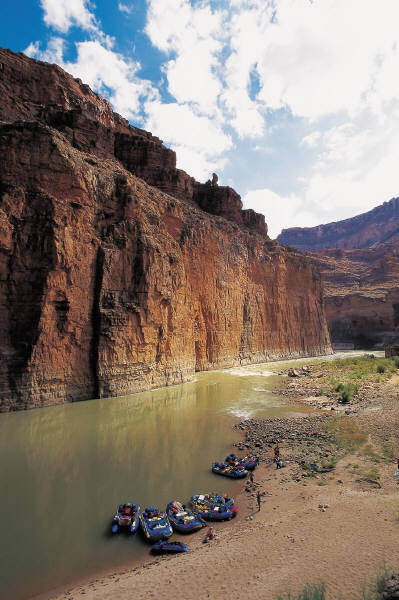
Canyon riverSome companies value their content as much as the products they sell. As a service content can explain the benefits of big data or sell soda. It works as a trade: You give me your contact information and I will let you download my content. But like a chameleon content takes on different textures and tones. At Content For Biz we provide content writing services for B2B companies. Part of our mission is to help clients think differently about content. So, rather than describe content as a commodity using the product, service, trade triad, let’s use animal, vegetable or mineral to classify it. Know what your content is before content writing begins.

Mineral Content

This is foundation content. It is the closest thing to being “written in stone” at least for the time being. It is inert, nonreactive, yet identifying. Mineral content can be a statement of fact, approach or philosophy. A mission statement, a description of your blog’s purpose, even a white paper can be considered mineral content because it is mined with a beginning and end. Each year companies should establish 3 high-impact ideas to create their content around. These are the gems – the sparkle that makes you different, effective and efficient.

Vegetable Content

This is outgrowth content. It is created to grow an audience, nurture leads, and offer a harvest of how-to’s or what ifs. Like a garden it is cyclical, changing by the season. Vegetable content may consist of blog posts, email marketing campaigns, press releases and website copywriting. This kind of content supports the marketing effort throughout the sales cycle. It is picked and easily digested by the customer. Vegetable content can make its consumer smarter, more aware and decisive.

Animal Content   

This is active content. It is instinctive, perceptive and needs to be fed often. Social media is its arena, but also events, newsletters, apps or webinars. The creator of animal content knows which way the wind is blowing. A strong business sense is required to move in the right direction, on the right path. Animal content appears as a peer, not a pest. A friendly approach creates a climate where conditions favor both buyer and seller.

The identifying, outgrowth and instinctual nature of content makes it more like a river chiseling its way through a canyon than a faucet filling a glass of water. If you want to think differently about the content you publish, give us a call.

Does Your Content Travel Well Across Channels?

Think of a well-packed suitcase. The size limits its capability, but not its function. Constraints can be good especially if you need to carry your bag from place to place or when you need your content to travel well in all conditions and across channels. By that I mean gaining attention amidst the flurry of headlines, tweets, posts and images that fly past us each day. We are all confined by time and space. So my thought is to use it wisely. Like the suitcase, you need to pack your content well.

Many people won’t believe that you can pack for a weeks-long trip in a carry-on bag. But this video shows you how to do just that – pack light and right. The same holds true for your content. You can say a lot with few words in a quick channel (think twitter) when the words are chosen for a particular audience or experience.

You may find that at first the pant legs and shirt sleeves are hanging outside the bag. But with the proper fold and sequence of garments the secret to the process becomes apparent. Writers are your content packers. They know how to structure and edit content.

The next time you need to inform, educate, entice or engage an audience, hire a qualified content writer to create and spread the word. In the digital world your content can travel fast from network to network, blog post to website, or image to email. Whatever route it takes, pack it right.