Content For Biz Most Popular Posts In 2011

The Content For Biz most popular posts for 2011 surprised us in some ways. The list contains how-to’s, but also an industry specific post.  The favorite topics reflect our position as journalists who understand content marketing. The most popular posts reference audiences, press releases, content strategy and credible sources as well as methods.

Sharing of posts through social media sites helped us garner more page views. A few of the posts were picked up or shared by Internet leaders including Chris Brogan, Denise Wakeman and Mari Smith. We see a big spike in page views when that happens. Mentioning Facebook and LinkedIn in a title seem to generate traffic as well.

Take a look at our list and add a link to your own Top Ten posts in the comments below.

10. 7 Tips for Getting Your E-newsletter Read

9.  How To Position Your Call To Action

8. The Best Press Release Distribution For B2B Companies

7.  Facebook Tips From LinkedIn Groups

6.  Keep Your B2b Web Content Current And Long Lasting

5.  What Should I Pay A Content Writer?

4.  Are the top 10 Construction Management Firms Missing the Boat on Blogging?

3. A Visual Content Strategy Engages Audiences

2. How To Find Credible Sources For Articles, Blog Posts And Whitepapers

And here in our top spot is the most popular post in 2011:

#1 Secrets Of A Content Sleuth


Go ahead and share a link to your Top Ten posts list in the comments below. Will you being doing anything differently on your blog for 2012?

How to Create (not copy) Quality Content

Here’s a simple question: Why is it so hard to create quality content?

Crowd with signs

Often, little attention is paid to what is being published. We see the same thing over and over again. Anyone can copy. If you want to generate better online leads and engagement, create custom content that expands upon your experience with the customers you serve. Harness what professional writers and researchers know about quality content. Then reach for new heights of creative achievement that differentiate you in a crowded market place.

Content isn’t just for websites. It is a part of your brand. It should offer a pragmatic promise not pie in the sky. Content moves across all your communications channels, including blogs and social media. Suppliers, manufacturers, distributors and buyers may depend on it. Use your existing body of knowledge to find creative solutions. Replace caution with curiosity. Listen to learn. Unleash your story telling ability.

Creativity includes process and technical ability. Below are some recent posts from Content For Biz that explore the process on how to create (not copy) quality content.

How to Convert Customer Knowledge into Content

How to Find Credible Sources for Articles, Blog Posts and Whitepapers

Writers Need Answers Before Content Creation Begins

Tell an Authentic Story

Worst Sentences Fixed

Why Tone & Mood Matter in Custom Content

Q&A Becomes a Custom Content Star for Mack Trucks

Not everyone is creative.  It is estimated that only 30% of the population falls into this category. In his book, A Whole New Mind, subtitled: Why Right-Brainers Will Rule the Future, author Dan Pink suggests that ingenuity and creativity will be more valued in the future because these traits cannot be computerized, outsourced or easily reproduced at a lower price.

Your content kettle should be stirred regularly. Add some spice. Where do you look for creative inspiration?

Internet Marketing Begins with Quality Content

One of the ways quality content can work in Internet marketing is to position your company as a knowledge center. Your knowledge space supports your brand and your customers’ need for information. Planning, creating, and publishing relevant content serves as a pathway for successful Internet marketing.

Visitors to your site are in need of fast answers. Your knowledge space should be helpful to your audience (market segments, customer profiles), be easy to navigate and include news, business insights, and community.

News

Offer outside reference sources as well as your own news. A content writer can write press releases, conduct interviews, find relevant timely links and keep this page updated daily. The page can serve as a kind of business radar uncovering business intelligence from a variety of credible sources. For an example of one such source see the Wall Street Executive Library.com

Business Insights

In this section describe methods. Include case studies, research papers, best practices and standards. A content writer can create and edit such materials, describe new tools and re-purpose existing content as blog posts. Content can take on various other formats. These may include profiles of companies (your suppliers, customers) and interviews with individuals who are leaders in the field. See Accenture’s Latest Thinking page for an example.

Community

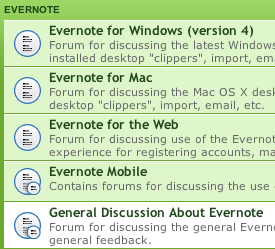
Add a forum to your site for members to exchange information about trends, methods, and key issues of the day. At Evernote there are multiple forums for different platforms and audiences. Tips and suggestions abound.

Evernote forums

Creating a robust presence through social media sites is another way of inviting visitors to participate in a community created by your company.

What is most important is that you deliver relevant content in a way that your prospects can find and understand. Your company’s true value proposition becomes apparent. The big promise to visitors of your knowledge space is to improve business performance. This is true no matter what product or service you are selling.

Having trouble positioning your company as a knowledge center? We can help.

Collecting, Creating and Distributing B2B Content That Matters

Knowledge workers spend 2 ½ hours a day searching for information to do their jobs. That’s what Ardath Albee, author of E-Marketing Strategies for the Complex Sale, said at the ConFab content strategy conference a few weeks ago. Scott Abel, who blogs at The Content Wrangler showed how efficient the content curation process can be using social networks. Steven Rosenbaum, author of Curation Nation, discussed how human choices are not made with algorithms.

Because the B2B buying cycle is long content must include depth, diversity and dimension according to Albee. Here is my practical 3D view on what these speakers were talking about. Good content writers who know how to curate can lessen a prospects search time by creating content that matters.

Add Depth by Collecting

The call for focused, edited, or filtered information is important from one end of the buying cycle to the other. We need to create meaning. Some ways of doing this are to talk with your own subject matter experts. Every company has them. You can also search the deep Web using the word “database” after your subject topic. For example, I am working with product developers in the functional foods industry. My search term would be: “Functional Foods database.” My search results lead me to information from PubMed and other credible sources. Another entryway to the deep Web is using “site: edu” in your search. The term “Functional Foods site:edu” brings me to sources at UC Berkley and the University of Michigan. Try searching your topic term followed with the words “white paper.” For good industry sources look at the bibliography of the white paper you find. That’s what brought me to Food Business News, Nutrition Business News, and Nutritional Outlook – all aggregators of good content for manufacturers, suppliers and distributors doing business in the functional foods industry.

Create & Diversify With Context

Content writers don’t create content in a silo. I often include the sales force from the beginning. I ask them what they know and what they need. Start collecting and creating information from within the company. What can the Human Resources and Engineering Departments add? Ask them.

Content writers sometime write for a persona, but we are aware that the audience is often made up of thousands of people with their own questions and concerns. We anticipate what they are looking for. I like the conversational tone on the Nutritional Outlook site: “Here’s where you’ll find information on.” It lists ingredients, market coverage, manufacturing know how, regulatory information, and research updates. Very simple, friendly and clear.

Here is another example at New Hope 360.com, that describes itself as a “digital marketplace that connects the healthy lifestyle industry from supply to shelf.” “Don’t see your product? It’s a big world of products, but we can help you cut through the clutter. List your company today to ensure that decision makers can find you!” They also have an “Editor’s Pick” column with a listing of relevant articles.

As content writers we know how to move site visitors from problem to solution. The buying process begins with the status quo and moves to a priority. Research is required. They ask: “What are the options?”We help them validate, then make a choice. We also monitor responses along the way.

Be Multi-Dimensional and Distribute

Content should be integrated through multi-platform channels including social media, blogs, articles, mobile and email. Your audience has an audience too. Ask them to share.

Deep content engages in different ways. It educates, offers expertise in the form of trends or methods, and adds ideas. Evidence can come from customer stories or your own. I found an article on the New Hope 360 site that included an interview with  Shawn Parr, CEO of Bulldog Drummond, a branding and innovation consultancy in San Diego. He shares this advice: “Think about your origin story—not only about how your company was started, but also where your ingredients come from and the relationships you have with your suppliers.”

Scott Abel shows the efficiency of a content curation process using his own twitter account as an example. He sets up an RSS feed to gather information, then reviews and approves what goes out for distribution. By carefully choosing what is distributed, he reduces the noise and adds value to the conversation through social networks.

The master at video curation is Steven Rosenbaum, author of Curation Nation and CEO at magnify.net. He says in the book that discerning quality is a human task, not to be allocated to search engines. Content curation needs qualitative judgment. Since there are no longer gatekeepers, access to an audience will come from gathering, creating and distributing the best and most relevant content. He was kind enough to sign his book for me at the Confab conference. In it he wrote: “In a busy world on the move – curation will make us trust again.”

How are you creating more efficient ways of creating and collecting  information that matters?

Save Time and Make Blogging Easier

time stressed writer
What can I write about?

Most companies understand the benefits of a B-2-B blog. But when it comes to writing blog posts week after week, they falter. While a lack of ideas, enthusiasm, and ability may be the problem, more often, it is a lack of time that sabotages their efforts. Writing is time consuming. Here are some ways to streamline the blogging process.

Decide on a topic. This often involves research. After you have read what is written on a topic, you need time to figure out how you can create your unique viewpoint.  Finally, there is the actual writing and editing time, which can vary considerably, depending on the degree to which your efforts are interrupted by other responsibilities. If time constraints are keeping you from producing a better blog, consider how hiring a professional writer can help you.

1) A professional writer can help you organize your B-2-B blog content using an editorial calendar.

Take a cue from B-2-B editors who find they deliver better content when they follow an editorial calendar. An editorial calendar includes a brief description of what you will publish and when.  Instead of letting things fall to chance, you might decide to feature a case study on Wednesdays and a Q&A with a company expert on Fridays. You may have six key topic areas to plan around. Stop scrambling to find a topic the day the blog post is due.

2) A professional writer can research a blog topic for you.

Much of a professional writer’s job involves finding credible sources of information—weeding through a multitude of sources and conversations on the Internet.  While your company experts are likely to be the No. 1 source of information for your blog, following other experts in the field, competitors, keywords, relevant research and news can be extremely valuable.  Consider hiring a professional writer to research a topic or customize and organize market intelligence for you.  With everything at your fingertips the writing process becomes more efficient.

3) A professional writer can edit your blog posts.

If you or your team have great ideas but don’t have the time to give your writing professional polish, you can hire a writer to review and edit your work.  With an editor’s thorough review process you will avoid embarrassing misspellings and grammatical errors. A good editor will help you communicate clearly and concisely, without losing your “voice.”  A writer knowledgeable in search engine optimization can also edit your blog copy to integrate important keywords that will drive traffic to your site.

4) A professional writer can develop and write blog posts for you.

People often wonder how someone can write about an industry or topic they are not familiar with.  However, professional writers successfully do this every day by thoroughly researching topics and formulating the right questions to ask company experts and industry insiders. In contrast, those who are so close to a topic often overlook the obvious questions that potential customers might have.

If time is keeping you from fully realizing the benefits of a blog, consider hiring a content writer to handle a portion or all of your writing-related tasks.  Content for Biz offers all of these writing, editing and content development services. Check out the “Work with Us” tab to learn more or give us a call.