Content Lessons From High School Football

Getting to the goal line

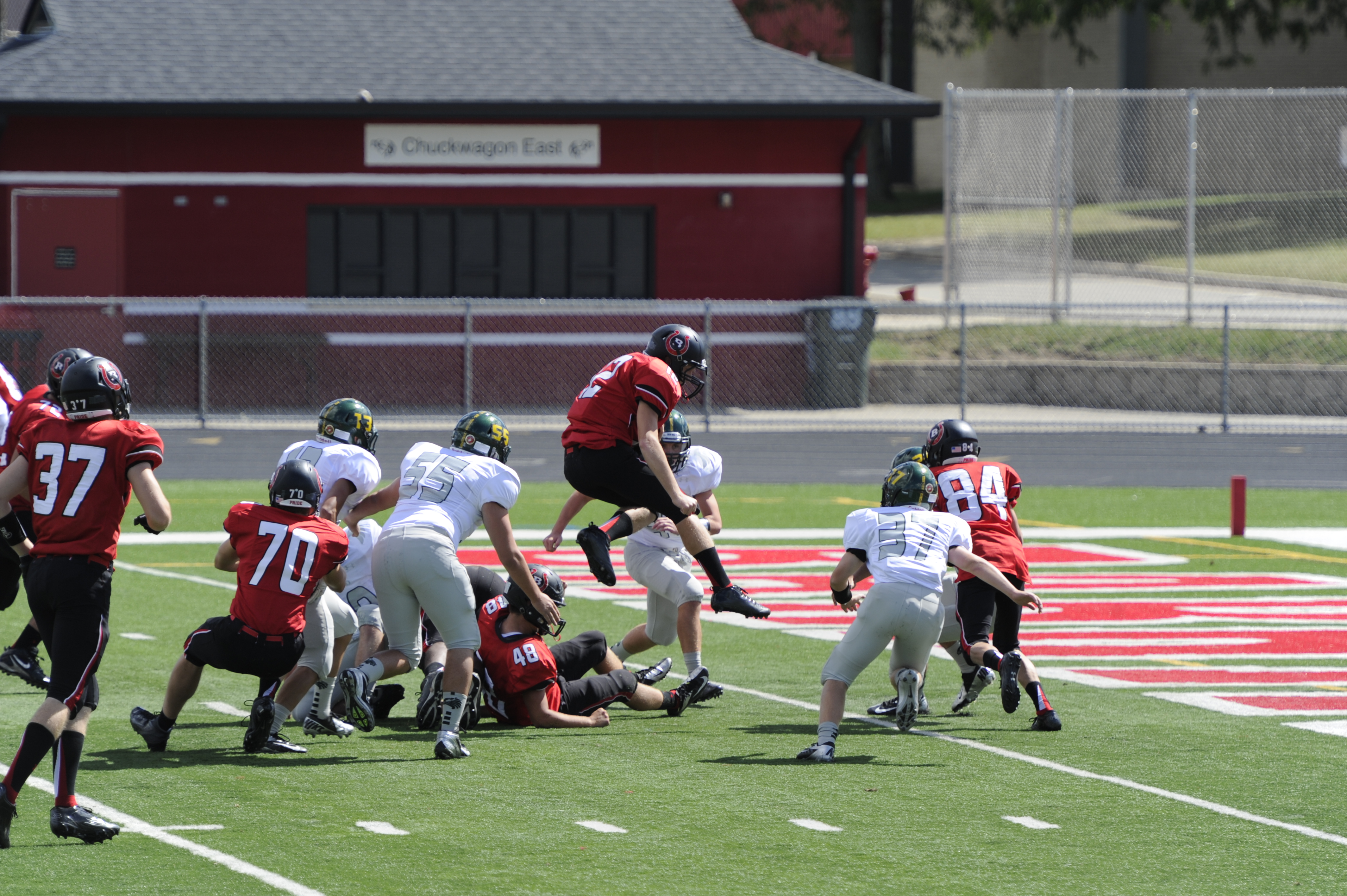
Can a high school football game uncover content lessons for B2B companies? You bet, at least in the mind of this content writer. While watching the game I get an understanding of why it’s important to assess opponents, signal a new play, execute, and connect with an audience. Watch this video that shows a fake handoff by the quarterback, a play that initiates a 65-yard run to score a touchdown. That play didn’t just happen. It was planned.

Understand your Opponents

Your competition is one form of opponent but another is the customer who struggles with his or her end goals, resources and budget. Content that acknowledges those concerns is like good blockers paving the way for the quarterback’s run.

Signal a New Play

If the passes are not caught and the handoffs go nowhere, reimagine your role. No football game is the same and the same holds true for company initiatives. High school kids hear from the coach: “Don’t repeat your mistakes, learn from them.” For companies, content is measureable. Sometimes it takes a bit of tweaking but you can reach your content goals. Yesterday’s content won’t support new ideas.

Execute

Watch what the quarterback does to make the opponent team change direction. You want your content to do the same – get your audience to change direction toward your solution. Get them thinking differently about what is important, performance and balancing cost.

You Gotta Feel It

Include some sensory element that allows your audience to experience emotion. At the football game you hear the roar of the crowd and clapping. Content writers use language and visual design to create mood and tone.

Add an unexpected connection the way this home game announcer did after reporting the touchdown play: “That a boy.” And, “This kid is deceivingly fast.” As for the quarterback, he said: “Just before the play I had a feeling: ‘This is it.” That’s the feeling your content can relay: This is it.

4 Ways to Build Content Through Customer Interviews

Woman interviewing customerBefore conducting customer interviews know how you can build better content and basic interviewing techniques. Interviews are a great way to obtain information for creating personas, customer-centric content, case studies and testimonials. A recent research report from Marketing Sherpa shows that 41% of B2B companies are using interviews with customers to build personas (profiles of your buyer). The report identifies customer interviews as the most effective tactic for developing personas. These usually include demographics, environment and buyer behaviors.

1. Know the End Goal

When conducting customer interviews know what the end goal is before you begin. Are you creating customer-centric content for newsletters, blogs, case studies or websites? In each case, having the customer’s perspective is important. You can learn what customers value most and least from your company and what they want more of. The information can also be used to segment your audience by particular attributes. Adding customer testimonials and case studies builds your credibility. From interviews you can create interesting content rather than a cursory one-liner.

Who should conduct the interview? An employee with an existing relationship with the customer has built trust but is unlikely to get objective answers. A content writer skilled at building rapport quickly and asking targeted questions can be a good resource.

Where to conduct the interview? One-on-one in person interviews are great but when logistics and budgets make that impossible, the telephone or computer are good alternatives.

2. Be Prepared for the Interview

Ask yourself: What do I want to know? Target your questions to get the answers you need. What does your audience want to know? Content is created for consumption. It needs to be relevant. Ask questions your audience wants answered.

Who should you talk with to get the information you need? For example, don’t talk with a purchasing agent if you want to know how your product is being used in manufacturing. Find the person who is closest to the action.

Make an appointment ahead of time to talk with the customer. Be transparent about the reason why you want to talk. The interview needn’t be long. You can get the information you need in five minutes when the person is very busy. Most people like being interviewed if it doesn’t take too long.

3. Listen During the Interview

After asking a question, listen. Do not interrupt during a response. When customers know you are really listening to them, you will get better information. Listen for key phrases and metaphors used by the customer. Gauge levels of emotional involvement. You can tell when someone is excited or disappointed by the tone of voice they use. Make note of what is causing these reactions.

Get the back story. What is your position in the company? How long have you been doing it? What challenges were you facing before purchasing our product/working with our company?

Position the product or service. How does our product or service fit in your work process? What problem does it solve for you? (Look for action in the response.)

What kind of results have you found since using the product?

What do you like best about the product/service? Least?

Have you discovered other benefits from using the product? Or, working with our company?

Add a Thought. I like to end interviews with a question that allows the person to add their own thoughts. “Is there anything you would like to add?” Or, “Did I forget to ask something that is important to you?”

Always thank your customer for taking the time to talk with you. Allow them to review any information that is attributed to them before it is published.

4. Structure Information Gathered

When using customer interview information to create a persona, customer-centric content, case study or testimonial use a consistent format to record the information after each interview.  This saves time and makes it available for future use. A content writer can put the pieces together creating valuable content that differentiates you from your competitors. These are some ways we build better content through customer interviews. Do you think customers enjoy being interviewed?

2012 Content Strategy Trends for B2B

Business StrategyB2B companies will continue to rely on quality content in varied forms to differentiate themselves and their products during 2012. The website is still home base for most companies, but social media and branded content are augmenting their online presence. Marketing budgets are increasing in these areas. Companies are looking for business professionals who can develop content using a strategy that makes sense for their business.

To build relationships online B2B companies are adapting.

Websites

On websites prospects are looking for your location, contact information, what you do, a clear message, and easy interaction (click to chat?). Those not familiar with the company head for the About Us page first after reviewing the Home page. They also want to know who your customers are.

For 2012 you may want to consider using a lighter tone in your content to engage prospects. Be genuine and use simple language. Keep evolving with the design of your site to see what works best as your offers or strategies change.  Ways to add interest might include a blog, twitter feed, customer reviews/ratings or videos featuring your customers.

Social Media

For some B2B companies, social media is becoming a customer service outlet. It is on the social channels that they receive feedback and respond to customer inquiries and comments. Using social media this way can strengthen SEO ranking.

According to a recent survey of B2B marketers conducted by the Content Marketing Institute Twitter outdoes all other channels for content distribution with 74% of B2B content marketers using Twitter followed by LinkedIn (71%), Facebook (70%) and YouTube (56%).

Other content statistics from the survey show the following increases in usage:

  • Blogs: 45% increase
  • Case studies: 32% increase
  • Videos: 36% increase
  • Webinars/webcasts: 25% increase

Branded Content

A study conducted in 2011 by the Custom Content Council and  ContentWise shows that branded content (content produced by a brand that is driven by narrative, not commerce) represents more than 50% percent of the total marketing budget. Why use branded content? The most often cited reason was to educate customers. Branded content has lots of forms including guides with exclusive tips, books, videos, newsletters and blogs that address a particular topic of interest to an audience.

For 2012, more branded content will be used by marketers of all sizes. Nearly three quarters of respondents to the survey believe it is more effective than magazine advertising. Sixty-nine percent think it tops direct mail and public relations.

Content Strategy

Content strategists help companies create and position their content. Strategist Ahava Leibtag predicted that in 2012 more companies will rely on content curation (the vetting of information for customers), delivering and displaying content (think mobile devices) and integrating marketing and communications (social media people trained in customer service).

What becomes apparent is that in 2012 investing in quality content delivered by professional content providers is a good business strategy.

Content For Biz Most Popular Posts In 2011

The Content For Biz most popular posts for 2011 surprised us in some ways. The list contains how-to’s, but also an industry specific post.  The favorite topics reflect our position as journalists who understand content marketing. The most popular posts reference audiences, press releases, content strategy and credible sources as well as methods.

Sharing of posts through social media sites helped us garner more page views. A few of the posts were picked up or shared by Internet leaders including Chris Brogan, Denise Wakeman and Mari Smith. We see a big spike in page views when that happens. Mentioning Facebook and LinkedIn in a title seem to generate traffic as well.

Take a look at our list and add a link to your own Top Ten posts in the comments below.

10. 7 Tips for Getting Your E-newsletter Read

9.  How To Position Your Call To Action

8. The Best Press Release Distribution For B2B Companies

7.  Facebook Tips From LinkedIn Groups

6.  Keep Your B2b Web Content Current And Long Lasting

5.  What Should I Pay A Content Writer?

4.  Are the top 10 Construction Management Firms Missing the Boat on Blogging?

3. A Visual Content Strategy Engages Audiences

2. How To Find Credible Sources For Articles, Blog Posts And Whitepapers

And here in our top spot is the most popular post in 2011:

#1 Secrets Of A Content Sleuth


Go ahead and share a link to your Top Ten posts list in the comments below. Will you being doing anything differently on your blog for 2012?

How to Extend the Life of Your B2B Event with Social Media

How to promote events with social mediaEvents represent  a significant investment for many B2B companies.  Marketers go to great lengths to ensure their event features the right content or entertainment; is held at the perfect venue;  and includes memorable food and beverages. However, it used to be that once an event was over,  there was very little opportunity for marketers to engage customers or prospects who were unable to attend.  There were also very limited ways  to engage with attendees after the event.

Social media has changed all that. It provides companies with an opportunity to extend the life of their B2B events by creating a way to experience the events online. It also allows marketers to use social media channels to reach out to attendees and non-attendees in new ways — often with a multimedia experience. Here are five ways to make social media part of your B2B event strategy.

1. Prior to the event, create a hashtag for the event on Twitter. Hashtags  help people find your event on Twitter and see what people are saying about it. Encourage people to talk about their plans to attend the event. Talk about speakers, content, who’s attending, etc. Remind attendees of the event hashtag before, during and after the event.

2. Before the event, engage prospects with a survey designed to identify their needs.

3. Share photos and videos on Facebook and through social sites such as YouTube and Flickr.

4. Share speaker slides on SlideShare, as well as through your event home page .

5. Interview customers at the event to share what they liked about the event. Post videos on You Tube and your event homepage.

Who’s Doing it Right on Social Media Channels

On John Deere’s Facebook page, you will find an amazing time-lapse video for the Can Do Project – They built a combine out of more than 350,000 cans of food. It took five days to build,  but you can watch it under three minutes.  Even if you missed the event itself, you could still learn about the experience.

Western States Cat does a great job of promoting its Dump Hunger campaign on Facebook. This year their goal is to collect 300,000 pounds of food.

You have to love Bacon Fest Chicago. They keep the excitement for this event  building through their blog,  a You Tube channel and an engaging Facebook fan page.

With a little planning and good use of social media tools, you can keep generating social buzz for your B2B event, long after the event is over.

Are you overwhelmed by social media? Content for Biz can help you formulate a strategy that makes sense for your business.