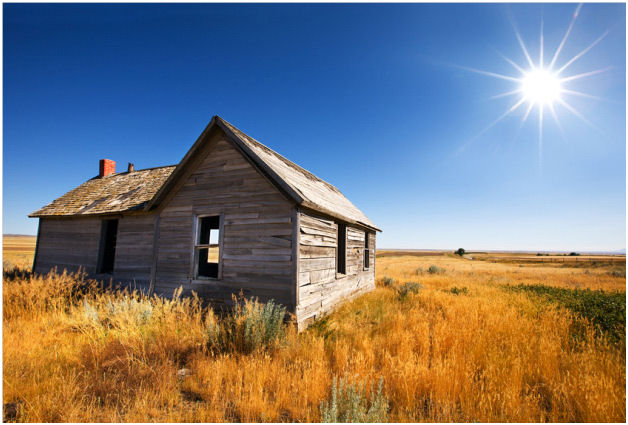
The Cure for Abandoned Social Media Accounts: Strategy and Planning

Did you hop on the social media bandwagon, only to be disappointed in your efforts, not to mention the results?  Were you lured by promises of low cost brand exposure? Are your accounts nearly abandoned or are you overwhelmed by a proliferation of social media accounts for multiple brands? If only B2B social media was as easy as setting up an account.

Take comfort in the fact that you are not alone. These problems are common among the B2B marketers we meet with. However, social media isn’t going away. If your business relies on companies finding you through search engines you need to think twice about abandoning your social media marketing efforts altogether. Increasingly, search engines such as Google are using social connections to serve up relevant results.  Without those social connections, it may be difficult for potential customers to find you.

Unfortunately, in the rush to get involved in social media, many marketers forgot the fundamentals. So before giving up, I urge marketers to step back and evaluate their efforts with the same level of scrutiny they give to their advertising, trade shows and other marketing efforts.

Identify who you want to reach.

Who are your target audiences and where are they online?  Take a common sense approach that prioritizes your markets and the social media sites that best reach them. If you don’t know, look at how publications, associations and competitors in your markets are using social media. Don’t feel obligated to use every social media channel.  Focus on the social media networks that make sense for your brand, and those that you have the resources to do well.

Figure out how you can use social media to better serve customers and prospects.

All the social media accounts in the world won’t make customers want to engage with you. Customers and prospects want something of value and it’s up to you to figure out what they need or want. Provide a good reason for people to connect with you. Add value and you will build connections that will enhance your company’s visibility and reputation.

I agree with Jay Baer, who said that ,“The goal is not to be good at social media. The goal is to be good at business because of social media.”

What are you good at? What do customers look to you for? Can it be translated into engaging social media content?
Realize that your business may need to create something or take action.  While you can leverage content and expertise  you already have, social media is not effortless.  Whatever needs to be done,  it should be good for business and good for your customers.

Recognize that each social media network is unique. Conversations should be customized for the audience as well as the platform. Just as in real life you wouldn’t say the same thing to prospective employees as you would to prospects, avoid pushing the exact same information out on all of your social media channels.

Your plan should outline how you will engage on social media sites: what you will say, how you will say it, to whom, and how often. And not to be overlooked,  who will be responsible for what. But here’s the hard part, you must do it over and over and over again.

Create sustainable content

By creating a social media plan for this week, next week and the week after, you uncover the resources needed for sustainable content. Aim for a calendar that features 12 months of potential conversation topics, videos, blog posts, case studies and whitepapers that address your goals and serve your customers. There is always room for modification, but with a carefully crafted strategy and planning process you will ensure that your social media sites don’t become ghost towns, reflecting poorly on your brand’s image.

Are you taking a second stab at social media? What will you do differently this time?


Contractor Websites Part III: Getting Organized

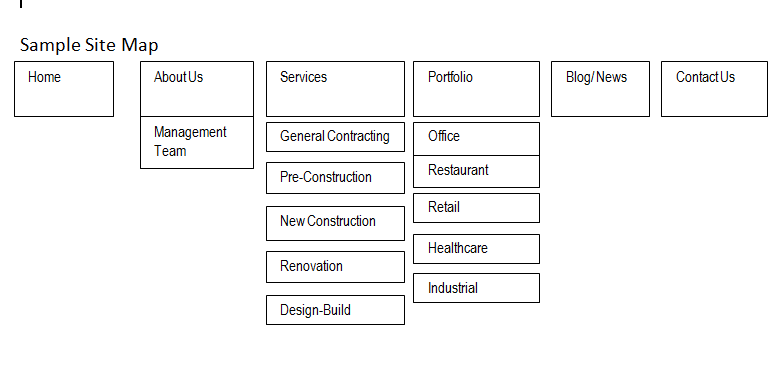
Whether you ask someone else to project manage your new website or do it yourself, the business owner, content and development team needs to be on the same page with what pages are needed and how visitors will navigate through the site. So clients can visualize this, I typically create a rough sitemap that looks something like this:

When deciding if you need a separate page for a service such as pre-construction, it’s useful to think about the key words you want to rank for. Listing services separately vs. one general page for services, provides an opportunity to rank in search engines for different terms. Each page should have a unique purpose. You want to avoid creating similar content on each page.

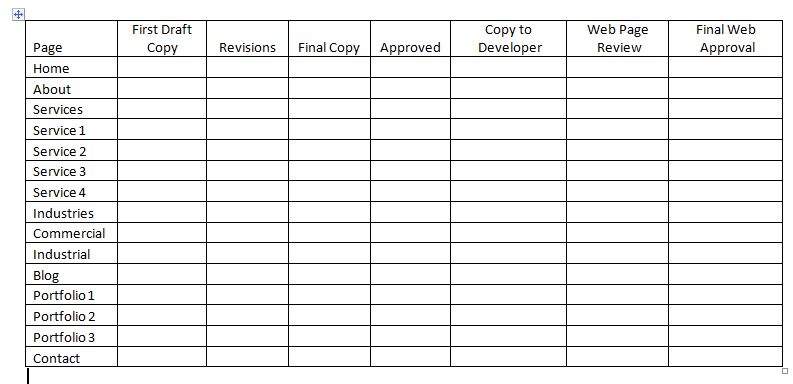
To keep the pages organized I devote each page to a line in an excel sheet with various columns tracking progress across the top. You might have some pages that don’t flow off the main navigation, but might be included in a footer, such as “privacy policy,” “careers” or a form for subcontractors to complete. Be sure to include all of these on your excel sheet.

Graphics

Now that you have a general idea of the content, gather your previous research on sites you like and decide on the look and feel of the site. Keep in one folder all of the identity elements such as the logo and hex values for the company colors.Begin compiling images to support each page including project photos, people shots, awards, etc. Now is the time you want to identify areas where your photos are lacking, so you can either hire a photographer or search for stock images. You don’t want to be fumbling around looking for photos when the site is nearly completed. As much

Select a theme

If you are working with a web developer, they will either create or customize an existing theme for you, based on your needs. However, if you are creating your own website, you will need to find a WordPress theme that fits your objectives. Themeforest has a great selection of templates. With so many choices, the task can be quite daunting. Here are things to look for:

  • Make sure the template is fully responsive on all devices.
  • Make sure the theme will accommodate popular WordPress plugins such as Askimet for spam, Yoast SEO, Contact Form 7 and integrations to your email marketing platform. Plugins can give your site a wealth of functionality. In general, I like a theme has been highly rated by many users and not one only a few people have purchased.
  • If you want to customize the color, make sure the theme supports this. Avoid flashy animations that may slow down your site and keep people from getting the information they need.
  • Make sure you can get support when you need it. Check out the reviews.

Once the theme is chosen, content written and photos selected, you will be ready to get started. While we won’t get into the nitty gritty of creating a website, we will help you learn to evaluate an review your site, upon completion. Next up: Contractor Websites Part IV: Final checklist

Contractor Websites Part 2: What needs to be done and who will do it

Determining which tasks you can take on yourself and which you need to outsource to professionals is a key decision for business owners. Of course, anything you can do yourself can be a savings, but you also need to consider your expertise as well as impact it will have on the time needed to complete the project.

Project Management

One of the key tasks that most business owners don’t think about when creating a website is project management. The person who takes on this role will develop a schedule for completing the website. They serve as a liaison between all members of the team, including the business owner or marketing executive, web developers, graphic designers, SEO specialists and content writers. They will also create a site map for the developer and content writers to follow as they work through what is needed to complete the project. We see many projects get delayed because owners get sidetracked with pressing business needs, while their website team waits for copy, photos, etc.  Choosing a website template, finding images, and writing copy, can take far longer than you ever imagine.

Web Design

Whether you are designing an original website, or customizing one of the thousands of templates available online, you may hire a professional website developer to do the work. Open source systems such as Wordpress make it possible for those without coding experience to create their own websites, but be prepared to invest a considerable amount of time and effort to learn how to do it. Skills among website developers also vary. Some are better at coding (the back-end work behind a website) and less adept at design.  Others are better at design, but not adept at coding. Once the design is created and/or approved, the web developer will insert the photos and copy into the site, and style it according to the approved design.    

If you decide to work with a template, be prepared to spend hours looking for the one that will fit your content as well the look and feel you want for the site.   The site you choose should be both  mobile and seo-friendly? Does the developer offer support? Can you determine if you can adapt it for your needs? If you are not comfortable in this arena, it is best to work with a professional.

SEO

Many a business has completed its website only to find out that the site is not optimized for search engines. That’s because search engine optimization, commonly called SEO, is its own specialty. While the web developer may add titles and metadescriptions to the site, it is not his or her job to create them. Writing the titles and metadescriptions should be based on business objectives, an analysis of key words for search traffic, competitiveness and other factors. An SEO content writer or seo specialist who has done the necessary analysis and consulted with the business owner should provide this information to the web developer. 

Content Writing

Once you determine the pages you need, content writers will get to work creating the words for each page.  If you want your site to rank in search engines, provide your writer with the keywords you want to rank for based on your research. Provide the writer with an idea of the amount of copy you want on each page, or the writer can write to the design. We base our estimates on 200-400 words per page.  Page titles and metadescriptions are also provided for each page.  Think about the tone you want for the copy. Should it be funny or serious, formal or casual, enthusiastic or all about the facts?  Convey your desires to the writer.

We’ve had several clients come to us frustrated after working with writers who did not understand their business.  If you want to avoid spending a lot of time explaining your industry, look for someone with expertise in your field.  Writers will benefit from conversations with customers and other members of your team, especially those who interact with customers. Provide them with access to these key resources as well as any other documents from your company such as proposals, brochures, videos, sale presentations or marketing material.

Graphic Design

Do you have a logo and other branding elements already established or you looking to create something new? When you create a website it is a good time to decide if your existing logo could use some revamping. A graphic designer can help ensure that your branding is carried through across all media, including the website.  They can also have a good eye for selecting images that will be used throughout the site.  

Photography

Images are one of the most important elements of a website design. Nothing will send potential buyers off your page faster than unprofessional photos.  Hiring a professional photographer is the best way to get the image you want and the quality needed. While stock images offer an economical alternative, the photos will not be unique to your business, and your site can suffer from a generic look. There also may be limitations on their usage. Stock photos are not a good option to represent work, as you might oversell a potential client.  As you prepare a list of pages for the site, make a list of photography needs  for each page and how you will source them. Allow your photographer to review website design so he can envision his work in place and ask questions.

With a better understanding of everything that needs to be done, you can assess the best way to get the job done.

What a contractor needs to know about building a website – Part 1: Upfront considerations

Part 1 of a 4-part series on website development

Creating a first website or even a revamp of an existing website is a learning process for most contractors. Most underestimate the time, talent and work that go into a successful site. Projects often hit stumbling blocks because business owners don’t understand all the steps involved. This series of posts takes business owners through the process of building a website sot hey can make better decisions about who they choose to work with, the type of site they design, and how they can best achieve their goals.       

For most businesses the website is center of all marketing efforts, working 24/7 to communicate the value of the business to visitors. As a business owner, you need to put on your marketing hat when developing the website. If you will be seeking help from web developers, content creators and/or graphic designers you need to provide a basic overview of the company’s business and determine what you want your website to accomplish. Here are some of the questions we like our clients to answer.Providing theses up front should save time and resources.

  1. What audiences are you trying to reach? Are there multiple industries or audiences that use your products and services? How will the website address their specific content needs?
  2. What makes your business unique?  The unique selling proposition (USP), is a factor that differentiates a product or service from its competitors, such as the lowest cost, the highest quality, experience, etc.
  3. What services or products do you offer?  Will customers be able to purchase online? What search terms would potential customers type in to find a business like yours online? Do you envision a page for each of the services?
  4. What actions do you want website visitors to take? Do you want them to request a quote, sign up for a newsletter, download a whitepaper?  Do you want them to call, email or chat online?
  5. What are your primary objectives for the website? Do you want to generate leads from organic search? Will you drive traffic from paid advertisements and other listings or do you want to just want a professional website you can refer potential clients to?
  6. Are there any specific business challenges you want the website to address? For example you may want to website to convey that you work for both residential and commercial customers.
  7. What websites do you like and why? Analyze competitive sites and sites outside your industry to determine your likes and dislikes. Similarly, you can provide examples of sites you don’t like. The key elements of the site to analyze are navigation (How easy is it to find things?), content (Is it helpful? Do you like the tone of the copy?) and design (Do you like the colors, type and photos?).

Having these questions answered up front will give developers, designers and content writers a clear picture of what you need and want, right from the start. Just like construction, time spent up front saves time and money later.

Up next: Who is doing what on your website

The Post-CONEXPO-CON/AGG Marketing Challenge

Using content to maximize your investment in North America’s biggest construction show

Topcon booth at conexpo-CON/AGG 2017By now, your feet have probably recovered from CONEXPO-CON/AGG & IFPE 2017, the global mega-construction trade show, held in Las Vegas, NV, March 7-11, 2017. However, if you were one of the more than 2,800 exhibitors that occupied a record 2.8 million-plus net square feet of exhibit space, and attempted to engage with 130,000 attendees, the real work is just beginning.

The most obvious post-show task is to follow-up with those who visited your exhibit. However, studies show that nearly 70 percent of exhibitors at a given trade show never contact a prospect who visited their exhibit booth. While that stat may be shocking, many companies struggle to find the time and resources for post-show follow-up. However, even now, weeks after the show, it’s not too late to take charge of post-show marketing efforts.

There is still time to capture and maintain the interest in your company and products among those who attended CONEXPO-CON/AGG & IFPE 2017 with the goal of establishing a long-term relationship with them.

 Post-Show Success Begins and Ends with Content

Here is a simple guide to post-CONEXPO-CON/AGG & IFPE 2017 content marketing:

  1. Publish content on your company’s website.

The biggest aggravation for any potential or existing customer  is not having current information available online. Immediate access to information is what all consumers demand today.

Be sure that your website is up-to-date, especially with information about the products and services that were displayed at CONEXPO-CON/AGG & IFPE 2017. There are probably more people interested in your products who did not attend the show. Consider this an opportunity to make them feel like they were there.

Include access to product specifications, photos taken at your exhibit and photos of equipment in field situations. If products were demonstrated at the show, be sure to include an action-filled informational video. Include other videos as well. Have a company spokesperson, a product manager or company engineer, explain product features and benefits via video because everyone wants to hear from an informed voice.

Collectively, your online content surrounding the show will enhance your sales message and generate enthusiasm and leads among website visitors.

2. E-blast content to those who visited your exhibit.

Be proactive with attendees who visited your exhibit.  Send a personalized email to everyone who visited.  It should say something like, “Dear Mr. Smith. Thank you your visiting our exhibit booth at CONEXPO-CON/AGG & IFPE 2017. Here is product information about…” The email should link to a digital pdf or web page highlighting your company’s activity at the show, including information about the products and services displayed. To drive response, include as many responsive offerings as possible so you’re not limiting content directed toward a narrow group or low level of interest.

Link to videos of the displayed products working on a job site, specifications, case histories, testimonials, and white papers. Remember, the more relevant content and links you offer, the better chance the recipient will engage in your products, services and company. If possible, include the name of the attendee’s local dealer/distributor or outlet where your products can be purchased, if not, provide the full list.

Finally, include a call to action. Provide the recipient with specific options for engagement, such as “Download our case history,” “Read our white paper,” “Request a product demonstration,”  “Download product specs,” and more.

After the person engages, ask for additional information. This can provide you with new intelligence for more successful follow-up efforts. For example, you might ask about the size of the company, products owned or when they plan to purchase.

Be sure to track and store info on who engages with the e-blast content for further follow-up. For example, if Mr. Smith clicked on the link for Product A, be sure you include him on a list of those interested in Product A.

3. E-blast content to those who did not visit your exhibit booth, but attended the show.

As an exhibitor, you can purchase a list of those who attended the show. Request the list by the type of business that reflects your ideal prospect.  (i.e. highway contractor, building contractor, sales volume; etc.) After you receive it, remove the names of anyone who visited your booth.

Now create a similar e-blast to those who visited your booth, with a link to a digital pdf or web page highlighting your company’s activity at CONEXPO-CON/AGG & IFPE 2017.

The email for non-visitors should also personally addresses the attendee, saying something like, “Dear Ms. Jones. We’re sorry we missed you during CONEXPO-CON/AGG & IFPE 2017, but wanted to be sure you were aware of the new products and services we had on display at the show…”

The same recommendations for content, calls to action and database management apply to the email for non-visitors of your booth.

4. Use social media for post-show content.

In addition to your website and email follow-up, use social media channels to reach CONEXPO-CON/AGG & IFPE 2017 attendees and others of interest to your company. Facebook, Twitter and LinkedIn can be particularly helpful in spreading the word, both domestically and globally. These platforms open the possibility for connecting with other customer groups of interest to your company.

One particular way of using social media is by rolling out, on a daily or weekly basis, a link featuring a product displayed at CONEXPO-CON/AGG & IFPE 2017.

5. Product blog posts extend the value of your investment in CONEXPO-CON/AGG & IFPE 2017.

What better way to get a dialogue started about your products and company than through a blog that can be included on your company website and in e-blasts to your CONEXPO-CON/AGG & IFPE 2017 list?

Let readers ask questions. If you wish to avoid a “comments” section, then include a Q&A, which allows you to maintain control of the conversation. You might even call it “Q&A from the CONEXPO/CON/AGG Show”.

Blogs can also include videos, testimonials and just about any other original or repurposed content you wish to make known. Answer the questions that potential customers might have about new products and new technologies.

6. Explore Augmented Reality and Virtual Reality Content

Augmented Reality and Virtual Reality have arrived and will soon be staples of business-to-business marketing programs. Each technique can be embedded in your content and can serve as an integral part of your CONEXPO-CON/AGG & IFPE 2017 promotion.

Augmented Reality provides a live direct or indirect view of a physical, real-world environment whose elements are augmented (or supplemented) by computer-generated sensory input such as sound, video, graphics or GPS data.

Engagement in Augmented Reality (AR) is relatively easy. In its simplest form, the recipient downloads your AR app (Free from a Google or Apple store). Much like a QR code, the app will scan a code you provide with the recipient allowed to view what you have offered on their phone or other mobile device.

In the case of CONEXPO-CON/AGG & IFPE 2017, the AR offering could be everything you’ve offered on your website, through e-blasts and social media, and more!

Virtual Reality (VR) simulates a real or imagined physical event. Many companies now use VR in product training or to demonstrate a product’s capability..

With the excitement of virtual reality, you might offer various twists and turns to enhance the understanding (and the excitement) of your products and services.

Use Content to Your Advantage

Instead of fretting over the trade show bills, it’s time to allow content, both original and re-purposed, to amortize your company’s investment in CONEXPO-CON/AGG & IFPE 2017. Most of what you need is already at your fingertips. Take the extra steps you need to continue the momentum created by a successful exhibit. If the statistics are correct, you will be among the 30% of companies who are taking trade show follow-up seriously.