Writers Need Answers Before Content Creation Begins

Beginning road signWhat happens before and after content creation may be just as important as the act itself. Content creation is a process. Below are questions a content writer needs answered at the beginning of that process.  I will address what’s needed during and after content creation in upcoming posts.

Who is your audience?

Writers write for people. They want to know how familiar your audience is with your brand, product, or service.  Share what you know about your customers’ preferences, interests, behaviors, and demographics. Knowing this, the writer can create content that best serves your audience’s needs and wants.

Content targeted to existing customers is different than that for prospects or first time visitors.  The writer can help you decide if segmenting audiences is a good content strategy.

What are your business objectives?

If you want to expand revenues, sensitivity to the purchasing cycle is necessary. If your objective is to widen your reach to global markets or narrow it to a region, content can be customized to reflect that. Increasing brand awareness requires lots of relationship building through multiple channels including social networks.

What do you want your audience to do?

Think about it. Your answer determines content prominence, priority, and navigation. Each piece of content serves a purpose.  Don’t confuse your intent (educate, influence) with audience action. The latter is measureable.

Who are your competitors? Or, what websites do you like?

Oftentimes companies avoid the question about competitors. I add the “Or” question for those squeamish or uncertain about competitors. Market research is important for content writers. Not so they can emulate your competition, but so to differentiate your company.

A favorite website can give a clue on what you like and the tone of voice you may be receptive to, if you haven’t already determined that.

Who will act as sources for information?

Finally, I ask for the names of subject matter experts within the company and whoever interacts most with customers. I also ask for the names of two or three satisfied customers who are willing to share their stories.

Not until I have the answers to these questions do I begin the tangible aspect of content creation.  Do you need help getting the content creation process started?

How Content Fosters Business Relationships

Handshake showing a satisfying business relationshipMy father often said, “Show me your friends and I will show you, you.” He was talking about reputation and influence. One of my clients, a professional service provider, said: “We only do business with people we like.”

While the words “friends” and “like” now have new connotations online, I wanted to explore how content can foster friendly, profitable, influential relationships. Your level of engagement with customers should be intentional. Once those decisions are made, these content ideas can support your intention.

Help People Make Beneficial Decisions

Those who already own and use your product are decision makers. They can be good sources for relaying how they benefitted and why they decided on you. Let them speak through testimonials, in comments and profiles.

Customers are investors in your company. How did they first connect with you? How do they consume? Learn their language and patterns of behavior. Recognize their skills. Benefit filled content reinforces their decisions.

Empower your employees. Train them to use social media and give them a guideline that reflects the human side of your business.

Give advice and recommendations on what is most useful under what conditions. Highlight “most popular” items.

Assess the tone of your content. If it doesn’t sound like you, change it.

Offer Something New

People get bored. Use whatever methods and co-creators you can find to offer something new. Create a difference and build strong content around it. You will gain members and affiliates who share your interests and insights.

Innovation gives others a reason to write about you and widens your audience of like-minded people. The more stakeholders, the better.  I have seen some great things come from strategic partnerships between businesses.

Be Dependable

When it comes to their needs everybody wants to be consulted and engaged. Don’t sell. Lead your visitors on a path of discovery. Nurture leads with infographics, ebooks, white papers and videos that convey your reliability as a source.

Stay trustworthy. Tell an authentic story. Ask if their questions were answered (this can be an automated email response to those who download your material). Listen and respond.

Be consistent in your purpose and commitment to improve. Become transparent. Your friends, followers and fans and their friends, followers and fans will be more likely to heed your call to action.

The president of a well respected non-profit told me her secret to building lasting relationships with generous donors: “Always, always say thank you. Then say it again.”

Thank you for reading this post. What are some of the ways you build satisfying business relationships online?

Write Your Company History in 6 Sentences or Less

Because people scan web copy your company history needs to be chunked into simple paragraphs of six sentences or less by topic, event, or key dates. Your audience will follow the path laid out if the story is compelling and the navigation is well organized. Always include information that is useful from the customer’s point of view.

Include the date of the company’s founding, the founder name (when appropriate) and why the company was formed.

The Hershey Company History page begins: “Our company originated with candy-manufacturer Milton Hershey’s decision in 1894 to produce sweet chocolate as a coating for his caramels.”

Delcam’s first line reads: “In 1965 Donald Welbourn, Director in Industrial Co-operation at Cambridge University, had the vision to see the possibility of using computers to assist pattern makers to solve the problems of modeling difficult 3D shapes.”

What makes the Hershey content more appealing? It is shorter, begins with the personal word “Our” and reveals that the chocolate was an afterthought used to supplement the caramel.

Hershey’s history is told in chunks consisting of just a few sentences each using this clever navigation system.

Software solutions company SAS shows visitors an opening Overview when the Company History menu item is selected. How many people do you think are enticed to click on the years tabs (below) after reading the Overview?

Tab titles that describe their story – Leaders, Roots, Global Frontiers might work better. If a visitor does click on one of the years tabs, icons appear below that are clickable. This is a nice navigation technique for chunking more information with just a few sentences. Each click through paragraph needs to be self-contained. In the paragraph above a project is mentioned but we don’t know what project they are referring to.

Google lists its chronological history of events on a single page by year this way:

1997

  • Larry and Sergey decide that the BackRub search engine needs a new name. After some brainstorming, they go with Google—a play on the word “googol,” a mathematical term for the number represented by the numeral 1 followed by 100 zeros. The use of the term reflects their mission to organize a seemingly infinite amount of information on the web.

As long as the reader is learning something new about the company and its products the History page is working. It creates a closer connection with your visitors.

Finally, your company history is worth celebrating. Find a way to let your customers celebrate with you by offering special discounts or trivia contests with a prize going to the winner.

Is Your Website Content Working?

Your website content should increase traffic to your site, generate leads and links, and convert visitors to paying customers. Here are a few simple tools to help you determine if your content is serving its purpose.

Keyword Numbers vs. Keyword Use

Many companies build their content around “optimized” keywords to increase traffic to their site. Google’s Adwords Keyword tool is a popular way to search for the right words. Entering a generic search term like “construction” will provide a list of keywords. Construction company shows 1 million Global Monthly Searches and 450,000 Local Monthly Searches. These numbers reflect searches that include all sorts of other words such as “best” or “jobs” that were added onto the original term – construction company. To get true keyword counts from the Adwords tool, try this.

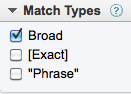
Under the keyword search box select:

On the left column in the Match Types box, change the default setting from Broad to Exact. Try it again by selecting Phrase. You will see the numbers drop to reflect the exact terms and phrases people enter into the search box.

These are the keyword terms you want to build your content with to increase traffic to your site.

Who is Linking to What Content

Some sites create content just in order to build links. Is anyone linking to your site? What about links on your competitor sites? Find out using SEOMOZ Open Site Explorer, a link analysis tool. Enter your URL or a competitor URL in the address box. Review link data on the Top Pages tab and Full List of Link Metrics tab.

Generating Leads With Content

Including links to blog posts, eBooks, whitepapers, brochures, coupons and landing pages can give you quantitative data on the level of visitor interest.

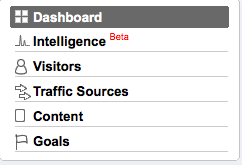
Google Analytics will show how many new and returning visitors came to your site and how extensively they interacted with your content. But do you know which companies are visiting your site and what content is engaging them? From your Google Analytics account Select View Reports to access the Dashboard. From there select Visitors > Network Properties > Service Providers. You will see a list of companies visiting your site.  Add filters to refine this list.

Convert With Content

Which pages have created the greatest conversions and on what pages did visitors act on the call to action? From the Google Analytics Dashboard select Content > Top Content to see how each of your website pages is performing. You will find the average time on site, page views, and bounce rate but also check out the metric under $ Index. This metric offers a way of ranking the content by page. Your page $ index will show what pages are converting. Create custom reports from the Dashboard using Goal > Total Conversions and Conversion Rate to get more precise information.

Content can be improved over time as you learn what works and what doesn’t. Knowing this allows you to make smart decisions when it comes to your website content.