Ad Blockers: Another Reason to Focus on Content

If you rely on display ads rather than content to generate leads online the growing use of ad blockers may cause you to reconsider. With one click, free ad blocker add-ons are available for every popular web browser. They do what they say they will do – block ads from appearing on all web pages including Facebook and YouTube.

It seems many website visitors are annoyed by a certain kind of advertising. Pop ups, moving animation, and use of audio are among the most annoying. Ads that cover up content irritate visitors too.  Google has banned this kind of advertising on its pages. They require static ads and prefer text only without images. They also have rules for ad placement (can’t obscure content). They believe targeted ads enhance the user experience. The default filter on the Mozilla Firefox add-on takes a similar approach. But, the user can choose to block all ads by simply changing the default.

The use of ad blockers is growing. ClarityRay, a company that offers ad block alternatives, reports that 9.26% of ad impressions are blocked in the U.S. and Europe. Some solutions to soothe the ad-intolerant include paying for an ad-free experience as a subscriber. This can help worthy sites that rely on ad revenue stay in business.

Sponsor Content, Feature Content

If you want to generate leads, don’t rely solely on ads. Start generating leads and building social connections through content. Support high quality content as a sponsor, lead online conversations or include feature content on your company website.

Sponsored content is much less offensive to visitors than flashy ads. Food Management magazine has a page on its site for sponsored content including videos and recipes from food companies. Many newspapers online now dedicate a page to sponsored content. Johnson & Johnson’s partnership with the Huffington Post helped create the Post’s Global Motherhood section. The page makes it transparent that J&J is a sponsor.

 

Example of sponsored content


On the site Johnson & Johnson has an ad as well as their twitter feed. Some sites are ridding themselves of banner ads and replacing them with discussion platforms. The primary commenter is required to monitor the conversation. This is a good way to learn what your audience cares about. Feature content on your site may include white papers and case studies. Share original content and connect with customers.

The use of ad blockers is predicted to double in the next 20 months according to ClarityRay’s research. People are looking for content, not flashy ads. They don’t want gimmicks that interrupt their experience on the site. Becoming a sponsor of quality content or creating your own feature content will position your company well. Ad blockers are one more reason to focus your attention on content.


 

Measuring Social Media Beyond ROI

Measuring tape unravelledMarketing managers want tools for measuring social media ROI but the answer may be found in recognizing patterns, reporting on results and establishing closed-loop business models.

Tools can measure quantities but interpreting patterns may be your best bet in substantiating your efforts. In his four part series on measuring social media, J. Michael Roach at Kimbermedia summarizes ways to obtain information/analytics on social media interactions. He covers Facebook (Insights), Twitter (www.twentyfeet.com), LinkedIn (Page analytics) and Google (Google analytics). Obtaining and understanding the data requires monitoring and evaluation. He writes “…notice how different types of content will generate more interest than others.”

In his recent post, 5 Ways to Measure Results of B2B Social Media, Jeffrey L. Cohen expresses the importance of measuring and reporting on social media results. He says it determines success and shows value. I would add another reason: show where improvement can be made. He advocates measuring followers, conversions, leads & sales, cost savings and ROI to get a clear picture.

Giselle Abramovich celebrates the arrival of social media ROI.  She cites the Link Like Love platform introduced by American Express. The platform is described as a closed-loop business model. Cardmembers can sync their cards with Foursquare, Twitter and Facebook to get deals and offers from partner companies. Accounts are credited after purchases. The purchase can be tracked to the channel it came from.

In order to measure social media ROI marketers need to understand the strength and weakness of metrics, how to report results, and look at the advantages and disadvantages of the business model. What content is generating leads? How many subscriptions have been added? What platforms have the highest conversions? It takes more than numbers to understand the dynamic of social media and its return on investment.

Do you have a plan or process for measuring social media beyond ROI?

Is Your Website Content Working?

Your website content should increase traffic to your site, generate leads and links, and convert visitors to paying customers. Here are a few simple tools to help you determine if your content is serving its purpose.

Keyword Numbers vs. Keyword Use

Many companies build their content around “optimized” keywords to increase traffic to their site. Google’s Adwords Keyword tool is a popular way to search for the right words. Entering a generic search term like “construction” will provide a list of keywords. Construction company shows 1 million Global Monthly Searches and 450,000 Local Monthly Searches. These numbers reflect searches that include all sorts of other words such as “best” or “jobs” that were added onto the original term – construction company. To get true keyword counts from the Adwords tool, try this.

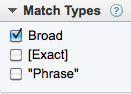
Under the keyword search box select:

On the left column in the Match Types box, change the default setting from Broad to Exact. Try it again by selecting Phrase. You will see the numbers drop to reflect the exact terms and phrases people enter into the search box.

These are the keyword terms you want to build your content with to increase traffic to your site.

Who is Linking to What Content

Some sites create content just in order to build links. Is anyone linking to your site? What about links on your competitor sites? Find out using SEOMOZ Open Site Explorer, a link analysis tool. Enter your URL or a competitor URL in the address box. Review link data on the Top Pages tab and Full List of Link Metrics tab.

Generating Leads With Content

Including links to blog posts, eBooks, whitepapers, brochures, coupons and landing pages can give you quantitative data on the level of visitor interest.

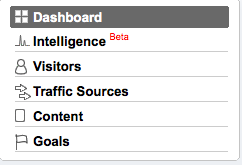
Google Analytics will show how many new and returning visitors came to your site and how extensively they interacted with your content. But do you know which companies are visiting your site and what content is engaging them? From your Google Analytics account Select View Reports to access the Dashboard. From there select Visitors > Network Properties > Service Providers. You will see a list of companies visiting your site.  Add filters to refine this list.

Convert With Content

Which pages have created the greatest conversions and on what pages did visitors act on the call to action? From the Google Analytics Dashboard select Content > Top Content to see how each of your website pages is performing. You will find the average time on site, page views, and bounce rate but also check out the metric under $ Index. This metric offers a way of ranking the content by page. Your page $ index will show what pages are converting. Create custom reports from the Dashboard using Goal > Total Conversions and Conversion Rate to get more precise information.

Content can be improved over time as you learn what works and what doesn’t. Knowing this allows you to make smart decisions when it comes to your website content.