Internet Marketing Begins with Quality Content

One of the ways quality content can work in Internet marketing is to position your company as a knowledge center. Your knowledge space supports your brand and your customers’ need for information. Planning, creating, and publishing relevant content serves as a pathway for successful Internet marketing.

Visitors to your site are in need of fast answers. Your knowledge space should be helpful to your audience (market segments, customer profiles), be easy to navigate and include news, business insights, and community.

News

Offer outside reference sources as well as your own news. A content writer can write press releases, conduct interviews, find relevant timely links and keep this page updated daily. The page can serve as a kind of business radar uncovering business intelligence from a variety of credible sources. For an example of one such source see the Wall Street Executive Library.com

Business Insights

In this section describe methods. Include case studies, research papers, best practices and standards. A content writer can create and edit such materials, describe new tools and re-purpose existing content as blog posts. Content can take on various other formats. These may include profiles of companies (your suppliers, customers) and interviews with individuals who are leaders in the field. See Accenture’s Latest Thinking page for an example.

Community

Add a forum to your site for members to exchange information about trends, methods, and key issues of the day. At Evernote there are multiple forums for different platforms and audiences. Tips and suggestions abound.
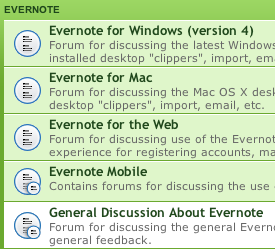
Evernote forums

Creating a robust presence through social media sites is another way of inviting visitors to participate in a community created by your company.

What is most important is that you deliver relevant content in a way that your prospects can find and understand. Your company’s true value proposition becomes apparent. The big promise to visitors of your knowledge space is to improve business performance. This is true no matter what product or service you are selling.

Having trouble positioning your company as a knowledge center? We can help.
3 Best Sites for Tracking Content Trends

Content writers and industry professionals need to track trends to stay current, find topic ideas to write about and learn what terms people are using to search the Internet. You can gage what keywords and topics are trending outside and within your industry, today, last month, and annually using these three best sites for content trend tracking. This is a routine I find effective as a content writer and communications strategist.

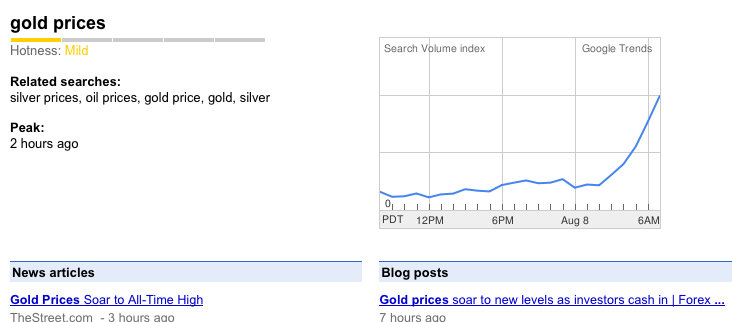
First, check out Google Trends. Early this morning some trending topics were “gold prices,” “Nestle” and “Stephen Hawking.” The price of gold is surging to new heights. If you are in the finance world, adding the words “gold prices” to your blog post,  e-newsletter, or social media titles today will likely increase your traffic.

Google trends page

You can change the date and see what the search trends were any day in the last year. Lots of people search for the Dow Jones Industrial Average using “djia.” Use the right abbreviations/terms and you have a better chance of connecting with your audience. Google Trends is updated every hour. You can subscribe to “Hot Trends” through an RSS feed.

Trends Buzz page

Trends Buzz gives a great overview of the most searched words at the moment on Google, Yahoo, Twitter, Alexa, Blogpulse, Wordtracker, Wikipedia and more.  Clicking on the term link opens up a listing of content on the subject.

Alltop pageMy other favorite site for reviewing trends and topics is Alltop. The home page has popular articles by good writers. You can search by industry or keyword to get all the most searched for topics. It’s sometimes hard for me to get off this page. It shows how great headlines draw reader interest.

Use these sites for tracking content trends and audience patterns emerge. Understanding how popular content fluctuates can help you plan your content accordingly. Knowing what words people use to search and the power of a good headline are added benefits of monitoring these 3 best sites for tracking content trends.

How are you using Internet trends to drive traffic to your site?

How to Convert Customer Knowledge into Content

customer serviceDaniel Russell is a “user happiness” researcher and team leader at Google. It is his job to understand what people do when searching with Google. He teaches classes on Internet search skills and blogs on the topic to share what he knows. He also learns from the users who attend his class and read his blog posts. For his knowledge to become a true company asset it needs to be enhanced, managed and effectively used as content.

Such knowledge driven content encourages companies to stay close to their customers. It can easily adapt to changes in customer needs. It can also find its way into product design if shared properly.

To convert knowledge into content follow these steps.

  1. Customer knowledge is a two way street – give and get.  Daniel’s post on Google’s Inside Search blog is an example of building product and customer knowledge into findable, shareable, credible content. Find a person at your company who can play the role Daniel does at Google.
  2. Enhance. Do not simply store away what is known in a customer management system or database. Teach a class or webinar that allows you to observe and gather. Write a blog post that describes hands-on experience. From it, users will sense something about the company culture as well.
  3. Manage. Daniel doesn’t write just one blog post, but a series of posts on Internet search skills. The content needs to be aligned with company objectives and user interests. He tells us that recent changes have been made for searching images so the examples he uses involve searching for images.
  4. Use Effectively. In your blog posts and classes include examples and new ways to use the product. Daniel shares ideas on using Google Images that the average user would not know: How to verify the gender of a name and how to find a book without its title.
  5. When you need help on how to enhance, manage and effectively use knowledge driven content talk with a content strategist.

What kind of content are you creating with your customer knowledge?

Content Strategy for Information Overload

During a debate between Norman Mailer and Marshall McLuhan the subject of information overload came up. The year was 1968. McLuhan, regarded by some as the father of media studies, said when people experience information overload they resort to patterns.

One such pattern was detected and studied by usability expert Jakob Nielson. Through eye tracking studies he is able to show how people scan websites. Below is a picture of an About Us page on a corporate website.  The red color shows the most viewed areas, yellow less viewed, and blue the least. He calls this the F viewing pattern.

As you can see on the map people read the first paragraph from left to right. After that their eyes jump down to the left side middle area. They rarely get to the end of a text heavy page. This shows that the most important content on the website page should be in the first paragraph.

Another interesting pattern was observed by Dutch cognitive scientist Christof van Nimwegen as described in Nicholas Carr’s book The Shallows. He shows evidence of how our information tools are influencing mental habits. Software programs that do the thinking for us actually create a less engaging environment. With no problem solving required the brain disengages.

To be memorable these studies show your website content should encourage some contemplation and reflection. Saving the best for first positions your content well for rapid readers. It also provides the reader with context.

Watching the Mailer/McLuhan debate on a YouTube video inspired me to write this post. The first paragraph provides context and encourages reflection. If I am not engaged as the writer, chances are null that you will be as the reader.

Have you noticed patterns of information overload in your audience? If so, what are you doing to address it?

List Six Traits You Like About Your Customers

Covent Garden MarketWhy do you and your customers choose each other? When you get the answer to that question, you can engage them with passion and purpose through your website content, blog, or newsletter.

A lot of content focuses on solutions and providing services directed to a customer’s “pain” points. What if you add customers’ passions? It is estimated that 10% of customers account for more than 50% of a company’s profits.

From Pain to Passion

Going from pain to passion requires uncovering what traits you like most about your customers and what your customers like most about you. I discovered in informal interviews with B2B companies that these were traits they liked best in their customers.

Reliable: Adheres to schedules, produces what’s needed, and pays on time.

Trustworthy: Is honest, loyal and forthright.

Grateful: Acknowledge they are well served and show appreciation.

Forgiving: Understand that no one is perfect all of the time.

Strategic: Able to think things through as partners to a favorable outcome.

Knowledgeable: Generous in sharing what they know.

Identify 6 Traits Your Customers Like About You

You can use the traits you like in customers to find what customers like about you. A simple survey will do. You may include Yes, No, Sometimes as answer selections. This example uses the above results to frame questions:

–      Do we adhere to schedules and produce what’s needed on time?

–      Can you depend on us to be honest and forthright?

–      Do you feel appreciated by XYZ Company?

–      If we admit a mistake, will your forgive us?

–      Did we find a satisfying solution to your problem?

–      Do we adequately share our expertise with you?

Understanding what you like and what your customer’s viewpoint and perceptions are makes you a better communicator. Your content can reflect that.

Share the traits you like most about your customers here.