Skip to content

Content for Biz Inc.

Better Content, Better Results

  • Home
  • About
  • Services
    • Website Copywriting
    • Business Blog Writing
    • White Papers and Case Studies
    • Email Marketing
    • Sponsored Content
    • Article Writing
  • Industries
    • Construction
    • Foodservice
    • Publishing
  • Blog
  • Portfolio
  • Contact

Content for Biz Blog

Content writers share practical ideas for B2B online marketing. Learn to create, recognize and apply custom content to drive traffic and generate sales leads. We review best practices for content writing, content planning and content strategy, with a focus on construction, foodservice and publishing.

Categories

  • B2B Websites
  • Blogging
  • Brand Building
  • Construction
  • Content Creation
  • Content Marketing
  • Content Planning
  • Content Strategy
  • Content Writer
  • Email Marketing
  • Food Service
  • Lead Generation
  • Mobile Marketing
  • Publicity
  • Publishing
  • SEO
  • Social Media
  • Transportation
  • Uncategorized
  • Website Copywriting
  • Working with a Writer

Tag: social engagement

How Website Content Writing Supports Social Engagement

Website content writingWhere do customers go to get information when making a purchasing decision? There are lots of ways for them to engage with a brand on social networks, but the top choice for information seekers is still the company website. In a recently released report by social marketing firm Get Satisfaction, 89.3% of potential purchasers went directly to the company website.

Website content writing positions the company or brand quickly on the Home page with a concise statement: what it does, its purpose and how the website visitor can benefit. Performance, value and social approval are important aspects of customer decision making.

SteelMaster Buildings is a good example of construction writing that supports social engagement. They are seeing success by integrating their website content with social networks and vice versa. SteelMaster manufacturers steel and pre-fabricated metal arched buildings. Here’s an example of social engagement on their Facebook page that is re-directed to the website.

Judy: Any photos of folks actually living in these steel structures?

SteelMaster Buildings: We sure do! I’ll see what I can dig up for you.  

SteelMaster Buildings: Here is a link to a page on our website that shows the exteriors and interiors of our buildings used as homes. 

On the website page Judy can click on links to see the company’s feature projects, home plans and step-by-step construction photos. She can also download a free Steel Homes Product Guide. From the website Judy can get a building quote or call to talk with a building specialist. She can also see photos of existing steel arched buildings in the state where she lives.

The company website affirms the value and performance of its products with stories of actual events and customer experiences. Their long history in the building industry is front and center on the Home page. Their business blog writing is done in part by a freelance writer who portrays customer stories. One gets the feeling this company is building more than metal arched structures. They are building customer satisfaction and reputation.

When website content writing reinforces social engagement on networking sites a good visitor experience occurs. Nurture those good feelings with website content writing that answers questions and builds relationships.

Do your prospects, fans and followers find the answers they need on your website?


Posted on July 30, 2012December 29, 2014Author Mary KlestCategories Construction, Website CopywritingTags customer experiences, customer stories, social approval, social engagement, social marketing, social networksLeave a comment on How Website Content Writing Supports Social Engagement
Is there a cure for low engagement on Facebook?

Is there a cure for low engagement on Facebook?

Two recent studies document that actual engagement between corporate brands and their customers on Facebook is quite dismal. In January 2012, a study by the Ehrenberg-Bass Institute, an Australia-based marketing think tank, found that fewer than 1% of Facebook fans engage with brands. A recent A.T. Kearney study analyzed the 50 top brands and found few companies have moved beyond one-way communication. While the studies used different measures of engagement, the message was the same – corporate Facebook sites are neither social nor engaging.

In the A.T. Kearny study, 27 out of 48 brands did not reply to customer comments. So let’s start there. Rule No. 1. should be “respond to customers.”

Inactivity is another problem. Fewer posts results in fewer opportunities for fans to engage. This happens when a company launches a social media platform without a clear strategy outlining what they will do and how they will do it. Thus rule No. 2: Have a plan.

Both studies suggest marketers need to rethink their Facebook strategy. In A.T. Kearney’s 2010 social media study, researchers found that the companies who were most successful in engaging readers brought in elements of nostalgia; asked customers for feedback on various products or; asked Facebook fans to rally around a cause. When trying to initiate engagement, be clear what action you want people to take. Do you want people to “like” a post,  submit a new product idea or link to your website?  Consider using Facebook for market research or asking customers how they are using their products.

The 2012 A.T. Kearny study analyzed four basic types of posts: personal postings, consisting of a question or statement that is personal to consumers, but does not specifically promote the product; promotional postings, which may include a coupon; informative postings, which provide product-relevant information to consumers; and external postings. Using Facebook “likes” as one indicator, the study showed that consumers “like” personal company posts two and a half times more, on average, than all other company posting types combined.

Despite this fact, companies aren’t posting nearly as many personal posts as they are promotional and external posts — 61 percent of company posts scanned in the study were promotional or external, and only 13 percent were personal. Based on these findings I would suggest Rule No. 3: Social media sites should be about the customer.

In conversation, we adjust our message to the needs of a particular situation: our relationship with the person, the time we have to communicate, as well as our objective. Our social media efforts should be no less customized. In the haste to get the brand message out, we have forgotten that social media is about one-on-one interactions.

There’s a great opportunity out there for B2B companies who commit to getting it right. Start today with a comprehensive social media strategy. Before you dive into the newest social media platform, make sure you are doing it right on the platforms you already have.

Three Rules of Facebook Engagement

1. Respond to Customers

2. Have a Plan

3. Make it About the Customer

Posted on March 2, 2012Author Joanne CostinCategories Social MediaTags Content for Biz, engaging content, Facbook posts, Joanne Costin, one-way communication, social engagement, Social Media, social media effectivenessLeave a comment on Is there a cure for low engagement on Facebook?

Do You Have What it Takes to Succeed in Social Media?

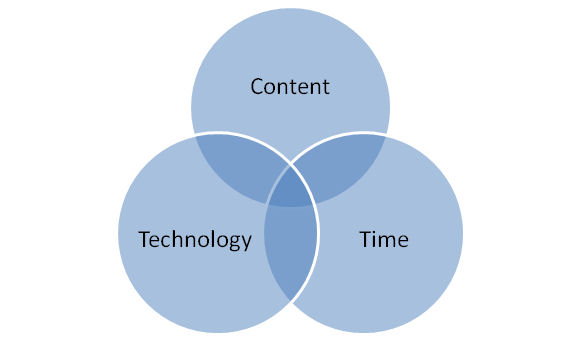
Three things for Social Media SuccessYou can read all the articles you want about social media marketing for B2B companies, but until you jump in and do it, you probably won’t realize what you need to succeed.  As many have found out, hiring a college-age daughter or son to set up your Facebook page or your twitter account isn’t the answer.

If  hardly anyone is  reading your blog, visiting your Facebook page or following you on Twitter, there is a good chance you may be lacking in at least one of these three success areas.

Success Factor No. 1: Content

You don’t have the foggiest idea what your customers would find interesting or engaging. You find it hard to think beyond what you sell, and you probably don’t enjoy staring at a blank page.

A content strategist can help you plan what you want to say and how you are going to say it. Content strategists  know how to find engaging stories about your business or topic area  that people actually want to read. And the best part … they never run out of ideas.

Content creators get the work done, creating blog posts, videos, and slide shows. Crafting messages that sound like you or your brand,  only better. Content curators select the “best of the best” information and ideas, creating value for your B2B audience.

Success Factor No. 2: Technology

Words like “meta tag,” “API” and “robots” scare you. You’ve never seen or even attempted to find the traffic statistics for your website or blog.  You aren’t interested in learning a whole new language.

Without knowing the technology behind social media, the best content in the world can remain lost. And without reviewing your website analytics, content opportunities will be lost.

Boosts in website traffic require link building and that means knowing where on the Web you need to be. Each social media network has its own characteristics. Do you have the patience to listen and learn?

Social media training will shorten the learning curve and let you  know where you need to focus first. Mastering the technology skills can help your social media efforts deliver a better ROI from the get-go.

Success Factor No. 3: Time

Once you engage your B-2-B business in social media, you quickly understand the tedium of it all . Day after day, week after week, you need to participate, create content, and promote content.  Conversations aren’t all in one place.  Information needs to be posted in a lot of places with thoughtful messages targeted to the audience.  It’s downright time consuming.

However, the more you are involved in social media, the greater the benefit you are likely to receive. Do you have the time? Do you know the tools that can help you best manage and monitor your efforts? Do you have someone who can do the “grunge” work for you?

Some businesses and business owners want to do social media themselves and they have everything they need to succeed: Content, Technology and Time. That’s terrific. Some may have the content, but lack the time and energy. Others may have the technological skills, but lack content.

The important thing is to not get hung up on what you don’t know.Recognize it and get some help. Hire someone  to get you started. Build a team and share your knowledge.  Sign up to receive some social media training. Move on. Don’t give up.

What has held back your social media efforts? What kind of help does your business need?

Posted on June 10, 2011July 9, 2011Author Joanne CostinCategories Social MediaTags content creation, content opportunities, content strategist, content strategists, content writers, social engagement, Social Media, technology skills, traffic statistics, website traffic1 Comment on Do You Have What it Takes to Succeed in Social Media?

Here’s the Proof: Press Releases Drive Website Traffic

Traffic The results are in. Visits to contentforbiz.com more than doubled the week after we sent our first press release.  We tested three distribution services: PRWeb.com, PR.com and freepressrelease.com.

On PRWeb we selected the “Most Popular”  $200 visibility level.  According to the analytics on PRWeb.com, the Content for Biz press release was distributed to 3,321 media outlets via email or feed.  It was opened for a full page read on PR Web.com more than 1,100 times and delivered nearly 47,000 impressions across the web over the last nine days.  Additionally, based on our site analytics, there were 15 direct links from PRWeb.com.

On PR.com I subsequently found out  that there’s not much included in the “free” version – not even a hyperlink.  Visibility upgrades range from $30.00 to $100.00, and hyperlinks are $29.95 each. To include an image, you are required to select the $60.00 visibility level. Our budget wouldn’t allow all these extras.  To be honest, it really isn’t much of a comparison with PR Web at the free level.   As far as visibility, the only way I could find my release on this site was to log in.

Posting on freepressrelease.com was easy. It’s just like uploading a WordPress post.  Hyperlinks are free, and there are some social sharing features, but visibility was next to nil. There were  no search tools on the site to help a visitor find what they are looking for.

In summary, our little test proved that you get what you pay for. The PR Web Distribution service helped to increase website traffic vs. the prior week by 210 percent, while the free services did not appear to provide any measurable results.

Tip: Check out a free tool called Press Release Grader to optimize the press release for the web. It’s an extra step, but well worth your time.

What’s your favorite B2B press release distribution service?

Posted on June 8, 2011March 26, 2017Author Joanne CostinCategories PublicityTags business to business content, construction industry, free press release, free press release distribution, free press release distribution services, pr newswire, pr web, press release distribution service, press release distribution services, press releases, prweb, social engagement, traffic booster, visibility, website trafficLeave a comment on Here’s the Proof: Press Releases Drive Website Traffic

How to Measure Social Media ROI using Benchmarks

Can you measure the results of your social media strategies? Marketers know that social media is a strategy within a larger communications plan. They look at both the quantity and quality of results based on a defined goal and time period. Still, the number one question asked by marketers according to a 2011 Social Media Marketing Industry Report by Michael Stelzner at Social Media Examiner is this: How do I measure the effect of social media marketing on my business?

The report findings were culled from a survey of 3,300 marketers. It revealed a surprising result: More B2B companies have been using social media longer (52.6% reported 1 year or more) than B2C. Time matters. Those using social media for a year or longer reported improved search engine rankings.

Set these four benchmarks and you are on your way to measuring results that matter.

1. Know Where You Stand Now

Before beginning a social media campaign, find current rankings on all sorts of online content. Get familiar with PostRank. It is one of the largest aggregators of social engagement data in the industry. Enter a feed URL and get statistics on the most popular posts based on engagement points. The site ranks RSS feed items, blog posts, articles, and news stories. This is quality and quantity data that can be used to measure throughout your timeline.

Use Google’s Feedburner and Analytics tools to help analyze your company’s blog traffic, subscriber count, keywords, and trends. Find even more useful statistics at Xinu. These tools are all easily accessible to measure where you are now with your Internet presence. Check them according to your timeline. What do you find? Interpret those results for your business.

2. Measure by quantity
These might include the number of fans, followers, subscribers and friends. Other quantities you might look at are twitter lists, groups on linkedin. Having this data will show you what sites to focus on. It also gives an idea on what topics are popular with your audience. The question is not only how many friends, followers and fans you have, but where did they come from? Present this data in a given period of time.

3. Measure by engagement
What level of engagement you measure depends on your business goals. How much activity is in your forum? Do you have stats on click-through rate to your product pages? How many subscribers to your RSS feeds? Do your fans, followers and friends make comments on blog posts and other social networking accounts? Are they sharing your content via the Facebook Like button or twitter retweets? Do they respond to surveys? Do they stay longer than people who came to you from other sources?

4. Bottom Line Results
By measuring your online presence, relationships, and increased sales you create a trail of data that leads to how each of these areas were enhanced by a social media strategy. Reaching a key audience and establishing meaningful dialogue may or may not increase sales over time. It is always good to know what is working and what is not. Use benchmarks to help you reach your business goals.

Posted on May 9, 2011July 28, 2011Author Mary KlestCategories Social MediaTags aggregators, analytics, b2b companies, benchmarks, current rankings, feedburner, followers, google, internet presence, linkedin, marketers, marketing industry, media campaign, media marketing, media strategies, report findings, search engine rankings, social engagement, subscriber count1 Comment on How to Measure Social Media ROI using Benchmarks
Proudly powered by WordPress