
Whose Job Is It To Do Content Writing?

content writing inboxIs this a question you hear asked at your company? It seems that business content writing at times is everyone’s job and no one’s job. That’s a problem. When you view content as a deliverable product or service to your customers a schedule gets created and responsibility is doled out. Recent research from Technorati shows B2B companies that blog generate 67% more leads per month. Is your company capable of sustaining a regular content cycle? That is what’s required for the content marketing effort to be effective in bringing new visitors to your website, adding subscribers/followers and generating leads.

Asking whose job it is to do content writing deserves an answer. The answer depends on available resources and type of content needed.

Informative content

Don’t look to your marketing manager to write daily or weekly blog posts, newsletters, articles, or press releases. It won’t get done. They are often big picture thinkers juggling multiple projects. They understand campaigns, themes and scheduling but often need help identifying relevant topics, researching, and actually writing the content. Like a film producer, they provide direction and approve the content for publishing.

Educational content

Don’t look to your subject matter experts. They are very knowledgeable about their subject and hold great insight. But, they may not be skilled in crafting a narrative. They often write as if everyone knows as much as they do, which most likely is not the case. They are however, good resources for the content writer who is skilled in interviewing subject matter experts and translating specialized knowledge into easily understood, interesting prose.

Customer-focused content

Don’t look to your sales force. They are often very good at communicating with customers. However, the written word or visual depiction of a company’s message is not as fluid as a personal conversation, meeting, or phone call. The skill sets are different. Because sales people are in front of customers they are a valuable resource for knowing what questions your content should answer and what challenges your content should describe. Any time spent writing content takes them away from what they really want to be doing, selling.

Social Content

Don’t look only to young people to create social media content. Just because they know how to use the tools doesn’t mean they understand business.

Best intentions fall to the wayside or fail because companies are not relying on the right professionals to meet their content marketing goals. Here is a content checklist created by Ahava Leibtag that shows some of what needs to be considered in creating effective content.
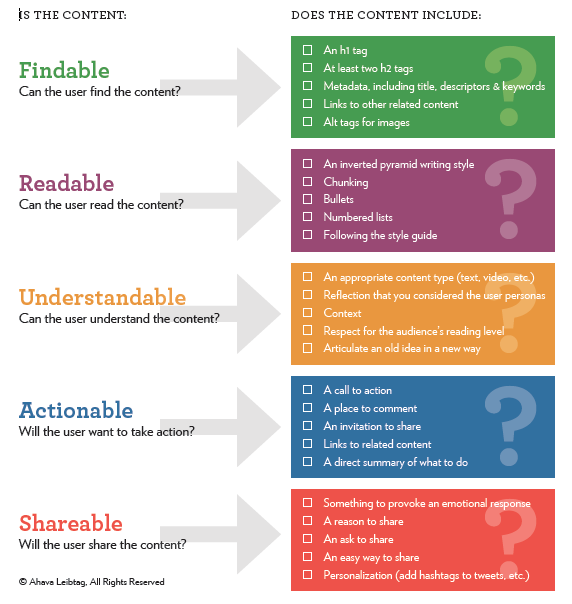
Content Writing Table


Look for people in your company who have experience as journalists, publishers, copywriters, and marketers with proven writing skills. If you can’t find them within your company, look for outside resources. Such professionals understand schedules and deadlines. They prioritize your projects and work as part of your team. They will know what to write and how to write for your particular audience and channels.

When it comes to business content writing projects, don’t make assumptions. The next time someone asks, “Whose job is it to do content writing?” you will have an answer.


 

Writing Content for a Startup Business

Every week we hear from people wanting content for a startup business. As an established content writing company we also work with many established companies. Often times the folks at the startups cannot answer the questions we need to ask as content writers. Here’s a heads up for those planning to use content writing services for a startup business: broad, unfocused answers are your enemy. In the scenario below I include how an established company (pro) might answer the same questions to draw a contrast. Do-it-yourselfers may benefit from this exercise as well. Here is how my line of questioning starts.

Question 1. Please tell me about your business. 

STARTUP: “We want to sell new super duper peeler widgets to food services companies.”

PRO: “We are introducing a new widget that makes peeling more efficient, saving time and money for midsize foodservice companies in the USA.”

The pro knows what they sell, to whom and why someone would buy it.

Question 2: Who is your target audience, your target market?

STARTUP: “Everyone looking for peeler widgets. We don’t want to miss anyone.”

PRO: “Executive chefs in the hospitality industry with a staff of at least six people.”

The pro knows that a target market is defined and exclusive. This is what makes the potential customer identify with the brand. Anyone. Everyone. Is no one. Customer focused content makes them aware of the product and how it will benefit them.

Question 3: Why would they buy it from you? Core strengths of your company?

STARTUP: “It’s a great product and we can serve them well by getting it there on time.“

PRO: “We’ve been serving the foodservice industry for 10 years and understand our customers need durable, reasonably priced, time saving tools that make food preparation more efficient.”

Has the startup identified urgent delivery as a major problem/solution for foodservice companies interested in peeler widgets? I don’t think so.

Question 4: Who is your competition?

STARTUP: “It’s a new product so we don’t have any competition”.

PRO: “XYZ has a similar product on the market, but ours is sharper and quicker. ABC dominates overall in commercial kitchen supplies. Yet, the biggest challenge is in getting chefs to change the way they are currently doing things. We have a video demo so they can see for themselves how efficient the tool is.”

Question 5: What do you want the content to do for you?

STARTUP: “We hope it will generate leads, affirm our existence in the market, get us ranked high in Google search, and more.”

PRO: “Website content is a base for our overall content marketing strategy.  It supports our brand, offers relevant information to existing and potential customers, and gives us a means to measure customer engagement.”

Content is a dilemma for the unfocused startup. They are strongly in need of content writing services to hone their message and compete. To be successful startups should know what advantageous they offer, their target audience/market, their strengths, competition, and what they want their content to do so we can write meaningful, compelling copy that meets the needs and interests of their audience.

Content Writing Lesson for Food Service: Swap Broad Terms for Specifics

Berries from Brazil
Berries from Brazil

Many companies have jumped on the green bandwagon and for good reason. Consumers favor environmentally friendly brands and companies want to do the right thing. However, as a result of this movement, words like sustainable and organic have been bandied about with increased frequency. But what do these words mean to consumers?

Research conducted by The Hartman Group suggests that the words “sustainable” and “organic” are confusing to consumers. At the Protein Innovation Summit, Tamara Barnett, director, strategic insights,  Hartman Group, advised food suppliers and restaurant operators to scrap words like sustainable and organic in favor of words that consumers can more readily understand. According to Barnett, consumers want to know where food comes from, so information about where a product is sourced from is important. Consumers want to know food comes from a real place. Consumers want to know how your practices impact quality. Educate and explain your practices with specifics rather than generalities.

On the menu and on your website, answer the question of where your food comes from. Explain what it does for the consumer (environmental or health benefits). Showcase your suppliers. “Consumers want to work with a company that is a good neighbor,” said Barnett. It is increasingly important to show a connection to the community that uses your product.

Don’t forget that authenticity can be conveyed not only in words, but in pictures. Photos of real customers, employees and places, build trust.

As content writers we combines words and pictures to impart meaning. We can review your current website copy and edit for clarity and substance. We will scrap confusing words in favor of more descriptive terms and keywords. It is not enough to be sustainable or organic.

Will 5 Senses Replace 5 Ws in Customer Experience Content Writing?

Human brainThe 5 Ws – who, what, when, where and why are taught in journalism schools as well as in sales training to get across quickly what readers or prospects want to know in order to engage them.  The five senses – sight, sound, smell, touch and taste are taking on new importance in customer experience content writing. Researchers are learning how interactions with the physical world influence our perceptions and how we respond.

In his article Experience is the Next Frontier in Marketing published on Fast Company’s website, Jacob Braude shares insights on how cognitive science may help marketers manage their messaging and how companies may improve their customer experience. Experience is defined as physical interactions with the world. But it doesn’t end there.

Research on emotional processing and physical interaction support Braude’s ideas on how the brain codes experiences. Studies lead by Harvard graduate student Christopher Nocera and others report these observations about experience:

  • People handling rough-surfaced puzzle pieces viewed a written passage as being more adversarial than those handling smooth puzzle pieces
  • Harsher judgments were made by those given a wood block vs. those given a soft blanket
  • Harder bargains were driven by study participants sitting in hard chairs vs. those sitting in soft chairs
  • The weight of a clipboard holding a candidate’s resume influenced perceptions of the candidate’s qualifications.

While these observations relate to physical experience, content writing can convey what’s understood about the subconscious impact of the five major types of experience:

Sensory – Use language that includes sights, sounds, smells, touch and tastes. Of all the senses, smell is the strongest in evoking memory. Touch is the first sense to develop. Apparently, tactile sensations align with emotional qualities throughout life.

Action – Write about what a product does, not what it is. Using active verbs activates the brain.

Space – Relate to size and scale. Show photos in an uncluttered environment that allows a comparison to a common item.

Situations – Describe how the product is used and in what environment.

Impressions – Write clearly and concisely so the reader doesn’t have to use much effort to decipher the information.

As we learn more about how the brain works, the idea is not to manipulate but to find the right fit, solve problems and deliver a good customer experience. The five Ws will always be important to provide context. The five senses will play a role in the customer experience narrative.

Content Writers or Industry Experts: Who Should Write Your Online Content?

content writer or industry expert

Answer our brief survey at the end of this post.

Sometimes a lack of expertise can be an advantage. Content writers unfamiliar with your product line or industry will ask lots of questions. The same kinds of questions a potential customer would ask. And that’s the beauty of it. The end result is informative copy in language that potential customers, not industry insiders, understand.

Industry experts, on the other hand, may overestimate what potential customers understand about their products. And they also may lack the time needed to devote to writing. The inability of  industry experts to deliver copy has delayed many online marketing initiatives.

But subject matter is where a content writer’s lack of expertise should end. The provider of your content writing services should be adept in asking questions, and able to quickly grasp key concepts. They should understand who your audience is and your business objectives for the content.

Content writing services such as blogging, website copywriting, and article writing that serve a variety of industries give the content writer an opportunity to learn about things the way a customer might. This often adds a fresh perspective.

B2B marketers needn’t be obsessed with finding content writers who are experienced with their services, industry or products. Instead, they need to find a content writing service business with a proven track record of success — a company who knows how to work well with industry experts. The best results occur when there is true collaboration between writer and expert.

Would you use a content writing service?  Why or why not?

Click here to take our three question survey

Thanks!