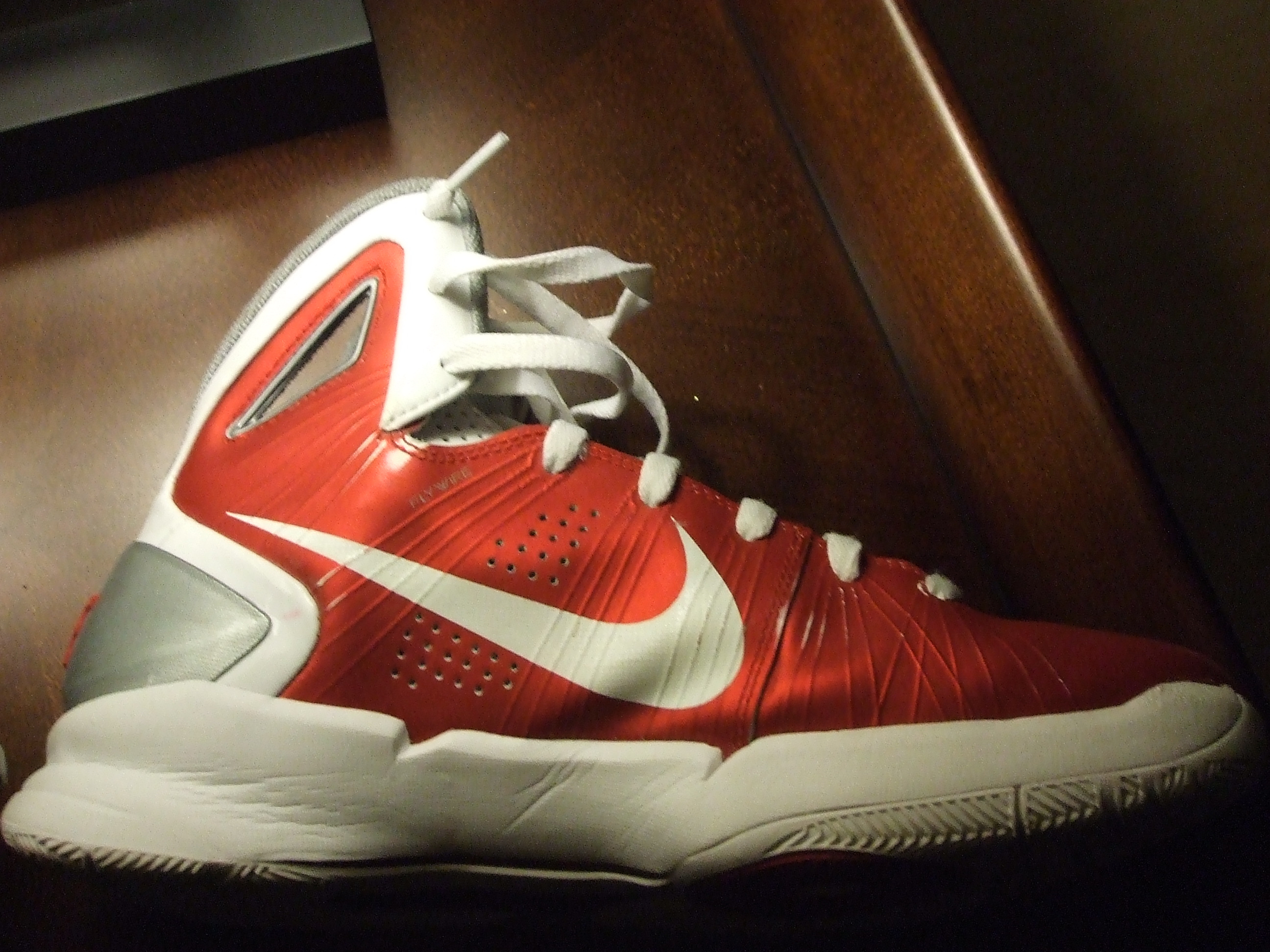
Why I Hate/Admire Nike

Will's Nike Shoe
Will's Basketball Shoe

As a parent, I hate Nike.

But as a marketer, they command my respect. Their brand is embedded in my 13-year-old son’s brain.  Their content engages him. He spends hours on their website dreaming about the athletic feats he will accomplish in their shoes. They even let him design his own shoes online.  Whoever doesn’t believe that advertising works doesn’t spend much time with 13-year-olds. His lives in a world where only the latest and greatest brands will do.

I have resigned myself to giving him a shoe allowance, and anything over and above this amount, he pays for out of his birthday or report card money. He will gladly shell out his hard earned cash for anything and everything with a swoosh on it.

In contrast, I buy my athletic shoes out of the clearance rack at a discount store. The name brand doesn’t mean that much to me in the case of athletic shoes.  But my son, he just doesn’t see it this way.

Clearly Nike is selling more than shoes. It provides a young man with confidence. My son wants to look cool to his friends, and with Nike, he’s pretty sure he will.  He wants to feel a certain way, and the shoes, that’s what does it for him.

Can B-to-B marketers learn a lesson from Nike?  I think so.  But to inspire that kind of brand loyalty requires thinking beyond the “product attributes.” What can you do to enhance the total experience; to engage the customer; to make them “feel” something about your brand?  Are you ready to let them design it and customize it right on your website? Do you know what their real motivations are? What b-to-b brands do you think have the same kind of loyalty as Nike?

I may not like what Nike has done to my son, but I can learn from it. And if I could request just one thing from Nike, it would be this. Maybe just once a year, could you do a little something for the Moms? You know a coupon would be really nice.


Why Less is More When Driving Reponse Online

One might think that the more items readers are able to “click on” in an email, the greater the response. However, that isn’t necessarily the case.  Your audience can be easily overwhelmed.  And sometimes fewer choices lead to greater response.

This was the case in an email newsletter I create for Clutter Coach Company, owned by certified professional organizer, Jane Carroo.  The company’s website (www.cluttercoach.com) is loaded with great content.  Subscribers to the Clutter Coach Company e-newsletter get special access to even more organizing content online. So the e-newsletter serves to drive traffic to the website and also keeps Clutter Coach Company top of mind among prospects and customers.

We decided to promote the online content in the e-newsletter by including a list of organizing articles. At first we provided a complete laundry list of nearly 30 articles in each e-newsletter.

However, taking a lesson from Jane, we decided to ”simplesize” the list, and instead offered six general categories of interest, which then led readers to a list of related articles in the category. The click-thru rate jumped 10 full percentage points with the first issue – from 24% to 34%.

B-2-B magazine editors have experienced the same phenomenon when it comes to new products issues. Reducing the number of products featured in an issue results in increased reader response.  A Top 100 Products list, for example, generated more response than a prior issue that included less information on several hundred products.  This list had value and represented only those products the editors and readers found worthy.

These experiences remind me that while it’s great to have a lot of content, it is equally important to organize it well.  Organization equals value to busy people. Just ask Jane.

Organize the structure of your site so that visitors don’t have to navigate through information that isn’t relevant to them. Guide them through the process. Weed through non-essential information so your site visitors won’t have to. Organize your content so as not to overwhelm.

Have you had similar results when you chose to pare down your choices? Share your thoughts here.

Where is Your B-2-B Content Hiding?

I recently received an e-newsletter from Hawthorne Caterpillar that was full of great content. An article on the dealer’s experience helping government agencies prepare for natural disasters was unexpected, and peaked my interest. Another article told the story of CAT rental equipment being used to rescue a cruise ship. Again, not your everyday run-of-the-mill use of rental equipment.

I searched www.hawthornecat.com, wanting to see if a website visitor could find these treasures, and found they were buried deep within the news section. While Hawthorne Cat has clearly done a lot of things right, it missed an opportunity to put this content front and center with website visitors. Wouldn’t it be great if visitors searching  under the  “Rental”  or “Governmental” navigation bars could find these stories?

Not everyone gets your email newsletter. Some people will find you through your website or social media site. Make sure your great (and relevant) content is easy to find wherever potential customers could be looking.

Perhaps your content is still on paper in a salesman’s briefcase, or maybe it’s a Q & A session with one of your best technical experts. (You know –the ones who can actually explain things to the rest of us). Make a list, make a plan and get it out of hiding and online.

Every Product or Service Has a Story

Interview in ProgressI write a “Closer Look” feature for Construction Equipment Distribution magazine that focuses on a single supplier to the construction equipment industry. Rather than rely on a lone interview with the company’s CEO or president, I always ask for the names of a few customers to interview.

Customer interviews provide a “real world” framework for the reader.  Instead of describing a company’s product and services from the CEO point of view, I integrate a story of how their products or services provide a solution for customers.

The profiled companies are amazed at the information I  gather.  There is no big secret to this.

When you need a great customer story  follow these steps:

1)      Ask customers to start with the source of their initial frustration or need.

2)      Answer the questions of who, what, when, where and why. Get as much detail as possible.

3)      Ask if there was anything that surprised them about the product or service.

4)      Ask if there was anything that could have been done better.

5)      Give them an opportunity to review their comments.

Don’t just ask for a testimonial and rely on the customer to deliver it. If you get it at all, it will likely sound like something no one would believe. Hiring a professional writer to conduct the interview will provide the best results. Customers open up more when they talk to a third party. It shows a level of professionalism.  If that’s not in the budget, at the very least, select someone who is not familiar with the customer/client relationship. Review the questions in advance.   Follow the steps above and let the customer know you are truly interested in hearing what they have to say. That’s the secret to getting a great customer story.

Acronyms: Convenience vs. Clarity

ABC is an acronymYou see an awful lot of industry acronyms on b-to-b websites, but I am convinced that often, the only ones who know their meaning are the business’ sales and marketing team. Before texting shorthand dominates communications worldwide, I am compelled to make my case for acronym restraint.

There’s no doubt, acronyms serve a purpose — especially among b-to-b associations. Thank goodness I do not have to spell out Laborers-Employers Cooperation Education and Trust, otherwise known as LECET, every time it appears in print. But acronyms get confusing. How do you remember that CMAA is the Construction Management Association of America, while CMA is the Construction Marketing Association?  And what about use of industry jargon?  Here’s an example from a direct mail company’s website where use of an acronym creates  an obstacle to communication.

Qualify more mail for BMC/SCF entry

That sounds advantageous, but what does it mean?

I turned to Google where I found out that BMC stands for Bulk Mail Center and SCF is a Destination Sectional Center Facility, a Processing and Distribution Center (P&DC) of the United States Postal Service (USPS). It serves a designated geographical area defined by one or more three-digit ZIP Code prefixes. By now the meaning of this statement must all be perfectly clear, right?

I learned that if you qualify more mail for BMC/SCF entry, you earn a bigger postal discount. That’s a great benefit lost by using a confusing acronym.

The point is, not everyone visiting your website is an industry insider. So each visitor should be treated like an important customer, prospect or influencer. Why alienate them with acronyms and language they won’t understand?  Clarity supports action.

When in doubt, spell it out.