Fun Friday – Worst Sentence & Observations on Content

We are calling our end of the work week posts “Fun Friday.”  You will find our “World’s Worst Sentence” along with observations made during the week. Our intention concerning the “worst” sentence is not to be harsh, but to honor those who take the time to proofread and edit their content. If YOU have a better suggestion for how to edit the “worst,” share it here.

This “worst” sentence appeared in an e-book I downloaded from a website.

BEFORE

If you are more philanthropic, profit mat not be your main motivation and you may want to sell more products to help more people and where your fruition comes from enhancing lives, but for the purposes of this example I will simply focus on the how to make the maximum profit for your company and its shareholders.

AFTER

Profit may not be your main motivation when selling products, yet increasing profits for your company and its shareholders may be the best way to enhance the lives of those you care about.

****

From Used Car Lot to Show Room

I attended two webinars this week. One was awful and the other sublime. I liken these experiences to walking in a used car lot vs. entering a show room.  I didn’t know either of the speakers and learned something from both. But why did I feel sleazy during one and successful during the other?

The difference was tone, trust, and the call to action. It became apparent to me that one was selling while the other was sharing. The first relayed a sense of urgency and how easy it all was if I only follow his direction. He offered a free gift at the end. On the webinar window was a counter showing an impressive number of attendees. He described the sales cycle and how to up sell people during the purchasing process. He wanted us to become affiliates of something he was selling. Meanwhile, the counter kept dropping until near the end there were less than a third of the original attendees still listening.  I think he needs to go back and do some marketing homework.

The sublime experience was during this year’s Blogging Success Summit, an annual event sponsored by BlogWorld & Social MediaExaminer.com. I had attended their events before and knew they only invite leaders in the field to speak. So Douglas Karr had been vetted by people I trust. He is also the author of Corporate Blogging for Dummies. His voice was friendly. He generously shared his contact information at the beginning. His content was current and engaging. What is the biggest factor influencing your site’s search engine rankings? Not keywords, not page titles, but incoming links. I tweeted a few of the good points he made. His call to action was for us to engage and ask questions. I did. Then shared the answer with a client. My esteem was heightened. Which book will I buy to learn more about corporate blogging? As a journalist, who will I interview for an article on corporate blogging?
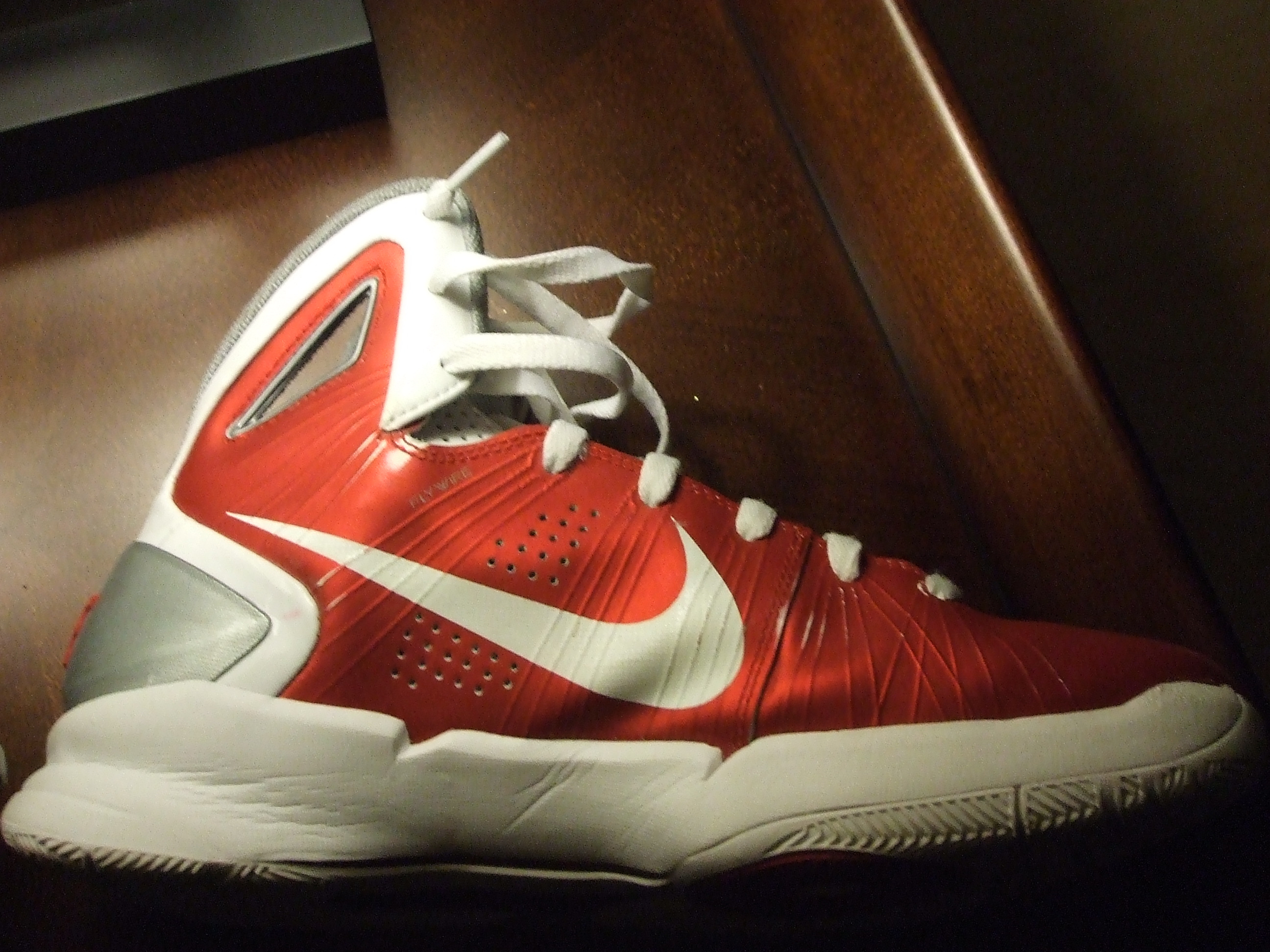
Why I Hate/Admire Nike

Will's Nike Shoe
Will's Basketball Shoe

As a parent, I hate Nike.

But as a marketer, they command my respect. Their brand is embedded in my 13-year-old son’s brain.  Their content engages him. He spends hours on their website dreaming about the athletic feats he will accomplish in their shoes. They even let him design his own shoes online.  Whoever doesn’t believe that advertising works doesn’t spend much time with 13-year-olds. His lives in a world where only the latest and greatest brands will do.

I have resigned myself to giving him a shoe allowance, and anything over and above this amount, he pays for out of his birthday or report card money. He will gladly shell out his hard earned cash for anything and everything with a swoosh on it.

In contrast, I buy my athletic shoes out of the clearance rack at a discount store. The name brand doesn’t mean that much to me in the case of athletic shoes.  But my son, he just doesn’t see it this way.

Clearly Nike is selling more than shoes. It provides a young man with confidence. My son wants to look cool to his friends, and with Nike, he’s pretty sure he will.  He wants to feel a certain way, and the shoes, that’s what does it for him.

Can B-to-B marketers learn a lesson from Nike?  I think so.  But to inspire that kind of brand loyalty requires thinking beyond the “product attributes.” What can you do to enhance the total experience; to engage the customer; to make them “feel” something about your brand?  Are you ready to let them design it and customize it right on your website? Do you know what their real motivations are? What b-to-b brands do you think have the same kind of loyalty as Nike?

I may not like what Nike has done to my son, but I can learn from it. And if I could request just one thing from Nike, it would be this. Maybe just once a year, could you do a little something for the Moms? You know a coupon would be really nice.

How to Position Your Call for Action

Before adding a call to action on your website or blog, determine what you want your audience to do. Then use your content to provide context for that action. For this blog, we want people to link to our site and subscribe to our RSS feed. But there are many actions people can take. For instance, do you want to get an opinion? If so, don’t write as if you are the ultimate authority on the subject. Admit your ignorance. This gives your reader a chance to add something. People will love to fill you in. We were not sure which graphic design to use for this blog so we requested input from business friends on Facebook and other social networks. The feedback we got was tremendous and helped us understand what design would be most effective.

There are a number of decisions to make when buying something is your call to action. If your audience knows your company and products they may already trust you. But if they are unfamiliar with what you offer, you need to build trust. Disclose everything a potential buyer may need to know about the company and its products as well as any relationships that influence your selling process. Word choice is important in getting people to act. I recently learned that it is sometimes better to use the word “Continue” rather than “Buy” during the online purchasing process. The idea is that people love to buy but hate to be sold to.

At a website usability conference I attended, the importance of a phrase was revealed. Guess which words resulted in the most clicks: “Sign Up” or “Click Here to Sign Up” or “Get Started Now”? The last phrase resulted in a 35% click rate compared with 17% for the first and 22% for the second. That is substantial.

When trying to get readers to subscribe to your e-newsletter offer them something useful in return. For that universal question always lingers: “What will I get out of it?” Be sure to explain the benefits they will get from responding to your offer.

If you want someone to link back to you, do as author and business communications consultant Chris Brogan does. He sometimes adds a last paragraph to his blog post saying: “I’d love to see YOUR post on this. Please post and link back to this url.” He copies the URL and adds it to make it easier to respond.

People are so busy it may be hard to get them to act. Content that is engaging, easily understood, and of benefit to them helps. Have you found ways to increase your call to action response? I would love to see your post. Please post and link to here. Or if you feel like taking another action, subscribe to our RSS feed to stay current on best business to business content practices.

Why Less is More When Driving Reponse Online

One might think that the more items readers are able to “click on” in an email, the greater the response. However, that isn’t necessarily the case.  Your audience can be easily overwhelmed.  And sometimes fewer choices lead to greater response.

This was the case in an email newsletter I create for Clutter Coach Company, owned by certified professional organizer, Jane Carroo.  The company’s website (www.cluttercoach.com) is loaded with great content.  Subscribers to the Clutter Coach Company e-newsletter get special access to even more organizing content online. So the e-newsletter serves to drive traffic to the website and also keeps Clutter Coach Company top of mind among prospects and customers.

We decided to promote the online content in the e-newsletter by including a list of organizing articles. At first we provided a complete laundry list of nearly 30 articles in each e-newsletter.

However, taking a lesson from Jane, we decided to ”simplesize” the list, and instead offered six general categories of interest, which then led readers to a list of related articles in the category. The click-thru rate jumped 10 full percentage points with the first issue – from 24% to 34%.

B-2-B magazine editors have experienced the same phenomenon when it comes to new products issues. Reducing the number of products featured in an issue results in increased reader response.  A Top 100 Products list, for example, generated more response than a prior issue that included less information on several hundred products.  This list had value and represented only those products the editors and readers found worthy.

These experiences remind me that while it’s great to have a lot of content, it is equally important to organize it well.  Organization equals value to busy people. Just ask Jane.

Organize the structure of your site so that visitors don’t have to navigate through information that isn’t relevant to them. Guide them through the process. Weed through non-essential information so your site visitors won’t have to. Organize your content so as not to overwhelm.

Have you had similar results when you chose to pare down your choices? Share your thoughts here.

Can a Holiday Inspire Your Content?

Today is Valentine’s Day, a holiday many people think was invented by greeting card companies. Not so, say historians. It actually became a sanctioned holiday by the Catholic Church near 498 AD. Greeting cards hadn’t become commercially available until the 1840s. What does this have to do with business to business content?

Misconceptions occur when information is not readily available. I was recently hired to write content for two B2B companies in different industries. When I went to their websites I could not tell what they did and for who they did it. At first glance, I mistakenly thought one was a printer and the other a sports equipment dealer. In reality they are a graphic design firm selling to nonprofit publishers and the other personal trainers for executive management. Spell it out. Your brand and identity depend on it.

Second, ideas or products can be fluent and when allowed, evolve into something greater. While Valentine’s Day started as a religious holiday it sustains its popularity in secular society because people like one aspect of it – expressing romantic sentiments to their beloved. Greeting card companies fill that desire. Think of your business history and how it has evolved. What is the thread that runs through it and how has it evolved? The About Us page may be a great place to tell this story.

Relying on that thread, your history becomes clear and engaging. February 14th became more than a day on the calendar. Good content can distinguish your company as something more than a manufacturer, supplier, or service provider.

These other holidays have been officially designated by Congress and/or calendar makers:

August 16th – National Joke Day

September  21 – World Gratitude Day

October 16 – National Bosses Day

November 21 – World Hello Day

We will have to see how long they last. Tell your customers now how much you appreciate them. Let your content say “You’re important”, “We’re here to serve” and “We’ll give you more.”  No chalky-tasting hearts required.