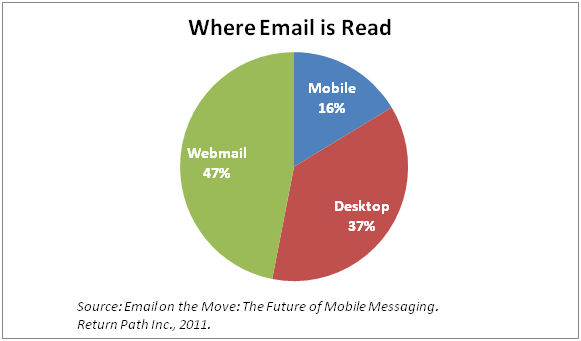
 A new stat will tell you why you can’t afford to ignore that a growing number of B2B buyers are viewing your email campaigns on a mobile device. According to email deliverability expert Return Path, in just the past six months, viewership of emails via a mobile device has grown 81 percent. About 16 percent of all emails are now viewed on a mobile device and if your audience is contractors or foodservice professionals who are always on the go, you can bet it is even higher.
The day of the week also impacts reading on mobile devices, with more mobile usage over the weekend. You can download Return Path’s report “Email on the Move: The Future of Mobile Messaging” from their website.
 Some email providers such as Mail Chimp offer tools to help marketers deliver an email message optimized for mobile devices. Subscribers check off how they want to receive their messages when they sign up. There is also a viewer to let marketers preview how messages will look on a mobile device.
Fantastic. But what if your email provider doesn’t do this? You are not completely out of luck. I like these tips from the experts at Click Z:
1) Use a “View on Mobile” Link
Create an HTML version that uses a limited number of images and includes primarily text designed in single column format. Most smart phones have a screen size of 320-420 pixels.
2) Shorten the Subject Lines
A long subject line will push your message down. Include a benefit right in the subject line.
3) Design for Fat Fingers
According to Click Z, a typical adult finger covers 45 pixels when pressed against a mobile screen. Make sure your calls-to-action are padded with at least 10 to 15 pixels to avoid problems when customers tap on a link.
The good news is that once the technological barriers are worked out, B2B buyers will have access to your emails from virtually anywhere. Keep a close eye on your stats to see when the majority of emails are opened, because a growing mobile audience may change what you know to be true about the best time to send. Make sure emails are sent from a well recognized name within your company, as this is a key factor in determining what gets opened.
From there, it’s up to the content writer to offer a clear benefit for reading. Presenting benefits sooner rather than later seems even more important for small screen viewers.
What else should content writers know about viewing email on mobile devices?