Must-Have Content For Promoting Events and Conferences

Event organizers and marketing managers need to address a multitude of details to launch a successful live event. To lessen the load, here is a run down of must-have content when planning an event. Keep in mind that ability, budget and leadership all influence what content actually gets created.

Build excitement and awareness with content that explains what the event is, whom it’s for, and why it’s worth attending. If it’s an annual event, the content also needs to convey what’s different about this year. Website pages, postcards, ads, video and emails are some of the common formats for this initial content.

Establish a theme

What ties all the content together? A theme gives writers and speakers a focus for content creation. It keeps the overall event message front and center. Your theme also serves as a platform for the agenda. For example, the Society For Hospitality and Foodservice Management uses a theme of “Envision The Future” for their annual event this year. A theme is not a stunt. It should reflect your brand or organization culture.

Create a website/page

Some conferences and events are included on an existing website under an Events tab and others have their own website URL. Having a separate website for your event gives you more content flexibility, better search engine optimization and adds value for your sponsors.

The National Restaurant Association designates a separate website for its annual NRA Show in Chicago. To keep up interest in the site between shows they offer online broadcasts as mini-events positioning themselves as a “Year Round Foodservice Hub.” It’s always good to add content to the site throughout the year, not just before, during and immediately following an event.

Whether you choose a separate website or add an event page on your existing site, you need content that includes a benefit driven headline, event description, location, dates and a call to action.

Registration content

Include where and when the event starts and finishes as well as fees for the event before linking to a separate registration form. When appropriate, add a description and rates (discounts) of hotel accommodations being offered.

Agenda content

This includes dates, times, session titles, speaker name, company and title; and a compelling attendee-focused description of each session. If there are a lot of sessions, give an overview or Agenda-at-a-Glance and provide links to the session descriptions.

Session descriptions

Session descriptions should contain a benefit and stir excitement about learning something attendees can only find at this event. Here’s a portion of a session description from a conference: “This case study presents a front-line account of how misinformation, competing agendas and the power of social media took a safe, healthy product off the market and nearly brought down a food company.”

Speaker bios

Most presenters will submit bio content to the event organizer. However, this content often needs to be edited for word count, style and tone in order to present a consistent and easy to read experience for potential attendees. Headshots of each speaker should be obtained and included with the bio.

Sponsor content

Whatever sponsor criteria you’ve identified for the event, offer priority content positioning to sponsors who have invested the most. Sponsor descriptions are often submitted by the marketing team but these too need to be edited for a consistent style and word count. Include logos and links to their websites.

Email content

Emails should be well crafted while promoting and executing an event.

Call for speakers. Content includes a description of the event and audience, dates, as well as suggested topics to be addressed. If you don’t get the response you were hoping for, follow up with an email on “Benefits to speaking at the event” and later a “Last chance to submit” email.

Sponsorships. Send an invitation to companies and organizations to participate at the event as a sponsor. Describe different categories of sponsorship, venue and benefits of being a sponsor.

Here are some email subjects to keep the event momentum going:

Registration open

Agenda announced

Key speakers

Early bird registration deadline

Session highlights

Who’s attending?

Welcome for registrants

Follow up thank you for attending

Trade Media

Write press releases for a targeted list of trade and industry publication editors.

Write articles that address topics in the publications’ editorial calendars.

Include photos and video with articles and press releases.

Write a guest blog that mentions the event.

Social Media

Check your organization’s social media policy before using social media to promote your event. Here are some general ways to promote your event with social media content:

  • Create a unique hashtag and use it to generate social buzz online.
  • Tweet at least twice a day. Mention speakers, sponsors, trending topics and use hashtags.
  • Post on Facebook two to three times per week. Have photos ready for posts.
  • Mention the event in a LinkedIn post or on a targeted group discussion page.
  • Add any videos to YouTube and use the link in social posts.
  • Designate someone to tweet live and post to Facebook during the event.
  • Monitor all mentions of the event and respond to those mentions.

Below is more content to consider.

Blog Posts

Add a blog to your event website to generate more content, more views and more interaction with your event. Create an editorial calendar and post regularly.

Conference Materials

Attendee brochure

Conference handbook

Promotions

Print Ads

Promotional brochure

This may seem like a lot of content but when it is well planned, well crafted and well executed you will see results. Don’t scramble for something to say about your event. A content marketing plan for the conference or live event should be created well in advance of the event date.

Know What Your Target Audience Pays Attention To

content engagementWhat do members of your target audience pay attention to? It’s a question to ask when you need to connect and create authority for the content you publish. While reading an article in Worth magazine I was intrigued by what owners of iconic restaurants reportedly put their attention to. The restaurants, listed as being in the top 10 nationwide, all have a 25-year history of success in an industry where failure is common. The number one rated Canlis in Seattle has an outdated interior but the view of Seattle’s skyline and mountain landscape is stunning. Peter Canlis, the founder’s grandson, unabashedly says: “To say we don’t struggle with how to change would be dishonest, but for us to obsess over it would be a waste of time.”

Chez Panisse owner Alice Waters believes it’s not just about cooking food. “We have a bigger mission in the world – feeding people ideas.” Co-owner and chef Andres Taylor at Hugo’s in Portland Maine talks about building a community. Most of the owners pay attention to customer expectations, but not so much to trends. Staff loyalty and menu consistency are an important part of success for some. Spago’s owner Wolfgang Puck believes in innovation, taking the view that restaurants are entertainment. Local artisan farmers are part of the team at The French Laundry, owned by Thomas Keller. The Inn at Little Washington maintains a 14,000-bottle wine cellar. Yet owner Patrick O’Connell believes in elevating food, service and atmosphere “to the same level.”

How can you find what your target audience pays attention to? Here are three suggestions.

Ask them. This can be in the form of a question such as “What do you consider to be a constant high priority?” or “What do you attribute your success to?” Let them continue talking. Listen for when their voice quickens or changes to a tone of certainty. That’s what they pay attention to.

Review their website. Most savvy companies put what’s most important on their Home page. You don’t have to look far. It is emphasized either through its placement, by its size or color – elements that draw attention.

Listen to conversations on social networks. Find forums, join Google hangouts or Twitter chats, and follow their Facebook engagements. I like to see conversations, not just posts.

You may need to distinguish between segments of your target audience. If you are targeting a foodservice audience consider restaurant owners, chefs, and food suppliers. After interviewing a number of professional chefs I have found that they pay attention to flavor, seasonality, and eating as a celebration. Food suppliers such as GFS Marketplace position service, pricing, and loyalty as priorities on their website. Whereas Sysco emphasizes ingredients, sustainability, and local flavor on their website. Traceability and social and environmental stewardship are included as well.

A lot of content is based on what companies think their audience pays attention to. Or the effort is simply to gain their attention. But when content tickles a recognized issue, you’ve connected with your target audience.


Content Strategy Examples to Build Third Party Credibility

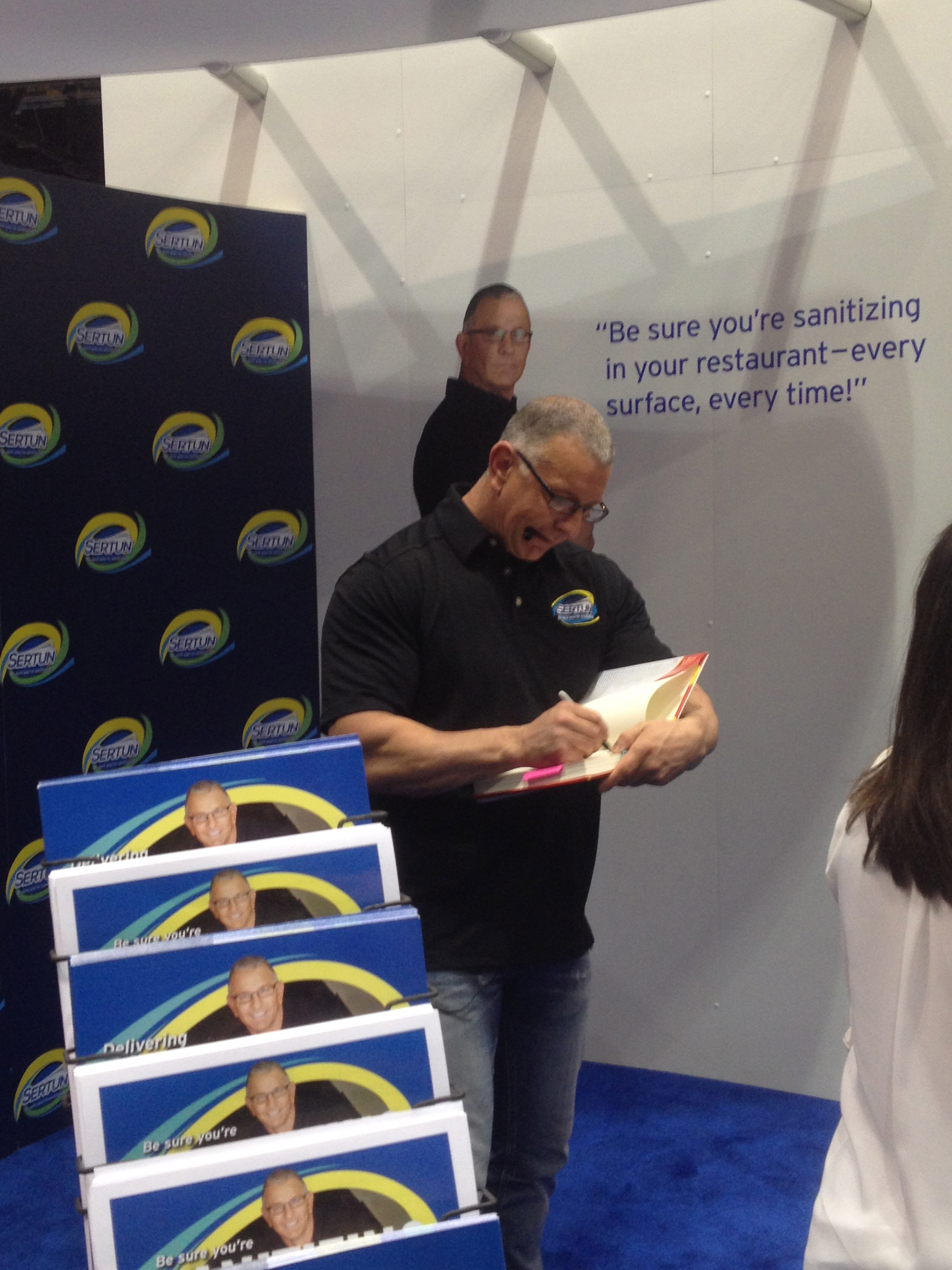
Robert Irvine book signingWhich content type do you think a Nielsen study revealed as being the most effective with buyers?

A.) Branded (owned by the brand)

B.) User reviews (comments, rating systems, online forums)

C.) Expert, news (articles, posts appearing on credible third party sites)

If you chose “C. Expert, news” content you are right. Posting content on sites that hold authority with your audience is a good content strategy to gain third party credibility. It builds trust. It positions you where you want to be with an audience that is receptive to your topic. By creating audience-focused content, not sales or promotional content, you can increase your content credibility through third party experts including publishers, website editors/bloggers, event and organization planners.

Publishers

When Diamond Crystal Salt wanted to reach an audience of professional chefs they talked with Plate Magazine about creating a custom newsletter that would be sent to Plateonline.com opt-in subscribers via email. Plate’s publishing staff hired independent writers to find and interview chefs (credible, third party experts) as sources for newsletter articles. Articles for the Essential Seasonings newsletter focus on salt-related topics of interest to their readers. Chef recipes are shared on their Culinary Recipes From Experts website page.

Another example of working with a publisher is transportation and hospitality security professional Shawn Clark of Clark Consulting Grp, who lends and establishes his credibility by writing articles for trade publications including Security magazine. His experience shows he is a credible source for the magazine and the magazine proves to be a credible source for him.

“The articles have certainly come up during projects; specifically when we are deploying one of the ideas or philosophies I’ve written about in the past,” says Clark. For him, writing articles provides an opportunity to share his experiences, ideas and solutions in a way that resonates with audiences.

Website Editors/Bloggers

A few days before the National Restaurant Association Show in Chicago, I saw this tweet from Swipely, a technology company serving the restaurant industry. The tweet links to a post in FSR Magazine, a publication that covers the full-service restaurant industry.

10 tips to rock the 2014 @NRAShow from @Swipely via @FSRmag ow.ly/wKfQL + a free tech guide ow.ly/wKWxN

The post in FSR magazine is titled: How to Budget Your Time at One of the Biggest Restaurant Industry Events. It gives ten good tips on how to do this with number six being: Evaluating Technology for Your Restaurant. After seeing some key points to consider about restaurant technology the reader is urged to visit the Swipely site to use their Restaurant technology grader. This post is written by Swipely content marketing manager Nicole Mongillo. Because the article is well researched with good information focused on a topic other than Swipely I think it passes as a valuable piece of content for the magazine’s readership. In this case, the website serves as a credible, third party.

Conference & Event Planners

When Site Prep magazine launched its first Site Prep Tech conference last year they included credible, third party experts such as Jason Anetsberger of Komatsu to talk about industry trends in articles that publicize the conference.

As part of a content strategy companies can also sponsor content as Vitamix does for the NRA Show World Culinary Showcase. Credible, third party experts in this case are celebrity chefs. In addition to events, companies can sponsor email campaigns and webinars to gain third party credibility.

NRA World Culinary Showcase


Associations

Big data company, Equipment Data Associates (EDA), joined forces with industry association, Associated Equipment Distributors (AED), to survey construction equipment dealers on their marketing tactics. The results are published in the AED | EDA Dealer Marketing Report: 2014 Benchmarks and Trends in the Construction Industry, and were featured in an article in Construction Equipment Distribution.Teaming up with a trusted Association to provide valuable information to an audience can be very effective because the results of the survey are often shared, extending audience reach for both the company and the Association.

Finding or being the right expert and meeting the editorial standards established by publishers, website editors, event marketers, and organization planners will bring your content closer to third party credibility. Once you gain trust, buyers are open to your message no matter stage of the buying cycle they are in.

Positive Housing Forecast Gives Builders Reason to Step Up Marketing Efforts

New home builder breaks groundTalking about what’s ahead for housing is always a lively discussion for builders and companies involved in the construction industry. Those attending the National Association of Home Builders (NAHB) Semi-Annual Construction Forecast Conference online received the latest news in what is moving housing forward and what might be delaying the comeback.

Builders might ask the same thing about their marketing efforts as they transition from a poor economic environment to a more robust one. At the beginning of the housing crash in 2006 the social network platform MySpace was a success story. Blogs were gaining acceptance by mainstream media and businesses. Apple Inc. introduced the first iPhone in 2007. North American advertisers spent $9.4 billion on search engine marketing in 2006. By 2013 that spend was more than $20 billion. In 2014, ninety percent of companies are using content marketing to reach customers according to a survey by the Content Marketing Institute and Marketing Profs.

What is moving your marketing efforts forward and what might be slowing you down?

For housing, the impact of severe weather slowed overall economic growth during the first part of 2014 but consumer confidence is improving said David Crowe, Chief Economist and Senior Vice President at NAHB.

Housing affordability and inventory is high. However, new home construction sales are lagging. The low supply of suitable lots is holding some builders back. A shortage of skilled labor remains a concern. Contractor access to commercial loans is improving.

Buyer hesitancy revolves around several factors including concern about employment, not being able to sell their existing home, qualifying for a mortgage and negative media reports.

Bright spots are projected for the second half of 2014 and onward to 2015. New home starts are up by 22% compared with last year and that number is likely to grow in 2015 to satisfy pent up demand. But, when will the entry-level buyer be back? Better employment and economic expansion are key to making young buyers secure enough to buy their own house.

How will builders reach these new home buyers? In 2014, well-designed web sites are functioning across device types, as lead generators, social media connectors, data analyzers and customer news source. That’s a lot more than the static, billboard type websites of 2006.

Still, marketing challenges persist. Tracking return on investment, executing new marketing programs, and staying current with how customers choose to interact with you are some of them.

Are you improving your outreach efforts through social media? Rethinking your email campaigns? Is your content marketing driving traffic to your website? Are you creating custom content that engages your audience?

If not, what’s holding you back? Buyer confidence is better, so should be your marketing efforts. Find the resources you need to stage your comeback.

3 Ways to Personalize Your B2B Content Marketing

Personalize contentRecent research completed by CEB Marketing in partnership with Google and Motista reveals that B2B buyers are more likely to purchase from companies that provide personal value over business value. Why? The risk lies with the buyer, that person who most likely wants to retain his job, make good decisions, get promoted, and be held in high esteem for what he knows and what he’s achieved for the company. That’s the person who reads your content. How do you reach him or her?

Getting personal is not about manipulating people. It’s a way of offering a good customer experience. Something we all appreciate. Here are three ways you can personalize your B2B content marketing.

Content consumption

Historic demographics is not the best way to understand your audience. Look at their content consumption habits for better insight. It is a signal of interest. From there you can measure what they share, how many leads are generated and ultimately who purchases. Content consumption is incremental and doesn’t stop at an initial response, page view or click through. Sourcing leads and tracking conversions will familiarize you with how prospects and customers behave online. What are their brand preferences? Interests? What online channels are they on and what are they sharing on social media? Knowing this you can personalize your approach by adding context when introducing new products or services. You can also make recommendations based on their known preferences and past purchases.

Email marketing

Most people subscribe to an email list to get deals, information and values. Behind every email address is a person who has shown interest in your company and its products. Segmenting your email audience by industry, title or whatever category is relevant is the first action to take. This guards against buyers of construction equipment receiving your promotion for automotive widgets.

You can personalize the subject line with your subscriber’s name or company name by inserting a [first name] dynamic tag. You can use tags in the body of your text as well. Use any field in your marketing database. For example, include the brand name of a product that the recipient recently purchased (John Deere), their industry (construction) or reference the town in which they live (Bloomington). Refer to your Google analytics behavior stats or CRM system to reference an action they took.  Service providers such as MailChimp, Office Autopilot and InfusionSoft can automate triggered emails based on a subscriber’s activity on your website.

Direct interaction

Ask people to rate your products. Include polls and surveys on your website, blog, social sites or newsletter. This can help you get into your audience’s mindset. In this way you can make a unique product offering. Think of Amazon’s one-to-one target marketing or Netflix. They make offers and recommendations based on visitor interaction.

Are you willing to customize your product or at least personalize your content marketing approach? Put your customer knowledge into practice. Hold onto what is known about them so you can indeed deliver a good customer experience.